What Happened to Big Boy Restaurants Across America?
For decades, he stood outside restaurants across the country: a chubby, smiling boy with a swoop of dark hair, red-and-white checkered overalls and a giant double-decker hamburger held high over his head. If you grew up anywhere from California to Michigan to Ohio, there’s a good chance a Big Boy statue was part of your childhood.
Families stopped at Big Boy for burgers, breakfast platters, strawberry pie and hot fudge cake. It was the kind of place where you could take the kids after church, meet friends for coffee or grab a late-night bite. Today, though, many people haven’t seen a Big Boy in years, and some assume the chain is long gone. Here’s what happened to one of America’s most iconic restaurant brands, and where you can still find that famous statue.
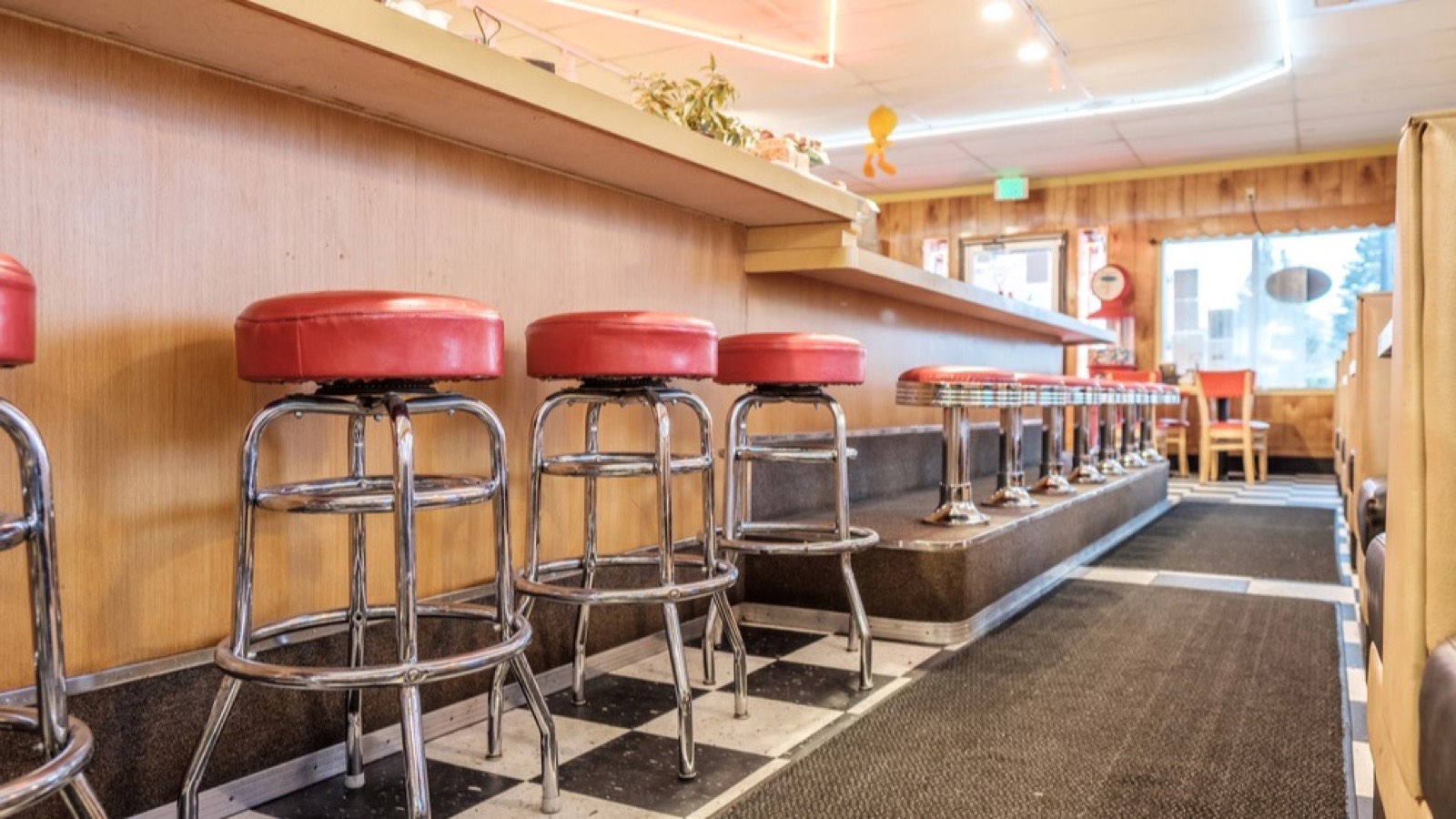
How the Big Boy Burger Was Born
The story begins in 1937 at a small diner called Bob’s Pantry in Glendale, California. One night, a group of local musicians came in, and one of them asked owner Bob Wian for “something different.” Wian improvised a hamburger with two thin patties stacked on a three-layer bun, meant to look ridiculous, like a leaning tower.
The odd sandwich became a hit, and Wian needed a name for it. When a chubby 6-year-old boy named Richard Woodruff walked in, Wian greeted him with “Hello, Big Boy,” and the name stuck. Woodruff also became the model for the famous mascot, according to the chain’s history. The double-decker burger went on to inspire copycats, including McDonald’s Big Mac.
A Chain Built on Franchises
Big Boy grew in an unusual way. Instead of building one national chain, Wian licensed the Big Boy name, mascot and burger to regional restaurant operators across the country. Many of them kept their own names, which is why people remember Frisch’s Big Boy in Ohio, Elias Brothers’ Big Boy in Michigan, Shoney’s Big Boy in the South, Elby’s Big Boy in West Virginia and Bob’s Big Boy in California.
Each franchise added its own signature dishes. Frisch’s contributed the Brawny Lad burger, Shoney’s brought the hot fudge cake and Eat’n Park introduced strawberry pie. The only item every Big Boy had to serve was the original double-decker burger. That patchwork system helped Big Boy spread quickly, but it also made the brand fragile.
The Marriott Years
In 1967, the Marriott Corporation bought Big Boy. It ran the brand for 20 years, during which Big Boy was one of the most familiar restaurant names in America. The mascot statue became a roadside landmark, and kids collected free Big Boy comic books handed out at the counter.
But during this time, several large franchisees began to leave. Shoney’s, one of the biggest, eventually dropped the Big Boy name and became simply Shoney’s. Other regional chains did the same, renaming their double-decker burgers and taking down the statues. Each departure shrank Big Boy’s footprint across the country.
Elias Brothers and Bankruptcy
In 1987, Michigan-based Elias Brothers, one of the largest franchise operators, bought Big Boy from Marriott and moved its headquarters to Warren, Michigan. Michigan had long been one of Big Boy’s strongest markets, and Elias Brothers’ restaurants were a staple across the state.
The company ran into financial trouble in the 1990s, and in 2000 it declared bankruptcy. During that process, the chain was sold to investor Robert Liggett Jr., who renamed it Big Boy Restaurants International. Many restaurants closed along the way, and the brand never fully recovered its earlier size.
The Split With Frisch’s
After 2001, control of the Big Boy name in the United States was split into two pieces. Frisch’s Big Boy, a longtime franchisee based in Cincinnati, took control of the brand in parts of the Midwest, including Ohio, Indiana and Kentucky. The rest of the country stayed with the main Big Boy company in Michigan.
That’s why the mascot and menu can look slightly different depending on where you are. Frisch’s has its own version of the Big Boy character and serves its burger with tartar sauce, while other Big Boys use a special sauce similar to Thousand Island dressing. Fans on both sides can get surprisingly passionate about which is better.
How Many Are Left Today
Big Boy is still around, but it’s much smaller than it once was. As of May 2025, Big Boy Restaurant Group, now based in Southfield, Michigan, operated 45 locations in the U.S. Frisch’s ran 31 more of its own Big Boy restaurants. Most of the remaining locations are concentrated in Michigan and Ohio.
Meanwhile, Big Boy has thrived in an unexpected place. An independent company in Japan runs more than 270 Big Boy restaurants there, far more than remain in the United States. There’s even a Big Boy in Thailand.
Why Big Boy Faded
Big Boy’s decline came from several directions. The franchise system meant the brand depended on regional operators, and every time a big one left, Big Boy lost dozens or even hundreds of locations at once. Ownership changes and the 2000 bankruptcy added to the instability.
Family dining also changed. Fast-food chains offered cheaper, faster meals, while casual dining restaurants pulled customers who wanted a night out. Coffee-shop-style restaurants like Big Boy got squeezed in the middle, the same pressure that has hurt chains like Denny’s and Sizzler. Our sister site has a list of diner classics that still bring people back.
The Statues Live On
Even where the restaurants are gone, the Big Boy statue has become a piece of Americana. Collectors buy and restore the fiberglass figures, and some former locations have kept their statues long after closing. Some towns have even fought over whether a Big Boy statue could stay up under local zoning rules.
The oldest surviving Big Boy restaurant, in Burbank, California, has become a destination for classic car fans and nostalgia lovers. Every week, people gather there to admire vintage cars, much like teenagers did in the 1950s and ’60s.
A Taste of Nostalgia
For many Americans, Big Boy represents a simpler time. It was a place where families ate together, where a slice of strawberry pie felt like a treat and where the friendly giant out front welcomed everyone through the door. You can find more retro favorites in this list of 1980s foods people loved.
If there’s still a Big Boy near you, it might be worth a visit. Order the double-decker, get a slice of hot fudge cake and snap a picture with the statue. Restaurants like this are disappearing fast, and every remaining one is a little piece of American history.