Why Empty Nesters Are Turning Their Kitchens Into New Adventures
When adult children leave home, the change can reshape everyday life in surprisingly practical ways. Grocery lists become shorter. Family dinners may become less frequent. Weeknight schedules can suddenly feel less crowded. For many empty nesters, that shift also creates something they may not have enjoyed for years: more freedom to decide what happens in the kitchen.
That freedom gives some older adults the chance to rediscover cooking, baking, gardening, and other food-centered hobbies. Instead of preparing meals around school schedules, children’s preferences, or the demands of a larger household, they can experiment with unfamiliar ingredients, revisit recipes they once loved, grow vegetables, or finally learn techniques they never had time to practice.
It is not simply about putting dinner on the table. Culinary hobbies can offer creativity, routine, learning opportunities, and ways to connect with others.
Cooking Becomes a Choice Again

For decades, cooking can be primarily a responsibility. Parents may spend years preparing breakfasts before school, packing lunches, planning family dinners, and trying to satisfy several tastes at once.
Once children have moved out, the purpose of cooking can change. A meal no longer has to please everyone. Someone who always wanted to make spicy curries, homemade pasta, sourdough bread, or elaborate desserts can experiment without worrying about whether the rest of the household will eat them.
That sense of experimentation matters because hobbies can play a positive role in later life. Research using data from the U.S. Health and Retirement Study found that participation in certain leisure activities, including baking or cooking something special, was associated with lower odds of depression among older adults. The researchers carefully described this as an association rather than proof that cooking itself prevents depression.
Cooking also combines several kinds of activity at once. Following a recipe requires attention and organization. Chopping, stirring, measuring, and preparing ingredients involve physical activity and coordination. Trying a new cuisine introduces unfamiliar techniques and flavors. At the end, there is something tangible to enjoy or share.
The Pleasure of Learning Something New
A quieter household can also make the kitchen a classroom.
An empty nester who spent years relying on familiar family recipes may decide to learn bread making. Another might experiment with Thai, Mediterranean, Mexican, or Indian dishes. Someone who rarely baked could start learning the differences between pastry doughs, while another person might take a class on nutrition or basic knife skills.
Cooking programs specifically designed for older adults already reflect this combination of practical learning and social activity. In 2026, for example, AARP Texas and Dallas College promoted a hands-on cooking series for older adults focused on culinary skills, nutritious meal planning, heart-conscious recipes, creativity, and social connection.
Research also offers some evidence that cooking activities can support well-being. A randomized controlled trial involving older adults with subjective cognitive decline and their caregivers found that participants in a five-week cooking program showed greater improvements in a combined measure of well-being than those in a wait-list control group. Cooking competence also improved among the older participants. The study involved a specific population, so its findings should not automatically be applied to every older adult. Still, it demonstrates that structured cooking can be more than a practical exercise.
Baking Offers a Different Kind of Challenge
Baking has its own appeal because it combines creativity with precision.
Bread requires patience. Pastry rewards technique. Cakes invite decoration and experimentation. Even a simple batch of biscuits can become an opportunity to refine a familiar recipe.
For empty nesters, baking can also change once a large household is no longer waiting to eat the results. Instead of making everyday snacks for children, someone might focus on smaller batches, more ambitious recipes, or food meant to be shared with friends and neighbors.
The pleasure can be as much about the process as the finished product. Measuring ingredients, kneading dough, watching bread rise, or decorating a cake creates a sequence of manageable tasks with a clear result.
That can turn an ordinary afternoon into a project.
Related article: 5-healthy-spices-to-keep-in-your-kitchen-simple-ingredients-worth-knowing/
The Kitchen Adventure Can Start in the Garden
Not every culinary hobby begins indoors.
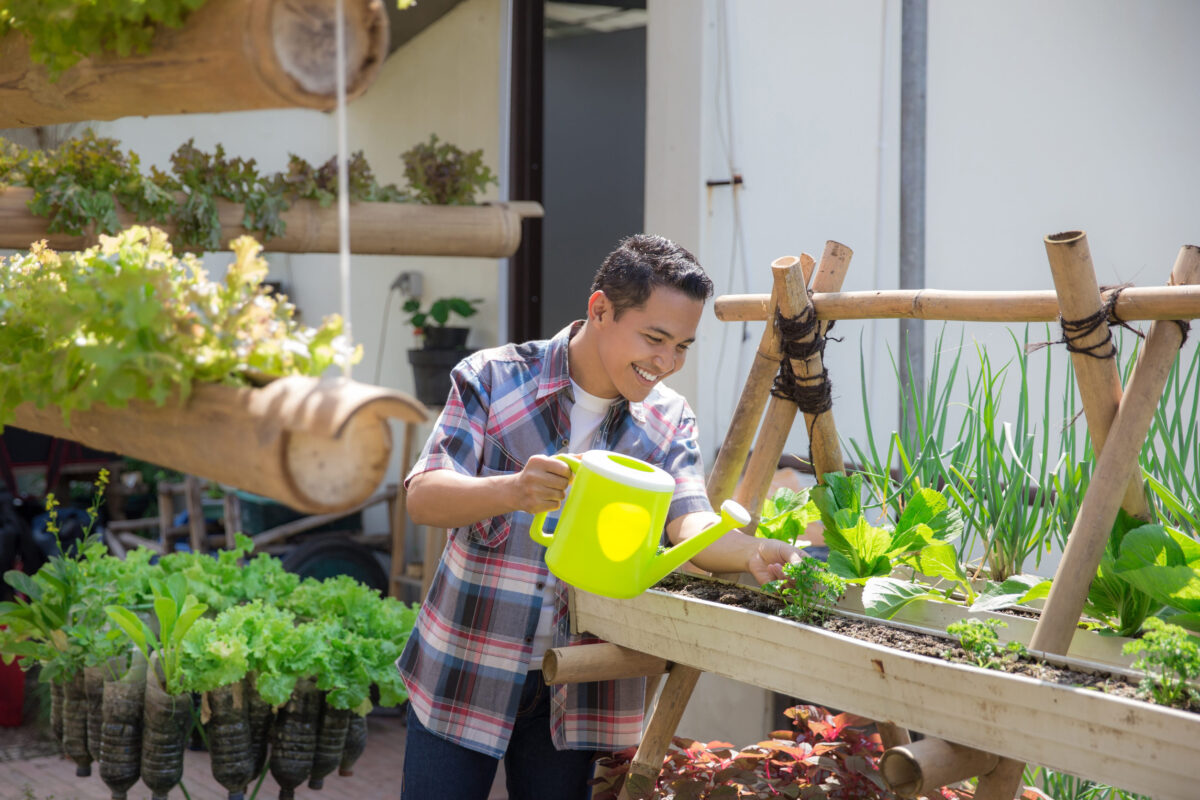
Gardening and cooking naturally complement each other. A few pots of herbs can change the way someone cooks. Tomatoes may lead to homemade sauces. Cucumbers can inspire pickling. Fresh basil might encourage someone to learn pesto, while an unexpectedly large crop of fruit can become jam, preserves, or baked desserts.
Gardening is particularly interesting because research has repeatedly examined its relationship with well-being in later life.
A 2020 study of 331 gardeners aged 60 to 95 found that participants reported benefits involving productive activity, social engagement, exercise, self-esteem, and attitudes toward aging.
More recent research involving adults aged 65 and older in Tokyo found that gardening was positively associated with several dimensions of flourishing, including life satisfaction, health, meaning and purpose, and close social relationships. Because this was an observational study, it cannot establish that gardening caused those outcomes.
Earlier reviews have also found that many gardening tasks qualify as low- to moderate-intensity physical activity. However, researchers have cautioned that the evidence is not strong enough to make broad claims about improvements in physical functioning.
In other words, gardening does not need to be treated as a miracle health solution to be worthwhile. Growing herbs, vegetables, or flowers can be an enjoyable reason to spend time outdoors and create something that later appears on the dinner table.
Food Can Create New Social Circles
One challenge of major life transitions is that familiar routines and social patterns can change. Culinary hobbies can provide new opportunities for connection.
A cooking class brings together people who already share an interest. Community gardens create opportunities for conversation. A successful loaf of bread or tray of pastries can be shared with neighbors. Dinner becomes an excuse to invite friends over.
A review of community-based food initiatives for older adults found that programs involving cooking, shared meals, recipe exchanges, and gardening could encourage social interaction, along with other potential benefits.
Research involving Danish adults aged 65 to 75 who lived alone also found that more frequent home cooking and greater confidence in cooking skills were associated with higher satisfaction with food-related life. Sharing meals with others was similarly associated with greater food-related satisfaction. Again, the study was observational, so it cannot prove that cooking or shared meals directly caused greater satisfaction.
Still, food has an obvious practical advantage as a social hobby. The activity naturally produces something you can share.
A New Chapter, One Recipe at a Time
Becoming an empty nester doesn’t automatically turn someone into a gardener, baker, or adventurous home cook. Some people are relieved to spend less time preparing meals and have no desire to make the kitchen a hobby.
For others, however, a household transition creates room for exploration.
The kitchen that once represented schedules, packed lunches, and family obligations can become a place to experiment. A backyard can become a vegetable garden. A Saturday afternoon can become bread-making time. A recipe from a country can replace a familiar dinner someone has always wanted to visit.
It doesn’t need to be a dramatic reinvention.
Sometimes the adventure begins with one unfamiliar ingredient, one pot of basil on the windowsill, one cooking class, or one recipe that always seemed too complicated to try.
After years of cooking for everyone else, an empty nest can offer something refreshingly simple: the chance to discover what you actually enjoy making.
Other articles you may like:
– 12-hobbies-everyone-judges-you-for/
– cheap-things-worth-buying-that-could-save-americans-money-over-time-in-2026/
– 6-kitchen-storage-habits-that-are-quietly-shrinking-your-small-kitchen/