McDonald’s Fried Apple Pie Return Is More Than Another Menu Comeback
McDonald’s looks set to bring back one of its most beloved desserts, and this one means a lot to longtime customers. The fried apple pie is more than just another sweet treat, making a brief comeback.
It’s one of those rare discontinued foods that people still mention, almost like McDonald’s took away a part of their childhood.
Reports suggest the original fried apple pie will be back for a limited time starting June 22, just in time for America’s 250th anniversary. This timing adds more than just nostalgia; it gives McDonald’s a patriotic angle for a dessert once seen as a true American fast-food classic.
For those who remember the old version, the appeal is clear. The fried apple pie had a hot, crispy shell, sweet apple filling, and a texture that felt more like a diner dessert than a typical fast-food pastry.
When McDonald’s switched to a baked version in the early 1990s, fans accepted it because they had to, but they never stopped comparing the two.
Why Fans Never Forgot the Original Fried Apple Pie
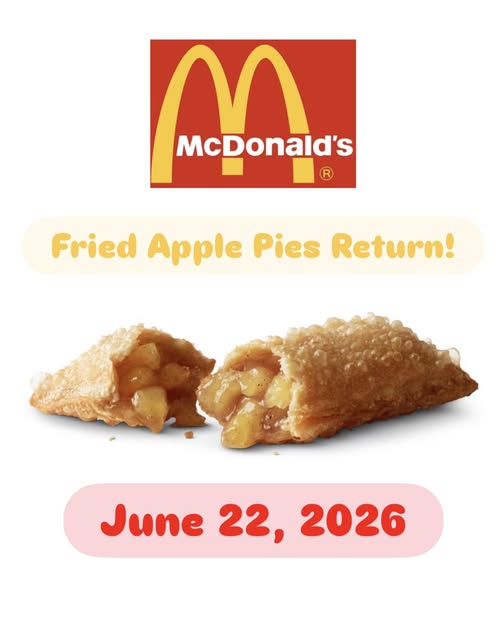
The original fried apple pie had something the baked version struggled to copy. It had crunch. It had heat. It had that slightly dangerous fresh-from-the-fryer feeling that made people wait a few seconds before biting in, even when they were too impatient to care.
That texture stuck in people’s memories. A McDonald’s burger was familiar, fries were reliable, but the fried apple pie felt like a little reward at the end of a meal.
It was cheap, hot, sweet, and easy to eat in the car, which made it one of the chain’s most practical desserts.
The baked pie that replaced it was not a failure. It remained on menus, keeping the apple pie alive for new generations. Still, for many older customers, the baked version felt like a compromise. It was softer, lighter, and less indulgent, but it did not deliver the same crackle that made the original so memorable.
The 1992 Switch That Still Frustrates Fast Food Fans
McDonald’s removed the fried apple pie from its menu in the United States in 1992 as fast-food chains faced growing pressure to offer items that seemed lighter and less greasy.
The baked apple pie fit that moment. It looked more restrained, sounded more responsible, and gave McDonald’s a dessert it could keep selling as it adjusted to changing customer expectations.
The problem was that fans did not judge the pie by its nutritional content. They judged it by memory. For them, the fried version tasted like McDonald’s at its most unapologetic, while the baked version felt like the chain had sanded down the edges of something that used to be special.
That’s why the dessert stayed alive online long after it disappeared from most U.S. restaurants. People compared it to pies at other chains, looked for copycat recipes, and wondered if McDonald’s in other countries still had a better version. The old pie became a fast-food legend that fans never really let go of.
Why the Timing Feels So Deliberate

Bringing back the fried apple pie for America’s 250th anniversary is a smart move, since apple pie already feels patriotic. McDonald’s doesn’t need to explain why it fits; the connection is already there in people’s minds.
Apple pie is linked to county fairs, diners, family kitchens, holiday tables, and old ads about American identity. McDonald’s fried version made that image fast, portable, and easy to grab at the drive-thru.
That is why this return feels bigger than a normal limited-time offer. We are not only watching a dessert come back. We are watching McDonald’s use nostalgia, timing, and national celebration to revive a product many customers still believe should never have disappeared.
McDonald’s Nostalgia Strategy Is Getting Harder to Ignore
McDonald’s has learned that nostalgia can drive attention faster than most new flavors. A new sauce might spark curiosity, but an old favorite makes people feel connected. That’s the power of bringing back something discontinued, because it gives customers a story to tell. Older fans can say they remember the original.
Younger customers can say they finally want to try the dessert everyone talks about missing. Social media turns this into a conversation, and McDonald’s benefits from both groups.
This is exactly why limited-time nostalgia works so well. It creates urgency without needing a complicated explanation. Customers already know the item will not be around forever, so the decision becomes simple. Try it now or risk missing the comeback everyone else is talking about.
Why This Dessert Still Feels Personal to Older Customers
Fast food memories are often tied to small routines, not fancy experiences. A parent bringing home McDonald’s after work. A stop after school. A road trip meal eaten from a paper bag. A hot pie was added to the order because it was affordable and easy to share.
For many, the fried apple pie is part of those memories. It wasn’t expensive or rare back then. That’s why losing it felt odd; something ordinary became special only after it was gone.
That emotional pull is what makes the return so effective. McDonald’s does not need to convince people that the pie matters. Fans have been doing that for decades. The company only needs to place it back on the menu long enough for the memory to become a purchase.
Why Limited Time Availability Could Frustrate Fans Again
The biggest risk with this comeback is obvious. If customers love the fried apple pie, they may not want to leave. A limited-time return can create excitement, but it can also reopen an old complaint.
Fans who have waited decades may see a short run as a tease. They may wonder why McDonald’s would bring back a beloved dessert only to remove it again after building demand for it.
That frustration could become part of the story, especially if some locations sell out or if availability varies by restaurant.
Still, scarcity is part of the machine. A permanent return would satisfy fans, but a limited return creates urgency. It turns the pie into an event, not just a menu item. That urgency can push customers to visit sooner, post reactions faster, and compare memories while the window is still open.
What Customers Should Expect From the Comeback
Customers should expect a dessert built around contrast. The appeal of the fried apple pie has always been the crisp outer layer against the warm apple filling inside. The experience is less about elegance and more about comfort.
The real question is whether the returning version will taste exactly like the pie people remember. Recipes, suppliers, cooking processes, oils, and restaurant operations have changed over the years. Even if McDonald’s aims to revive the original spirit, modern expectations may shape how people judge it.
That uncertainty may actually make the comeback more interesting. People will not just be buying dessert. They will be testing a memory. They will be asking whether the treat still deserves its legendary status or whether decades of longing made it larger than life.
How the Fried Apple Pie Became a Fast Food Legend
The fried apple pie debuted in 1968, the same year McDonald’s introduced the Big Mac. That alone gives the dessert serious historical weight inside the brand’s menu story.
It arrived during a period when McDonald’s was becoming more than a burger stand and turning into a national habit.
The dessert’s roots also gave it an advantage. Inspired by Southern-style handheld pies, it felt familiar before it ever reached millions of customers. It had the simplicity of a homemade dessert, but it was engineered for fast food speed.
That combination helped it last for more than two decades before the baked version took over in the United States. Its long absence then did something unusual. It made the fried apple pie more famous as a memory than it might have been as a regular menu item.
Why This Comeback Could Put Pressure on Other Fast Food Chains
McDonald’s is not the only chain that understands nostalgic desserts. Several competitors have kept fried pies, turnovers, shakes, and old-school sweets alive in different forms. That matters because customers who missed McDonald’s fried apple pie often found alternatives elsewhere.
If McDonald’s return performs well, it could remind the rest of the industry that forgotten desserts can be just as powerful as new menu inventions. Chains are always searching for products that feel familiar but still create fresh attention. A revived fried pie checks both boxes.
The bigger lesson is that comfort food does not need to be complicated. Sometimes the strongest comeback is not a wild new flavor or celebrity meal. Sometimes it is a hot apple pie with a crispy shell, brought back at the exact moment customers are ready to care again.
What This Says About America’s Fast Food Mood
The excitement around the return of McDonald’s fried apple pie says something about where customers are right now. People are dealing with higher food prices, smaller portions, and constant menu changes. A familiar dessert from the past can feel like a small escape from all that churn.
That does not mean customers are ignoring price or nutrition. It means they still respond to food that carries a story. The fried apple pie gives people something simple to look forward to, and simplicity has become powerful in a fast-food world filled with complicated promotions.
For McDonald’s, this is the sweet spot. The company can celebrate its history, stir online conversation, and bring people back into restaurants without asking them to learn a new product. The name alone does most of the work.