Your Tiny Laundry Area Doesn’t Need Another Cabinet. It Needs This Simple Reset
A small laundry area has one job, yet it can end up hosting an entire household’s unfinished business. There’s the detergent, naturally, but also the spare hangers, the mystery sock collection and whatever someone set down “just for now.” Before you start measuring for another cabinet, try a different approach: permit fewer things to live there, and give the things that stay a clear purpose.
That doesn’t mean turning your laundry closet into a showroom where nobody actually washes clothes. The goal is function: being able to reach your supplies, move a load between machines, and get clean clothing out without rearranging the room first. Start with what you already own, rethink where it belongs, and build a routine that doesn’t require extra furniture to keep everything under control.
Give Your Laundry Area a Smaller Job
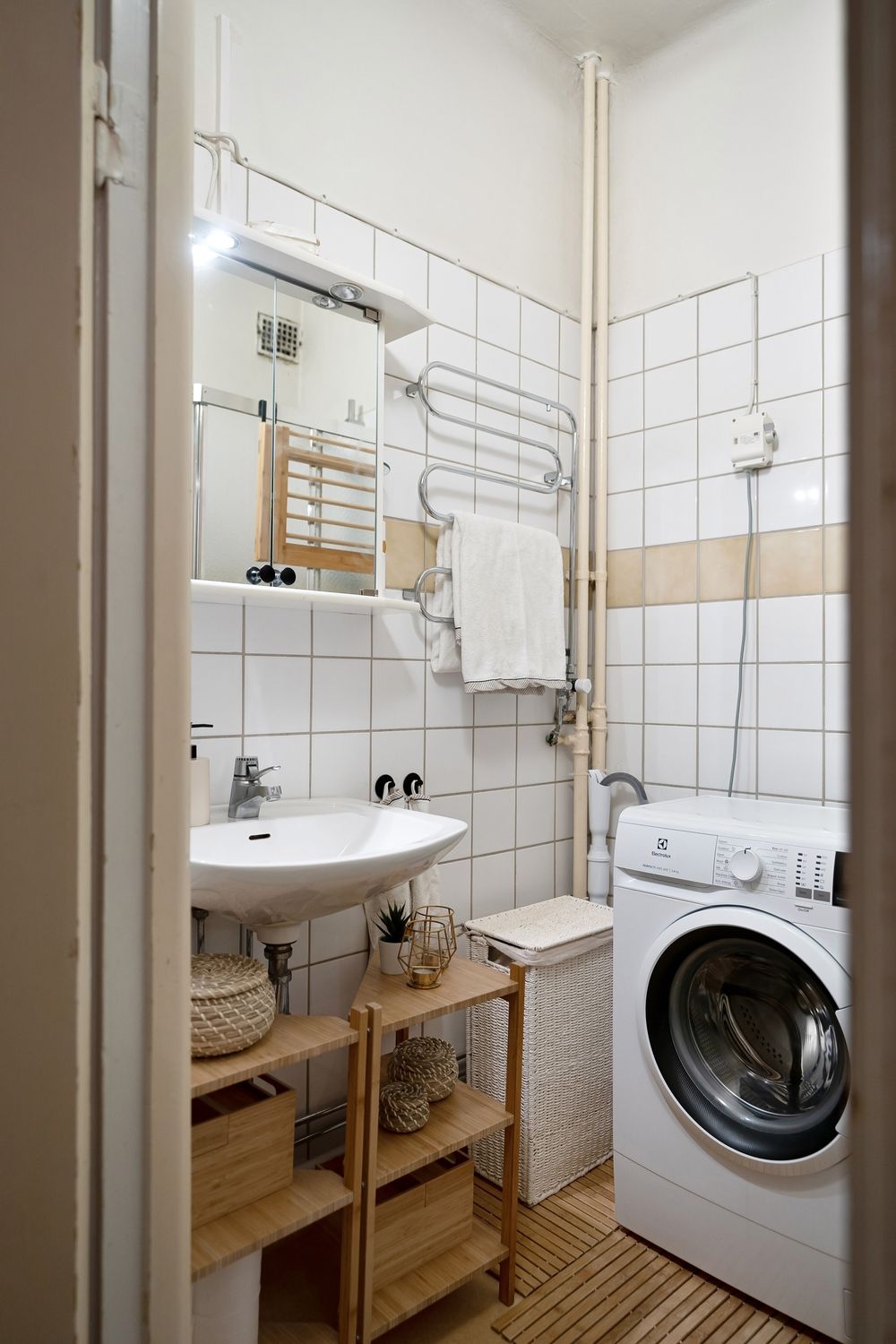
Begin by taking loose items off existing shelves and other accessible surfaces, then separate laundry essentials from everything else. Keep the products and tools you actually use to wash, dry, and care for clothing. Give unrelated belongings a home elsewhere rather than automatically making room for them again. This is an editing exercise, not an invitation to buy matching baskets for things that never belonged beside the washer.
“Generally, we recommend only storing items related to washing and drying clothing in a laundry,” Ashley La Fond, founder of organizing company Of Space & Mind, told CNN Underscored. Her examples include detergent, stain removers, dryer balls, an iron or steamer, and clothing-care accessories. In the same guide, professional organizer Luisa Quinteros Wessel recommends keeping bulk extras elsewhere instead of cramming everything into the laundry space.
Put that advice to work by separating your current supplies from your backup inventory. If you have another suitable, secure storage spot, move unopened replacements there and keep the products you’re currently using in the laundry area. If you don’t, resist buying more than your available space can reasonably accommodate.A bargain-size purchase still needs somewhere to live, and the washer shouldn’t have to share its working area with a detergent warehouse.
Next, review the accessories. Keep the hangers you use for laundry, not your entire spare collection, and return clean towels and linens to their usual destinations. Give unmatched socks a small container you already own, then check it when you put clothes away. The point isn’t to establish a permanent sock archive. It’s to stop a few unresolved items from claiming an entire shelf.
Related: If You Grew Up Hanging Laundry on a Clothesline, You Probably Learned These 9 Things
Organize the Work, Not Just the Bottles
Once you’ve reduced the contents, arrange what remains around the tasks you perform. Think about where you check pockets, treat stains, load the washer, and collect dry clothes. Whirlpool’s organization guide recommends placing supplies near the tasks they support, such as detergent near the washer and dryer supplies near the dryer. It also suggests labeled hanging laundry bags as an alternative to multiple baskets and using available flat space for folding.
Apply that logic to the shelves, cabinets or hooks already in your space. Put frequently used supplies in an accessible, appropriate location, while keeping safety requirements ahead of convenience. Group clothing-care tools together so you aren’t hunting through unrelated products for a lint roller. If a spare tray or washable bin already fits your shelf, use it to contain those tools. You don’t need to buy a container to create a category.
Make small items earn their own modest landing spot. A dish you already own can collect coins and other pocket finds; a designated hook can hold an empty mesh wash bag. Keep these arrangements specific rather than creating an “everything” basket that eventually requires its own excavation. Labels can be as simple as paper and tape, as long as everyone sharing laundry duty understands what belongs where.
If sorting baskets crowd the floor, consider keeping dirty laundry where it originates and bringing it in when you’re ready to wash. Alternatively, use existing suitable hooks for labeled laundry bags rather than adding a freestanding sorter. If there’s no usable surface in the laundry area, fold on a clean table elsewhere. A tiny utility space doesn’t need to perform every stage of clothing care within its own four walls.
Skip the Pretty Detergent Jars and Finish the Laundry Journey
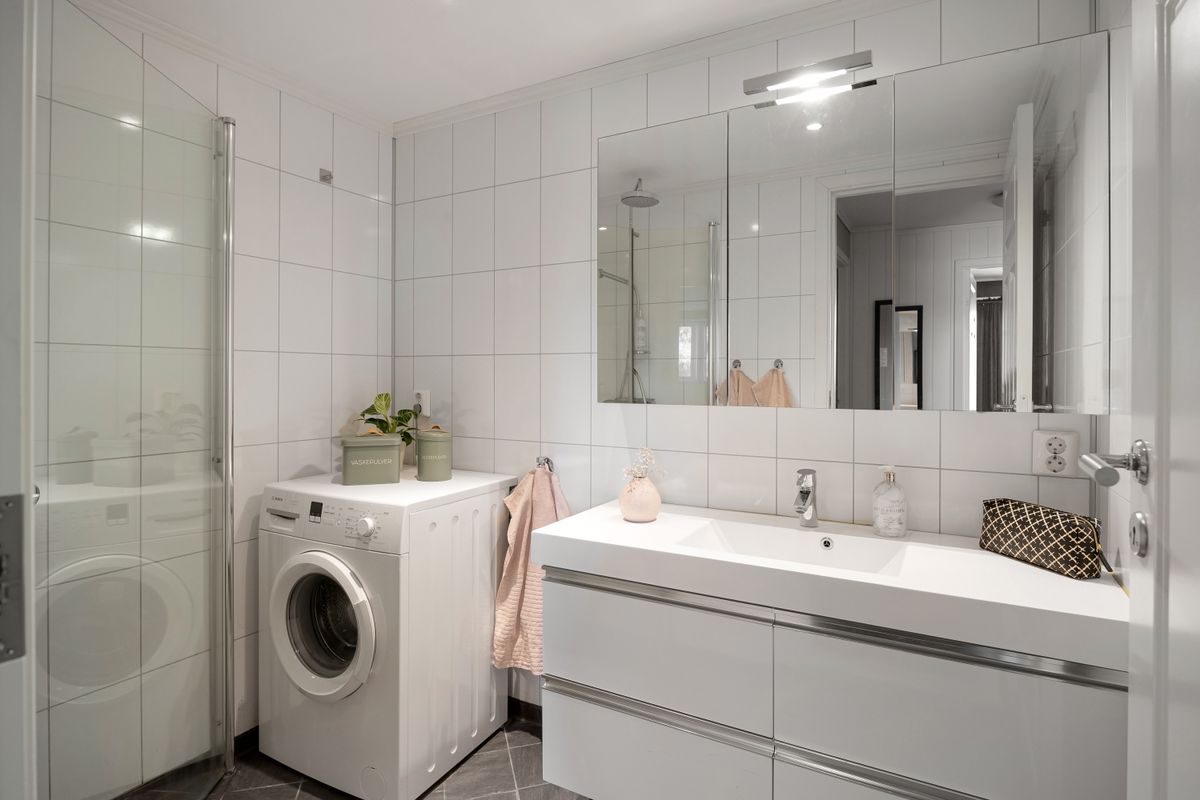
One organizing trend is worth leaving out of this reset: transferring laundry packets into decorative jars. The American Cleaning Institute advises keeping laundry products in their original containers, with labels intact, and putting them away securely after use. Its guidance also calls for keeping products out of children’s and pets’ reach and closing detergent packaging immediately after each use. A coordinated display isn’t worth abandoning the packaging and instructions that came with the product.
“Keeping the product in the package is a simple step to a safer home,” Brian Sansoni, then the American Cleaning Institute’s senior vice president of communications and outreach, said in a 2021 statement. The organization’s message was straightforward: don’t sacrifice safety for style. Let your storage look like storage, and reserve repurposed containers for nonchemical items such as clothespins, dryer balls, or empty wash bags instead.
Finally, decide when clean laundry leaves the area. Washing and drying are only part of the process; clothing still needs to go back into drawers, closets, and linen shelves. Choose a manageable stopping point that includes putting things away rather than leaving every finished load beside the machines. If folding elsewhere works better, carry the basket there deliberately instead of allowing the laundry area to become the default holding zone.
Before you finish each laundry session, return supplies to their assigned places, remove pocket finds, and take finished clothing to its destination. If something repeatedly lands in the wrong spot, adjust the arrangement rather than assuming you need another cabinet. Your reset succeeds when you can use the space without clearing it first. That’s a more useful upgrade than squeezing one more piece of furniture through the door.