Why Your Local AI Model Feels Weak Compared to Cloud Tools And What Big Tech Isn’t Telling You
Meta Title
Why Local AI Feels Inferior to Cloud Models: The Real Reason Revealed
Meta Description
Local AI models often feel weaker than cloud-based tools, but the real difference isn’t intelligence. It is missing tools, memory, and system design.
The Illusion of “Smarter AI” Is Misleading Users Everywhere

It happens almost every time.
You install a powerful local AI model, excited about privacy, speed, and control. You run it through Ollama or another local setup. Everything feels promising—until you ask it to do something real.
“Find the latest software update and summarize it.”
“Check my files and create a report.”
“Save this analysis to my desktop.”
And then it fails.
Meanwhile, a cloud AI tool responds instantly, pulls live information, writes a file, and delivers exactly what you wanted.
At that moment, it feels like the cloud model is simply “smarter.”
But that assumption is wrong, and the truth is far more interesting.
The Real Difference: It’s Not Intelligence, It’s Access
A local AI model is often compared directly with cloud-based systems like Claude, ChatGPT, or Gemini. That comparison is fundamentally flawed.
A local model is just a reasoning engine. It generates text based on patterns learned during training. That’s it.
A cloud AI system, however, is something very different. It is not just a model; it is a full operational system.
It includes web search capabilities, file system access, code execution environments, retrieval from external databases, memory systems, and tool-calling frameworks.
The model is only one component inside a much larger machine.
So when cloud AI completes tasks that local AI cannot, it is not because it “knows more.” It is because it is connected to more.
The “Brain Without Hands” Problem
A helpful way to understand local AI is this:
A local LLM is like a brilliant brain locked inside a sealed room.
It can think, it can reason, and it can write, but it cannot act.
It cannot browse the internet, open files, verify information, or execute tasks.
So when you ask it for real-world output, it is forced to guess or stop short.
Cloud AI systems, on the other hand, are not locked in that room. They are connected to tools that act as their hands, eyes, and memory.
That difference changes everything.
Why Cloud AI Feels Instantly More Powerful
Cloud AI systems are built with an orchestration layer, hidden systems that coordinate what the model does next.
First, the model receives your request and interprets the task. Then it decides whether external tools are needed. If required, it triggers a web search, retrieves real-time data, processes the results, and continues reasoning. Finally, it produces a polished response or performs an action, such as writing a file.
To the user, it looks seamless.
But what you are actually seeing is not just intelligence. It is execution.
That is why cloud AI feels like it “does more.” Because it literally does.
The Hidden Upgrade Local AI Is Missing
Local AI can match cloud systems, but only when it is upgraded with missing layers.
Tool calling is the first major upgrade. It allows AI to request actions such as searching the web or writing files, rather than only generating text.
Retrieval systems, often called RAG, allow AI to pull information from documents, PDFs, or databases before answering.
Memory systems allow AI to remember past interactions and user preferences, creating continuity rather than restarting each session from scratch.
File system access allows AI to read, edit, and generate local files, turning it from a chatbot into a productivity tool.
Code execution allows AI to test scripts and verify outputs instead of guessing.
Without these layers, even the most advanced local model will feel limited.
This loop is the difference between “talking to AI” and “using AI.”
Why Smaller Models Often Beat Bigger Ones
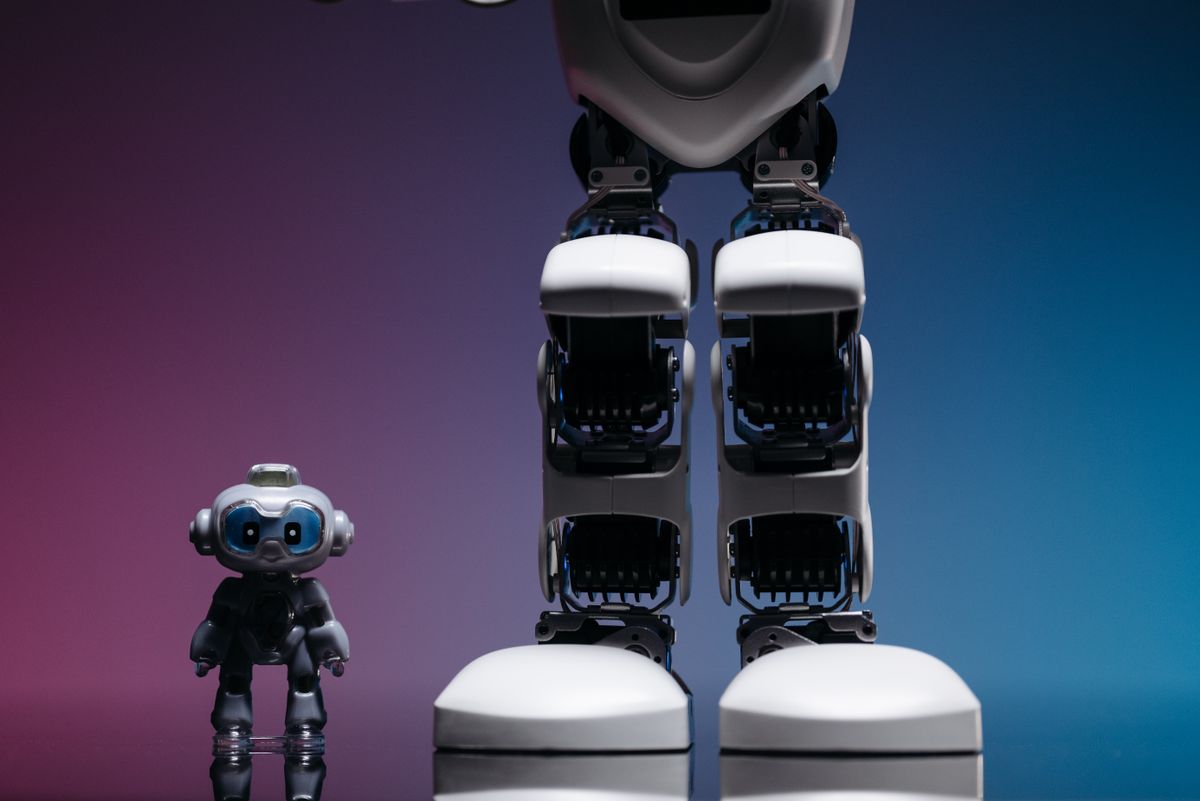
One of the most surprising findings in modern AI development is this: a small local model with tools can outperform a large model without them.
A small model with web access can retrieve fresh data. A small model with access to files can analyze real documents. A small model with execution can verify code and calculations.
Meanwhile, a large model without tools is still guessing from outdated memory.
In real-world tasks, access often matters more than size.
The Real Bottleneck Is Not the Model
When local AI feels weak, the problem is usually not the model itself.
The real bottleneck is a missing capability. No internet access. No file system connection. No memory system. No retrieval layer. No execution environment.
In other words, the model is not the issue. The system around it is missing.
Fix the system, and the same model feels dramatically more capable.
Why Cloud AI Feels “Magical” (But Isn’t)
Cloud AI platforms are carefully engineered systems disguised as simple chat interfaces.
Under the hood, they include intelligent routing between models, tool-execution frameworks, retrieval pipelines, safety filters, memory layers, and output-validation systems.
This is why they feel smooth, fast, and capable.
The intelligence is not just in the model. It is in the infrastructure.
The Future Is Not Bigger Models, It’s Smarter Systems
The AI race is shifting.
It is no longer about who builds the largest model.
It is about who builds the most capable system around the model.
That system includes tool integration, retrieval pipelines, memory architecture, secure execution environments, and smart orchestration logic.
Local AI is not behind.
It is just missing its infrastructure layer.
The Hybrid Reality: Local + Cloud Together
The most practical AI setups moving forward will not be purely local or purely cloud-based.
They will be hybrid systems in which local models handle private, everyday tasks, while cloud models handle complex reasoning or live data. A router decides which system to use depending on the task.
This approach gives users privacy, speed, and power simultaneously.
The “Dumb” Local AI Myth Ends Here
A local AI model is not dumb.
It is simply incomplete.
Without tools, it cannot act. Without retrieval, it cannot know. Without memory, it cannot learn. Without execution, it cannot prove anything.
Cloud AI feels smarter because it is not just a model; it is a system designed to do work.
Once local AI is given the same structure, the difference between them starts to disappear.
The future of AI is not about bigger brains.
It is about building better bodies around them.