You Wash Dishes With Hot Tap Water, but the CDC Says a One-Minute Sanitizing Soak Is Needed During Boil-Water Advisories
You finish dinner, turn on the hot tap, squeeze some dish soap onto a sponge, and get to work. A few minutes later, the plates are clean, the forks are sparkling, and the kitchen is back in order.
Job done, right?
Usually, yes. But the Centers for Disease Control and Prevention (CDC) has a dishwashing recommendation that might surprise you. During a boil-water advisory, simply washing and rinsing dishes with hot tap water isn’t the complete process the agency recommends.
Instead, the CDC instructs people washing dishes by hand to soak their rinsed dishes in a specific sanitizing solution for at least one minute.
Before you start soaking every plate in your kitchen, there’s an important detail. This recommendation applies during boil-water advisories, not ordinary everyday dishwashing when the water supply is safe.
Here’s what the CDC actually recommends, why hot water isn’t always enough, and what you should do when your community’s water becomes unsafe.
Hot Water and Dish Soap Aren’t Always the Whole Story
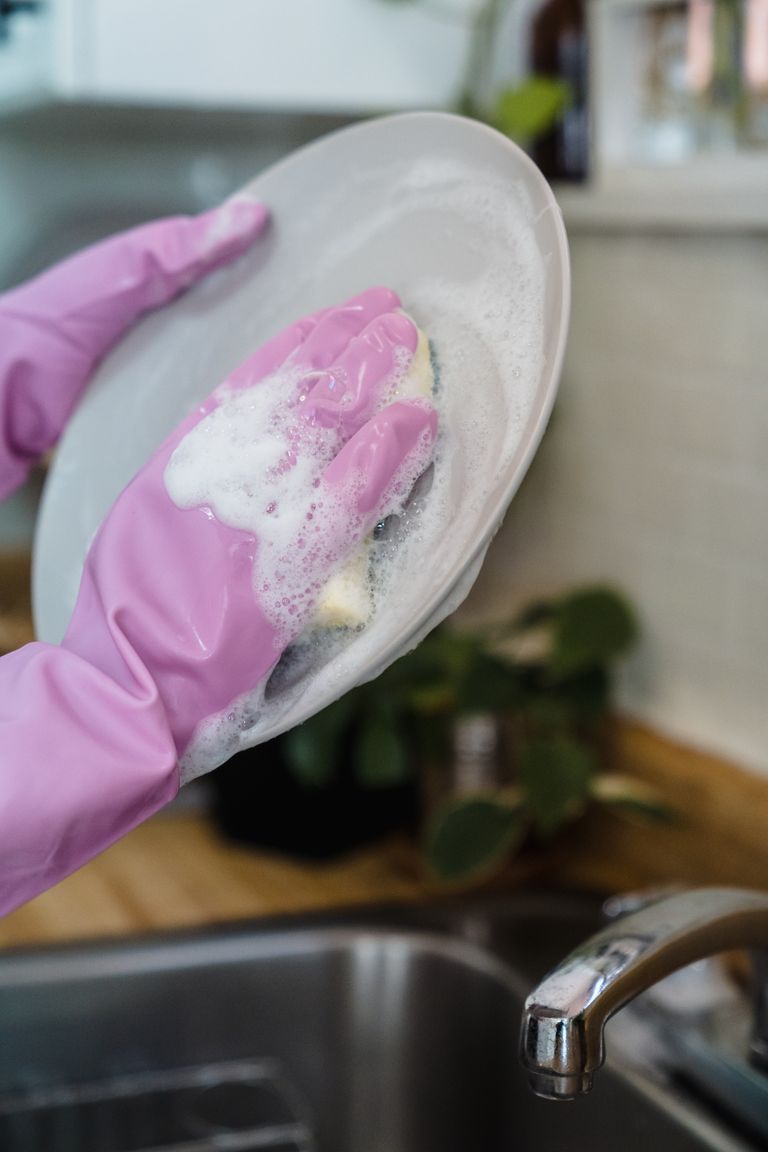
Most of us learned to wash dishes the same way: hot water, dish soap, a little scrubbing, and a good rinse.
There’s nothing wrong with that routine.
In fact, the Food and Drug Administration (FDA) recommends washing dishes, utensils, cutting boards, and countertops with hot, soapy water as part of ordinary household food safety.
But there’s a difference between cleaning something and sanitizing it.
Cleaning removes food particles, grease, dirt, and many germs. Sanitizing goes a step further by reducing germs to levels considered safe under public-health standards.
Think of it this way: A plate can look perfectly clean without having gone through a separate sanitizing process.
That doesn’t mean every plate needs one. It means certain situations call for additional precautions.
And a boil-water advisory is one of those situations.
What the CDC Says to Do During a Boil-Water Advisory
When local authorities issue a boil-water advisory, the usual kitchen routine may need an adjustment.
The CDC recommends using disposable plates, cups, and utensils when possible. That eliminates the need to wash them in potentially contaminated water.
But what if disposable dishes aren’t available?
The agency provides a specific hand-washing procedure.
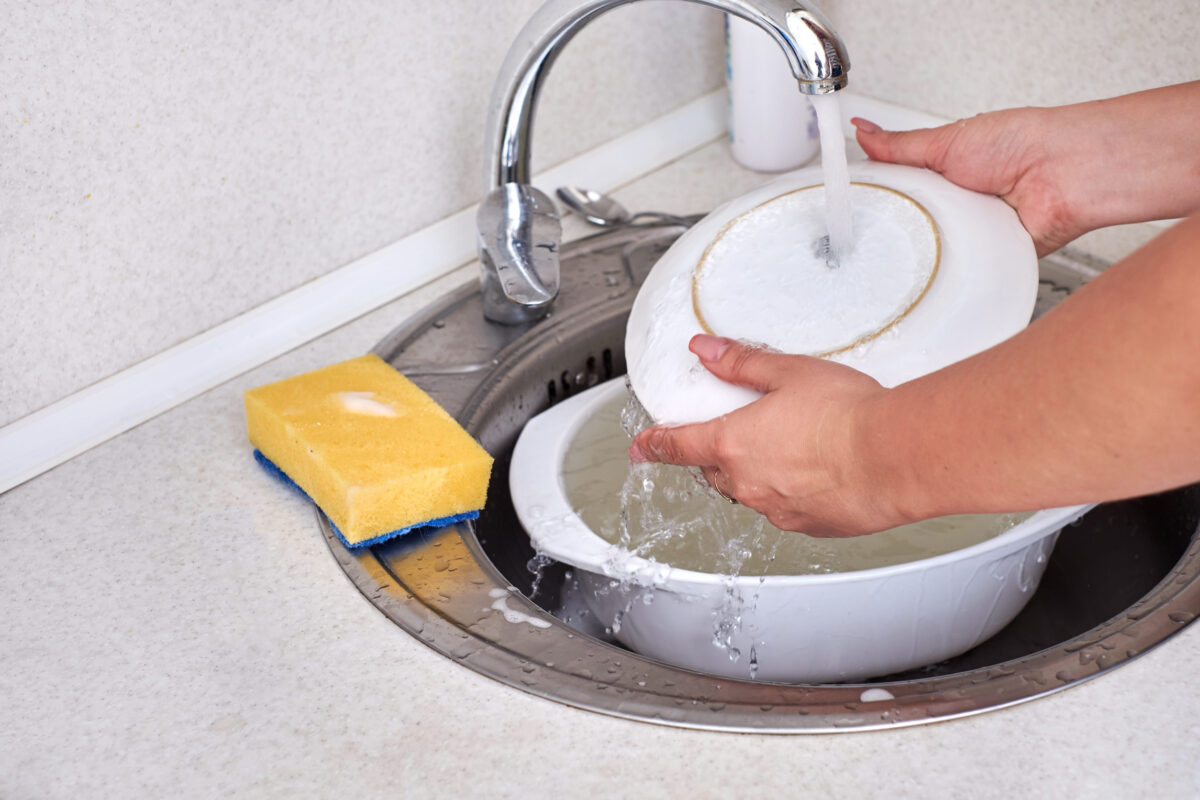
First, wash and rinse your dishes as you normally would using hot water.
Next, prepare a separate basin containing one teaspoon of unscented household liquid bleach for every gallon of warm water.
Place the rinsed dishes in that solution and let them soak for at least one minute.
Finally, remove the dishes and allow them to air-dry completely before using them again.
That’s the full CDC procedure.
Notice something interesting? The CDC doesn’t instruct you to rinse the dishes again after the sanitizing soak. Its directions move straight from soaking to complete air-drying.
You can find the complete instructions in the CDC’s drinking-water advisory guidance.
Remember to follow your local health department’s advisory and use only bleach products suitable for the intended food-contact application. Product labels and local instructions matter because not every bleach formulation is interchangeable.
Why Turning Up the Hot Water Isn’t the Answer
Here’s where things get interesting.
You might assume that using really hot tap water automatically sanitizes dishes.
After all, hot water feels powerful enough to tackle almost anything, especially when you’re scrubbing a greasy frying pan.
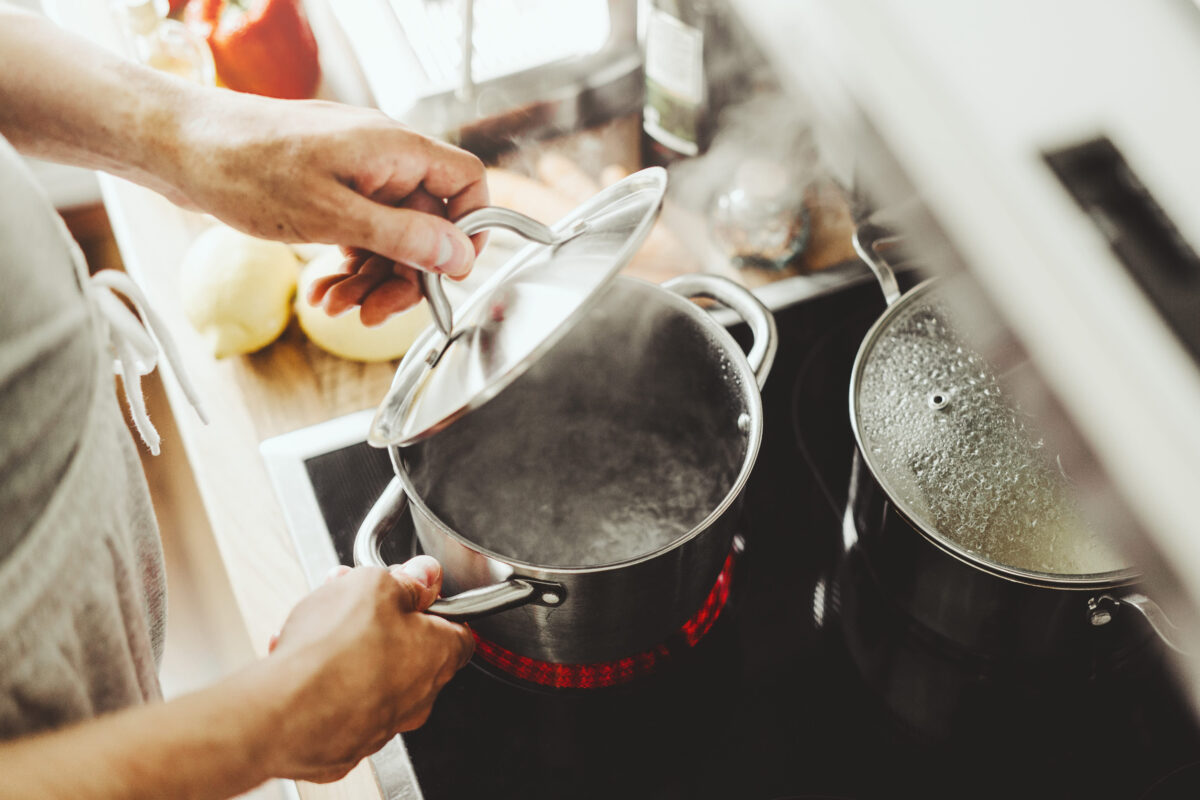
But the temperature of ordinary household tap water isn’t necessarily high enough to provide reliable heat sanitization.
For comparison, the FDA’s 2026 Food Code describes a commercial manual hot-water sanitizing method requiring water at least 171°F for a minimum of 30 seconds.
That’s not a temperature you should try to recreate with your bare hands at the kitchen sink.
The CDC also warns that higher household hot-water temperatures increase the risk of burns.
So cranking up your water heater isn’t a clever dishwashing shortcut.
During a boil-water advisory, the important thing is following the recommended procedure rather than assuming hotter water solves the problem.
Does This Mean You Should Sanitize Every Dish?
Thankfully, no.
Nobody needs to turn an ordinary Tuesday-night cleanup into a restaurant-style sanitation operation just because the CDC has special emergency instructions.
When your household water is safe, washing dishes properly with hot, soapy water remains the standard recommendation.
The CDC also explains that daily sanitizing may not be necessary when household surfaces and objects are carefully cleaned after use.
However, extra sanitizing can be appropriate after certain contamination events.
For example, dishes and utensils exposed to floodwater require special handling. The FDA provides separate instructions for cleaning salvageable items and recommends discarding some materials that cannot be safely cleaned.
Likewise, kitchen surfaces and utensils that may have contacted contaminated or recalled food may need additional cleaning and sanitizing.
The key is recognizing that different situations require different procedures.
One sanitizer recipe doesn’t automatically work for every emergency.
What About Your Dishwasher?
If you prefer loading dishes into a machine instead of standing over the sink, there’s another detail worth checking.
During a boil-water advisory, the CDC says dishwashers are generally safe to use if they have a sanitizing cycle or reach a final rinse temperature of at least 150°F.
That doesn’t mean every dishwasher automatically qualifies.
Your machine’s settings matter, and the CDC recommends checking the manufacturer’s instructions.
If you’re uncertain whether your dishwasher meets those conditions, follow your local water authority’s guidance rather than assuming the hottest-looking setting is enough.
It’s also important to distinguish a boil-water advisory from a “do not use” advisory.
A do-not-use advisory means tap water should not be used for any purpose. The CDC’s ordinary boil-water-advisory dishwashing procedure should not be applied to that situation.
Be Careful About Which Cleaning Products You Use
A bottle of bleach under the sink might seem like a simple solution, but there’s a catch.
Not every bleach or disinfecting product is appropriate for sanitizing dishes.
Some products contain additives or have instructions that make them unsuitable for food-contact use.
The CDC warns against mixing bleach with other cleaners or disinfectants because dangerous vapors can result.
That’s why the dishwashing and sanitizing stages should remain separate.
Always check the product label for its permitted uses, dilution instructions, contact time, and rinsing requirements.
And don’t assume that using extra bleach makes the process better.
Following the correct instructions matters much more than improvising a stronger mixture.
The Bottom Line for Your Kitchen
For everyday dishwashing with safe water, hot, soapy water and proper cleaning are still the recommended routine.
But when a boil-water advisory changes the safety of your water supply, the CDC recommends additional precautions, including a one-minute sanitizing soak when following its hand-washing method.
So the next time your community announces a water advisory, don’t just reach for the dish soap and assume your usual routine is enough.
Check the local instructions, use the correct cleaning method, and give those dishes the extra attention the situation requires.
Because sometimes, the most important part of washing dishes happens after the scrubbing is finished.