10 U.S. States With the Worst Air Quality Problems
Air pollution is no longer just a big-city problem hiding behind a gray skyline. It now follows weather patterns, wildfire seasons, traffic corridors, oil and gas hubs, wood-burning communities, industrial zones, and valleys where dirty air gets trapped like steam under a lid. That is why the states with the worst air quality are not always the states people expect.
Why Air Quality Rankings Are More Complicated Than They Look
Air quality is measured through several pollutants, but two of the biggest concerns are ozone and fine particle pollution. Ozone, often called smog at ground level, forms when pollutants react in sunlight. It becomes worse on hot, still days, which is why sunny metro areas can have serious pollution even when the sky looks bright and blue.
Fine particle pollution, often called PM2.5, is even sneakier. These particles are tiny enough to travel deep into the lungs, and some can enter the bloodstream. They come from wildfire smoke, diesel exhaust, industrial activity, power plants, wood burning, road dust, and chemical reactions in the air.
The most polluted states usually have a mix of several problems. A state may have heavy traffic, a large industrial base, extreme heat, wildfire smoke, a basin-shaped landscape, or winter inversions that trap emissions close to the ground. Once those factors stack together, residents can face unhealthy air during summer smog alerts, winter smoke events, and year-round exposure.
California Still Carries America’s Heaviest Air Quality Burden
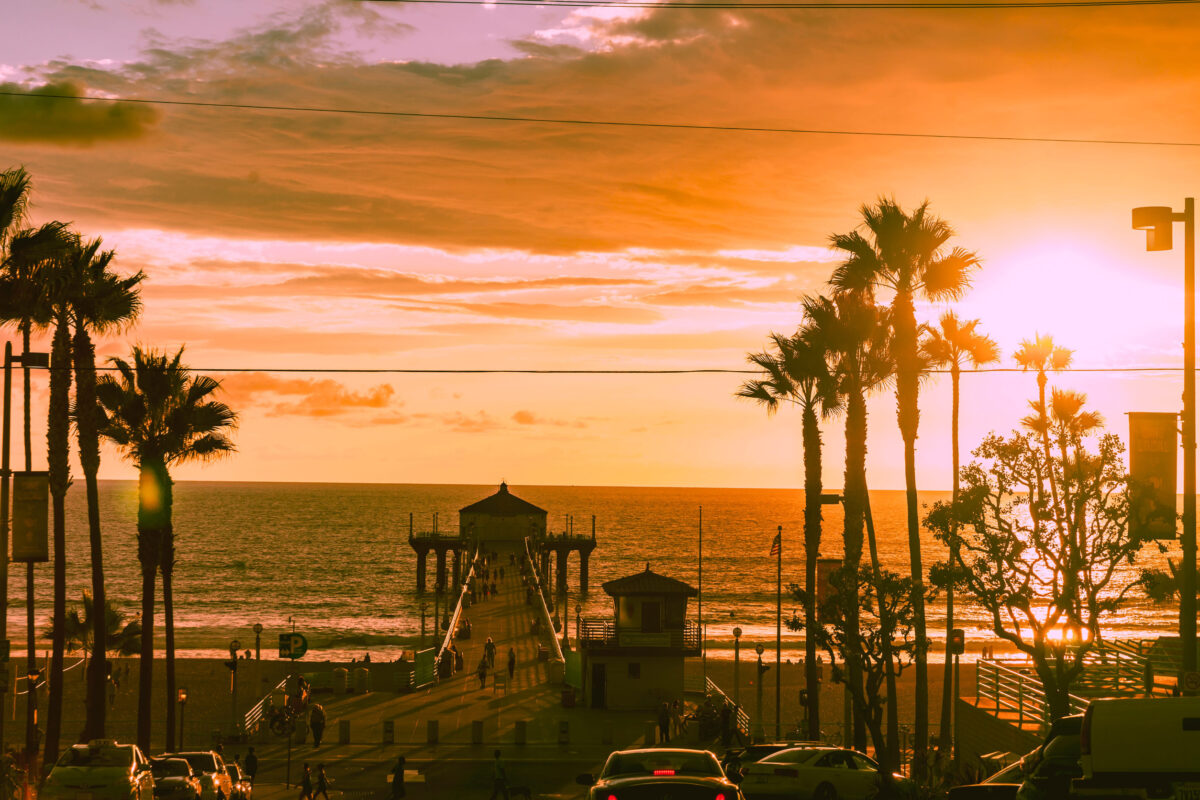
California remains the clearest example of how geography, population, weather, and emissions can collide. The state appears repeatedly in national pollution rankings, especially in Southern California and the Central Valley. Los Angeles-Long Beach ranks as the most ozone-polluted metro area, and places such as Bakersfield, Visalia, Fresno, San Diego, and San Bernardino continue to appear across ozone and particle pollution categories.
The problem is not just one source. California has massive traffic volumes, ports, freight corridors, warehouses, agricultural activity, oil production, and wildfire smoke. In the San Joaquin Valley, surrounding mountains trap pollutants, and hot weather helps ozone form. That means pollution can sit over communities even when emissions come from miles away.
California’s air has improved dramatically over the decades, but the state’s worst regions still face some of the country’s most stubborn pollution. The danger is especially serious for children, farmworkers, older adults, outdoor laborers, and people with asthma or heart disease. For many residents, air quality is not an abstract environmental issue. It determines whether kids can play outside, whether workers can breathe safely, and whether families need to run air purifiers during smoke season.
Texas Has a Growing Air Quality Problem Hiding in Plain Sight
Texas earns its place near the top because several major metros now appear in national pollution rankings. Houston, Dallas-Fort Worth, Brownsville-Harlingen-Raymondville, McAllen-Edinburg, Austin-Round Rock, and El Paso-Las Cruces each show different forms of air-quality stress. That matters because Texas is not just large. It is fast-growing, energy-heavy, highway-dependent, and industrially powerful.
Houston’s problem is especially sharp because it combines petrochemical activity, port traffic, vehicle emissions, heat, and stagnant weather. Dallas-Fort Worth faces its own ozone and particle pollution challenges because of rapid population growth, sprawling highways, construction, and freight movement. Border regions such as Brownsville and McAllen also rank highly in particle pollution, making Texas more than a one-city story.
The state’s air quality challenge is tied to growth itself. More people mean more cars, more construction, higher electricity demand, more warehouses, and more pressure on already-strained urban air basins. Texas has cleaner days in many rural areas, but its metro pollution footprint is expanding. That makes the state one of the most important air quality battlegrounds in America.
Oregon’s Clean Image Gets Complicated by Smoke and Particle Pollution

Oregon has a reputation for forests, rivers, mountains, and clean outdoor living. That image is real in many places, but it does not tell the whole story. Eugene-Springfield ranks among the worst cities for year-round particle pollution, and Medford-Grants Pass, Bend, and other Oregon-linked metro areas appear in particle pollution rankings as well.
Wildfire smoke is one of Oregon’s biggest modern air quality threats. Smoke can quickly push PM2.5 levels into dangerous territory, and it does not respect city limits. A community can be far from the flames and still breathe unhealthy air for days because smoke can travel across valleys and urban areas.
Wood burning, diesel soot, outdoor burning, road traffic, and industrial sources also add to the problem. In some Oregon communities, winter air can become especially unhealthy when smoke and emissions settle close to the ground. The state is not as dirty as a heavy industrial corridor, but its particle pollution problem is serious enough to challenge the clean-air image many Americans still carry.
Arizona’s Heat Turns Pollution Into a Daily Health Concern
Arizona’s air quality issues are closely tied to heat, sun, dust, and rapid growth. Phoenix-Mesa ranks among the most ozone-polluted metro areas, and Maricopa County appears on the list of counties with failing grades across all three pollution measures. That makes Arizona a major air-quality concern, especially as summers get hotter and the Phoenix area continues to expand.
Ozone thrives in sunlight. When vehicle emissions, industrial activity, chemical vapors, and heat combine, the air can become unhealthy even on days that look clear. Add dry conditions and dust, and Arizona’s air quality problem becomes a mix of invisible smog and visible particles.
The challenge is especially tough because many residents spend time outdoors for work, school, sports, commuting, and daily errands. Construction workers, landscapers, delivery drivers, children, older adults, and people with breathing conditions face a higher risk during bad air days. Phoenix’s growth has created jobs and opportunities, but it has also made clean air harder to protect.
Alaska Shows How Cold Weather Can Trap Dangerous Pollution
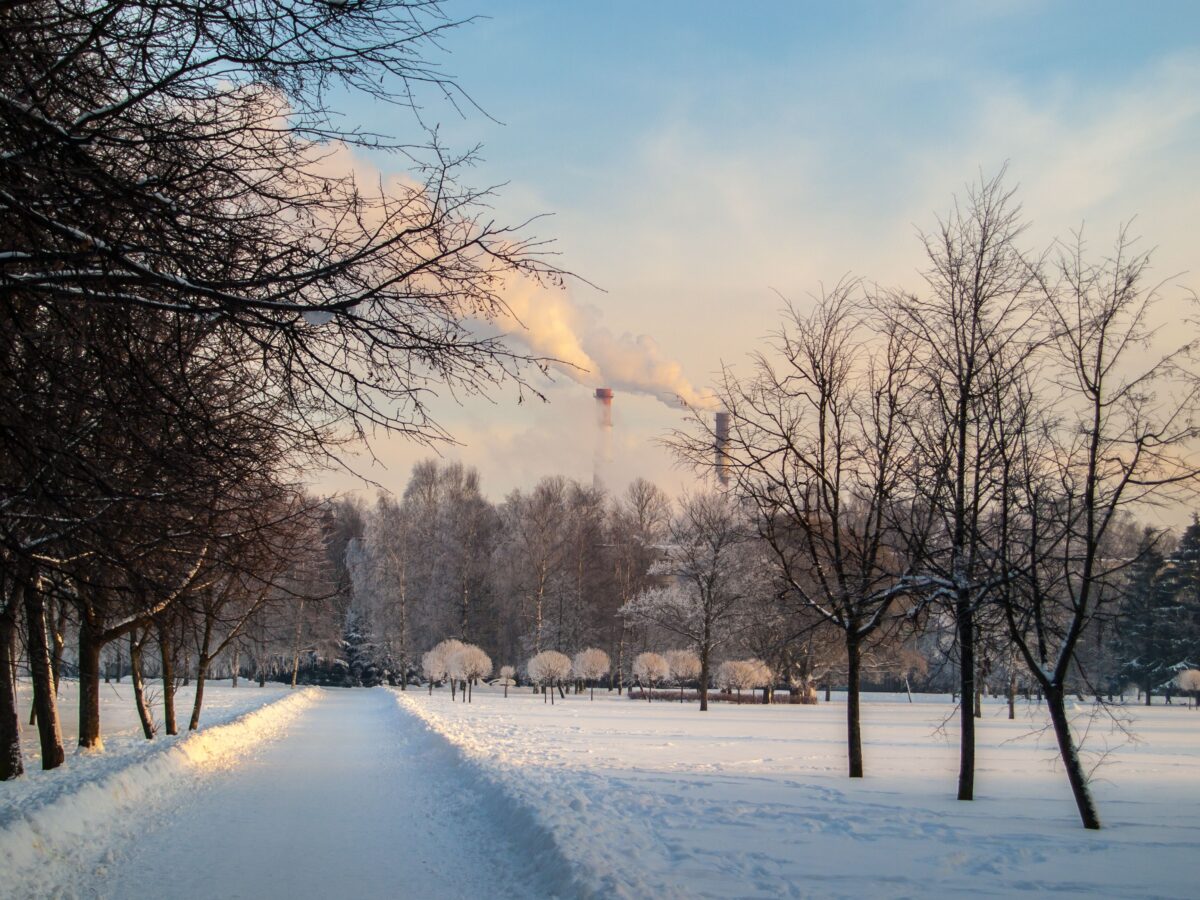
Alaska may seem like an unlikely state on a worst-air list because it has wide-open landscapes and a small population compared with California or Texas. Yet Fairbanks-College ranks at or near the top for short-term particle pollution, and Fairbanks North Star Borough appears as the worst county for daily PM2.5. That makes Alaska one of the clearest examples of how local conditions can overwhelm a state’s natural image.
The main issue is winter particle pollution. In cold months, residents often rely on wood burning for heat. Temperature inversions can trap smoke close to the ground, leaving communities under a layer of polluted air. The result can be harsh, concentrated exposure in a place many outsiders imagine as pristine.
Alaska’s problem is not statewide in the same way as California’s. It is more localized, but the pollution can be intense where it happens. Fairbanks shows that the worst air quality is not always caused by traffic jams or factories. Sometimes it comes from heating homes, frozen weather, and a landscape that traps smoke.
Pennsylvania’s Industrial Past Still Shadows Its Air
Pennsylvania has improved since the worst days of coal smoke and heavy industry, but the state still faces serious problems with ozone and particle pollution. Pittsburgh, Lancaster, Philadelphia-Reading-Camden, and Allegheny County appear in national pollution rankings. Several Pennsylvania counties also show failing grades across multiple pollution measures.
The state’s challenge stems from a long industrial legacy, major highways, power generation, freight movement, urban density, and pollution that crosses state lines. Western Pennsylvania still carries industrial and energy-related burdens, while the Philadelphia region faces traffic congestion, dense development, and regional ozone pollution.
Pennsylvania also sits in a part of the country where emissions from neighboring states can mix and travel. That means local air quality is shaped by more than local choices. Even so, residents in the most affected counties feel the consequences firsthand, especially during summer ozone days and periods of high particle levels that aggravate asthma, COPD, and heart conditions.
Ohio’s Air Quality Problem Is Easy to Underestimate
Ohio does not always dominate national headlines on pollution, but several of its counties and metro areas appear in troubling air-quality rankings. Cleveland-Akron-Canton, Cincinnati-Wilmington, Cuyahoga County, and Butler County all point to a state where industrial activity, traffic, regional emissions, and older infrastructure still matter.
Ohio sits in a transportation-heavy and manufacturing-heavy region. Highways, diesel trucks, power generation, factories, and urban congestion all contribute to the pollution mix. In warmer months, ozone becomes a bigger concern. In colder seasons, particle pollution can rise when stagnant air holds emissions near the surface.
The issue is not that every part of Ohio has terrible air. The concern is that enough populated regions show repeated stress to put the state on the watch list. For families in Cleveland, Cincinnati, and other affected areas, air quality warnings are not just numbers on a weather app. They can change school recess, sports practices, outdoor work, and daily health routines.
Indiana Faces Pollution Pressure From Industry, Highways, and Regional Smog
Indiana’s air quality concerns are tied to manufacturing, transportation, power generation, and its location in the industrial Midwest. Indianapolis-Carmel-Muncie appears in year-round particle pollution rankings, and Indiana counties such as Lake and Marion show up among counties with failing grades across pollution measures.
Lake County is especially important because it sits near the Chicago metro area and a heavy industrial corridor. Pollution in this region does not stop at state borders. Emissions from traffic, industry, and power generation can move across communities and contribute to ozone and particle pollution over a wider area.
Indiana’s challenge is the kind of pollution that can feel ordinary because it is built into daily life. Highways, factories, warehouses, trucks, and energy systems keep the economy moving, but they also create emissions that can harm lungs and hearts. That tradeoff makes Indiana one of the states where air quality deserves more attention than it often receives.
Michigan’s Particle Pollution Problem Centers on Dense Urban Corridors
Michigan’s air quality concerns are strongest in its major metro corridors. Detroit-Warren-Ann Arbor ranks among the most polluted cities for year-round particle pollution, and Wayne County appears on lists of counties with failing grades across all three pollution measures. That puts Michigan in the group of states where air quality trouble is concentrated but significant.
Detroit’s region has a long industrial history, heavy road traffic, freight movement, older infrastructure, and cross-border air pollution dynamics. Emissions from vehicles, factories, power sources, and commercial activity can combine with weather patterns to create unhealthy exposure.
Michigan also shows why state averages can hide local risk. A person living near a lake or forest may experience very different air than someone near a freeway, industrial zone, or dense urban corridor. For the most exposed communities, especially lower-income neighborhoods and communities of color, pollution can become part of daily life rather than an occasional warning.
Washington’s Wildfire Smoke Has Changed the Air Quality Conversation
Washington does not fit the old image of a polluted state built around factories and smog. Its modern air quality problem is increasingly tied to wildfire smoke, wood smoke, transportation, and regional particle pollution. Seattle-Tacoma and Yakima appear in short-term particle pollution rankings, showing how smoke events can push even green, coastal, and mountain-adjacent states into dangerous territory.
Wildfire smoke has changed the rules. A state can spend years reducing emissions from cars and power plants, then face days or weeks of unhealthy air when smoke drifts across the region. Fine particles from smoke can enter homes, schools, workplaces, and vehicles, which means staying indoors does not always solve the problem without filtration.
Washington’s risk is likely to remain tied to climate, fire behavior, and regional smoke movement. Cleaner vehicles and industrial controls still matter, but wildfire readiness now belongs at the center of air quality planning. Residents need reliable alerts, cleaner indoor spaces, better filters, and serious public planning for the smoke season.