The American Pride Crisis Is No Longer Just Political Noise. 8 Reasons Why
American patriotism used to feel simple. A flag on the porch, a hand over the heart, a July Fourth cookout, a military flyover, a school child learning the national anthem, and a shared belief that the country was messy but still moving toward something better. That version of national pride has not vanished, but it has cracked in public view.
We are now living through a strange American moment in which pride in the country depends heavily on who is in power, which news channel someone watches, how old they are, where they live, and whether they believe the country still protects people like them. That is not a small cultural shift. It is a warning sign.
The question is no longer simply, “Are Americans proud?” The sharper question is, “What has happened to America when pride itself has become partisan?” A country can survive disagreement. It can survive bad leaders, court fights, economic fear, protests, and bitter elections. What becomes more dangerous is when millions of citizens no longer see the same country when they look at the flag.
American pride has fallen because trust has fallen with it.
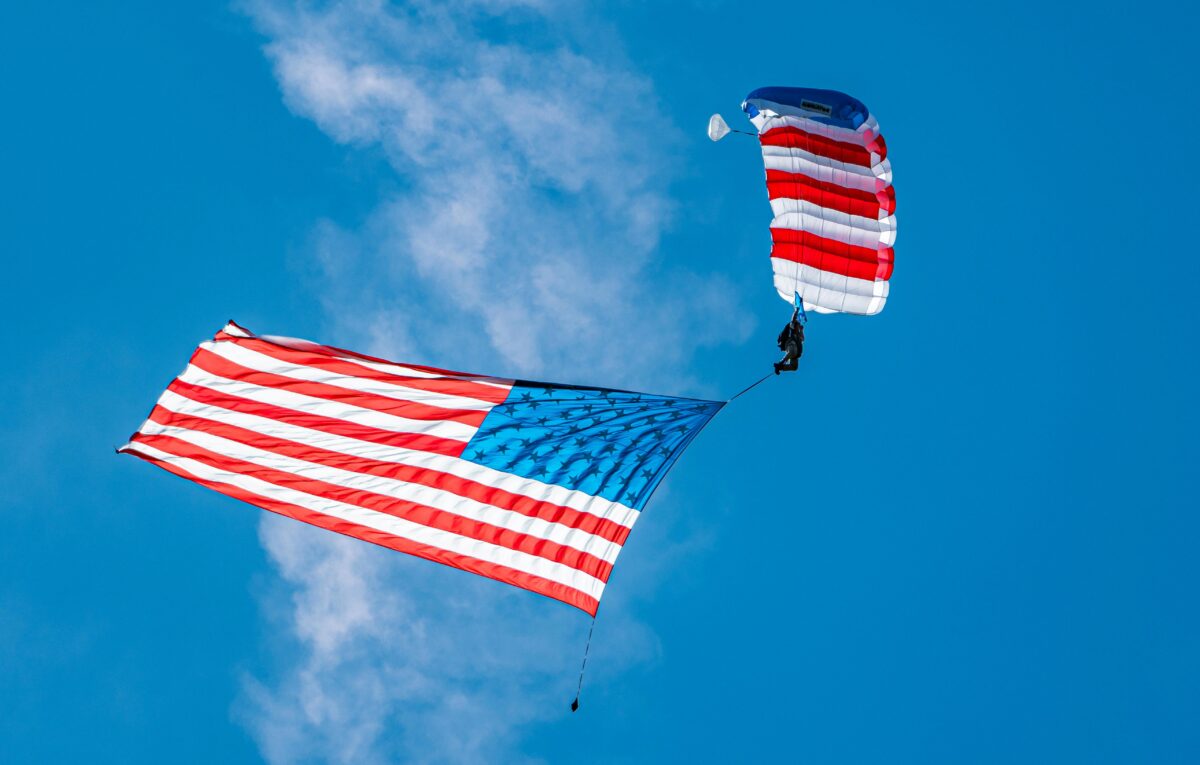
Patriotism does not grow in empty slogans. It grows when people believe the country’s institutions are fair, its leaders are accountable, its rights are protected, and its promises still mean something. When those beliefs weaken, pride becomes harder to perform.
That is why the decline in American pride cannot be separated from the collapse in public trust. Many Americans no longer believe Washington works for ordinary people. Many no longer believe courts are above politics. Many no longer believe Congress can solve basic problems without turning every issue into a tribal fight. This is the soil where national pride begins to dry out.
A person can still love America deeply and feel embarrassed by what America has become at times. That tension is everywhere now. Veterans who served under the flag feel uneasy. Younger voters see a country that talks about freedom but fights over books, bodies, voting, race, speech, immigration, and protest. Older Americans who remember different political eras see a nation louder, angrier, and less gracious than the one they thought they knew.
Political leaders have made patriotism feel like a loyalty test.
One of the most damaging changes in American life is the way political leaders have turned patriotism into a partisan badge. Instead of asking citizens to serve the country, many politicians ask citizens to serve a movement, a personality, a party, or a grievance.
That is a dangerous inversion. In a republic, loyalty belongs first to the Constitution, not to a leader. It belongs to lawful institutions, free elections, civil rights, public accountability, and the peaceful transfer of power. When patriotism becomes personal loyalty to one political figure, the country moves away from citizenship and toward obedience.
This is why so many Americans feel uneasy even when they cannot put the feeling into perfect language. They sense that something has shifted. Political identity has become emotional identity. Disagreement feels existential. Compromise sounds like weakness. Institutions are trusted only when they deliver the desired outcome.
A democracy cannot function that way for long. It needs citizens who can lose an election without rejecting the nation. It needs winners who can govern without punishing half the country. It needs leaders who understand that patriotism is not a costume for power.
Young Americans are not rejecting America for no reason.
The generational divide in American pride is one of the clearest signs that something deeper is happening. Younger Americans came of age in an era shaped by school shootings, expensive housing, student debt, climate anxiety, pandemic disruption, political violence, social media conflict, racial reckoning, and constant warnings that democracy itself is under strain.
Older generations often ask why young people are less patriotic. The better question is what version of America young people have actually experienced. Many Gen Z and millennial adults did not grow up with the post-World War II confidence that shaped older Americans. They grew up watching institutions fail in real time. They watched public health become a culture war. They watched college become costly, rent become punishing, and entry-level adulthood become harder to afford.
For them, patriotism cannot be built on nostalgia for things they never lived through. It has to be earned through visible fairness, economic opportunity, safety, honesty, and rights that feel secure rather than conditional. A country that wants young people to love it cannot simply scold them into pride. It has to give them reasons to believe the future is not already rigged against them.
That does not mean young Americans are hopeless or disengaged. Many are deeply involved in activism, voting, organizing, mutual aid, campus debate, local politics, and digital campaigns. Their patriotism may not always look like older patriotism, but it often carries the same basic demand: make the country live up to what it says about itself.
Veterans are forcing America to face a harder question.
Few voices carry more weight in a debate on patriotism than veterans’. When someone has worn the uniform, served under orders, sacrificed years of life, and represented the country abroad, their doubts deserve more than a lazy accusation of disloyalty.
A veteran questioning American pride is not the same as someone casually complaining about politics. It is a person measuring the country against the values they were told they served. Freedom, constitutional order, democratic stability, dignity, restraint, global respect, and rule of law are not abstract words to people who took an oath.
That is why veteran unease matters. It exposes the gap between patriotic ceremony and civic reality. America loves to thank veterans at airports, stadiums, parades, and campaign events. Yet some veterans now look at the political climate and wonder whether the country is honoring the democratic principles service members were asked to defend.
The uncomfortable truth is that patriotism cannot be reduced to supporting troops after they return home. It must also mean protecting the system they served. If veterans are worried about the health of democracy, the country should listen before the concern becomes another partisan talking point.
The flag cannot hide the anger beneath it.
American politics has become skilled at using patriotic imagery while avoiding patriotic responsibility. Flags fill campaign stages. Leaders invoke soldiers, founders, freedom, faith, and sacrifice. Crowds chant about saving the country. Yet beneath the symbolism, Americans often treat one another with open contempt.
That contradiction is one reason pride feels hollow to many people. A nation cannot shout about liberty while cheering cruelty. It cannot praise the Constitution while ignoring checks and balances. It cannot celebrate freedom while treating disagreement as treason. It cannot claim moral leadership while normalizing threats, lies, and public humiliation.
Real patriotism is not proven by how loudly someone sings the anthem. It is proven by how they treat the rights of people they dislike. It is proven by whether they accept election results, respect lawful dissent, reject political violence, and allow neighbors to belong even when they vote differently.
The flag should be a symbol of shared citizenship. Too often, it now feels like a border drawn inside the country itself.
The Constitution is becoming the center of the pride debate.
When Americans talk about losing pride, they often return to constitutional anxiety. They worry about free speech, protest rights, equal protection, due process, religious liberty, privacy, voting access, and limits on executive power. These worries do not all come from one side, nor do they all focus on the same threat.
That is exactly why the Constitution matters. It is supposed to outlast temporary power. It is supposed to restrain winners and protect losers. It is supposed to keep political victory from becoming permission to crush opponents.
When citizens believe constitutional protections are weakening, patriotism becomes defensive. People stop asking, “How do we celebrate America?” and start asking, “How do we protect America from itself?” That shift changes the emotional temperature of the country.
The coming years will test whether Americans still understand constitutional patriotism. That form of patriotism is less flashy than flag-waving, but far more important. It says the country is not defined by one president, one party, one court, one election, or one cultural mood. It is defined by a system of rights and restraints that citizens must defend even when it frustrates them.
Economic pressure is quietly weakening national pride.
Patriotism also suffers when daily life feels unaffordable. People may love their country, but love becomes complicated when rent consumes paychecks, groceries feel punishing, health care feels fragile, and retirement looks uncertain.
The American Dream has always been one of the country’s strongest patriotic engines. If people believe hard work can still build a stable life, they are more likely to feel invested in the nation’s promise. If that belief weakens, pride weakens with it.
This is especially true for younger adults. Many are told that America is the land of opportunity, only to face housing markets that feel out of reach, wages that struggle to cover costs, and career paths that seem less secure than their parents’ lives. The gap between national mythology and lived reality creates resentment.
A patriotic country cannot survive on ceremony alone. It must offer a believable future. People need to feel that their children can live safely, work with dignity, afford shelter, receive care, and participate in public life without being crushed by fear. Without that, patriotism becomes a slogan printed over anxiety.
Protest is not the enemy of patriotism.
One of America’s oldest mistakes is treating protest as disrespect. In reality, protest has often been one of the country’s most patriotic forces. The abolitionist movement, labor movement, women’s suffrage movement, civil rights movement, antiwar protests, disability rights movement, LGBTQ rights movement, and many other struggles pushed America closer to its promises.
Peaceful protest says the country is still worth arguing with. It says citizens still believe public pressure can matter. It says the Constitution is not museum language, but living protection.
That does not mean every protest is wise, fair, or effective. It does mean the right to dissent is central to American identity. A country that fears protest fears accountability. A country that protects protest protects its own democratic bloodstream.
Americans who march, write letters, vote, organize, speak at school board meetings, challenge officials, publish criticism, or hold signs outside government buildings are not automatically attacking America. Many are trying to repair it.