3 Shots, 4 Officers, No Bodycams: Corey Ruiz Killing Puts Madison Police Under Scrutiny
A call about suspected property crime became a fatal confrontation involving 4 officers, 1 failed Taser and 3 reported gunshots on a busy Wisconsin street. Now, 1 grieving family and hundreds of protesters are demanding to know whether Corey Ruiz had to die.
At approximately 1:34 p.m. on July 22, 2026, Madison police officers responded to reports that someone was stealing bicycles and checking the doors of parked vehicles in the city’s Marquette neighborhood. By the end of the encounter, 38-year-old Corey Durell Ruiz had been shot by police and transported to a hospital, where he was pronounced dead.
The deadly encounter lasted only a fraction of the afternoon, but it produced at least 3 separate investigations, days of protests and a national debate over what was captured on video. It also exposed a critical evidence gap: none of the 4 officers involved was wearing a body camera.
As we examine the available evidence, the case turns on 2 competing accounts. Police say Ruiz pulled a fixed-blade knife and injured an officer. At the same time, his family’s attorney argues that the cellphone recordings show an unnecessary escalation by officers who already had Ruiz surrounded.
The 1:34 p.m. call that became a fatal confrontation
Madison police said officers were initially dispatched after receiving reports involving suspected bicycle theft and attempts to open parked vehicles. Officers located Ruiz, but police said he fled on 1 bicycle, cutting through backyards before officers encountered him again near South Baldwin and Williamson streets at approximately 1:35 p.m.
What happened as Ruiz came off the bicycle remains 1 of the investigation’s first unresolved questions. Police said he either fell or was pulled from the bike, but the department acknowledged that investigators had not yet determined which version was accurate.
A physical struggle involving 4 officers then unfolded in the middle of the intersection. Police Chief John Patterson said Ruiz produced a fixed-blade knife and injured 1 officer, while a second officer suffered another injury that authorities did not believe came from the knife.
That allegation is central because the reported knife injury could determine whether the officer’s use of deadly force was considered legally reasonable. Ruiz’s family and civil rights attorney Ben Crump have questioned whether the available videos clearly prove that a knife posed an immediate threat during the final seconds.
4 officers, 1 failed Taser and 3 reported shots
Police said 1 officer attempted to use a Taser during the struggle, but the less-lethal device failed to bring Ruiz under control. The officer whom police say was injured by the knife then fired his handgun while the other 3 officers remained close to Ruiz.
Bystander recordings circulating online contain the sound of 3 gunshots, according to multiple reports. The recordings show officers surrounding Ruiz at close range, but they do not clearly establish when the alleged knife appeared or precisely what the shooting officer could see.
Only 1 of the 4 officers fired a gun, police said. The department described that officer as a veteran, and the Associated Press reported that he had served with Madison police for 11 years.
Officers provided emergency medical assistance before Ruiz was transported to a hospital. Despite those efforts, the 38-year-old was pronounced dead, turning a suspected property-crime response into an officer-involved death investigation within the space of 1 afternoon.
All 4 officers were placed on administrative leave after the shooting. That step is standard following a fatal police encounter and does not, by itself, mean that any of the officers has been disciplined or accused of a crime.
The most important camera was never there.
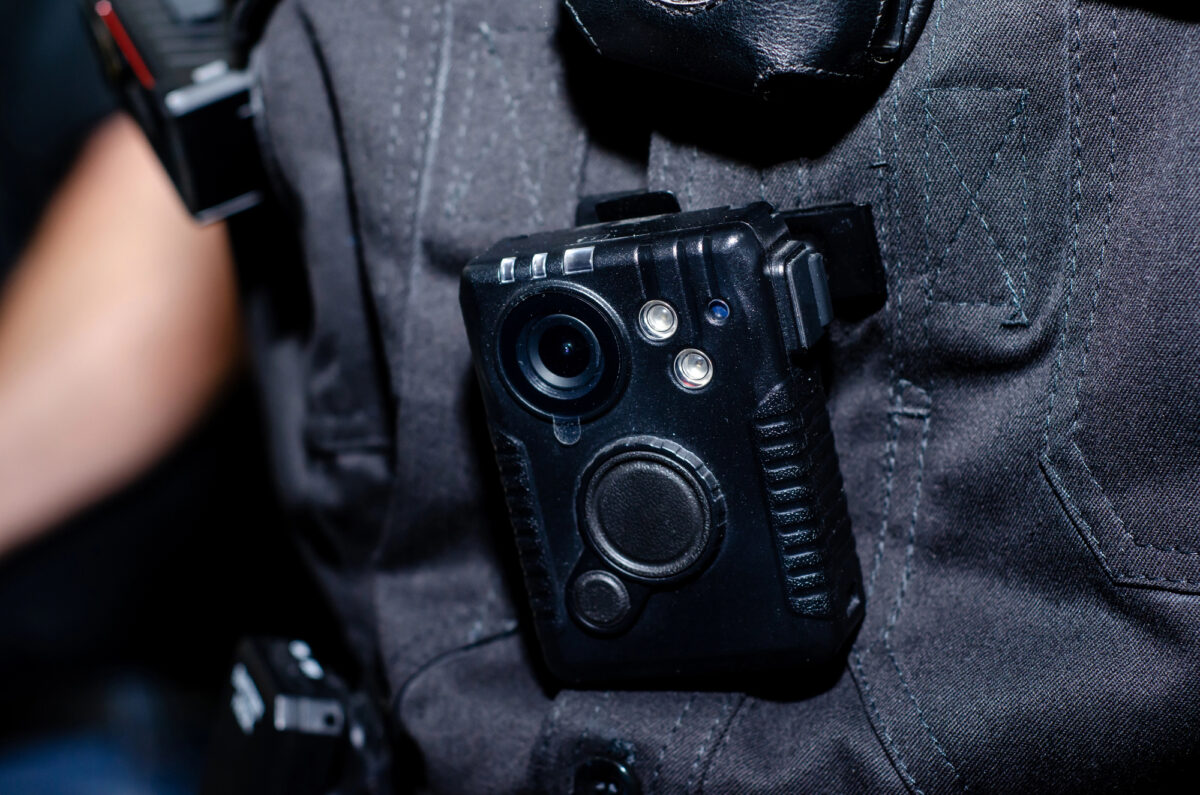
Several civilians recorded the confrontation, yet there is no body-camera footage showing the officers’ direct perspective. Madison has a police department of nearly 500 officers, but regular patrol officers are not currently required to use body-worn cameras.
That absence is striking because Madison officials have debated body cameras since at least 2016. After nearly 10 years of discussions, pilot programs and cost concerns, the city entered one of its most closely watched police investigations without an official camera attached to any of the officers involved.
Madison conducted a 90-day body-camera pilot in 2024, but the limited trial did not produce major measurable changes in officer behavior. Officials also acknowledged that a test lasting only about 3 months may have been too short to measure long-term changes in public trust or police practices.
A city estimate placed the cost of approximately 450 cameras, software and related equipment between $3.2 million and $6.7 million. Madison officials also noted that a possible federal grant could offset as much as $900,000, although staffing and long-term data management would create additional expenses.
A newer proposal would provide approximately $414,800 for a body-camera program phased in over 3 years. City leaders have indicated that funding could appear in a budget beginning in January 2027, but that potential rollout will come too late to provide an officer-level recording of Ruiz’s final encounter.
Bystander videos provide evidence, but not the full timeline.
The cellphone footage has become the case’s most influential evidence because it gives the public a close view of the struggle. However, each recording captures only 1 angle, begins after part of the encounter has already occurred, and may not show what was happening beneath the cluster of 4 officers.
Patterson warned that the viral footage represents only “one perspective” and said investigators were reviewing additional recordings that had not been widely circulated. As of July 25, officials had not publicly described how many additional videos existed or whether any recording clearly showed the alleged knife injury.
Investigators will likely compare every available second of video with 911 calls, police radio traffic, witness accounts, medical records, and physical evidence. They will also need to determine whether the Taser probes connected, when the gun was fired, and whether the immediate threat was still present during all 3 reported shots.
The videos may eventually establish parts of the timeline, but they cannot automatically answer every legal question. A camera positioned several feet away may show the wider struggle while still missing the movements of 1 hand, the location of a knife, or the view available to the officer who fired.
Ruiz’s 13-year-old daughter becomes the human face of the case.
Ruiz was more than the subject of a police incident report or a figure in a viral video. He was the father of a 13-year-old daughter, Kah’liyah Aliomar, who joined relatives as they publicly mourned a man they knew as a father, son and brother.
The shooting happened only a few blocks from the teenager’s home, and near a route she had used while walking to school. For 1 child, the intersection at Baldwin and Williamson is no longer simply part of a neighborhood but the place where her father’s life ended.
Ruiz’s mother, Elsa Ruiz, told reporters she never expected to bury her son before he buried her. Standing beside the grieving family, Crump delivered a 5-word statement that captured why the public evidence matters: “Thank God there was video.”
Crump has called for criminal charges against the officer who fired the 3 reported shots. He characterized the killing as unnecessary and unconstitutional, while police have continued to maintain that the officer fired after being injured by a knife.
Crump’s statements represent the family’s legal position, not a finding by prosecutors. As of July 25, 2026, no officer had been criminally charged, and investigators had not announced a final determination about whether the shooting was justified.
Hundreds protest from the intersection to the Capitol.
Within approximately 24 hours of the shooting, hundreds of residents gathered for vigils and demonstrations in Madison. Protesters placed flowers at the intersection, marched toward the Wisconsin State Capitol, and demanded the immediate release of evidence and officer identities.
The demonstrations disrupted normal activity in the capital city, including the cancellation of 1 outdoor concert near the Capitol. The public response grew as cellphone footage spread across social media and national civil rights organizations began paying closer attention.
Roughly 20 protesters interrupted Patterson’s July 23 news conference, questioning whether authorities could conduct a transparent investigation. Some demonstrators demanded arrests, while others in the room wanted the police chief to finish explaining what officials knew at that stage.
The protests have also carried a racial-justice message because community advocates identified Ruiz as Black. His death revived comparisons with the national demonstrations that followed George Floyd’s killing in 2020, although investigators have not announced evidence establishing racial motivation in the Madison shooting.
Why a homicide investigation does not automatically mean murder
Officials have described the case as a homicide investigation, but that legal term does not mean investigators have already concluded that a crime occurred. In its simplest form, homicide means that the actions of 1 person caused the death of another person, whether the killing was unlawful, justified, or excusable.
Wisconsin Statute 175.47 requires an officer-involved death to be investigated by at least 2 investigators who do not work for the agency employing the officers involved. That requirement is intended to prevent Madison police from controlling the criminal investigation into their own personnel.
The Wisconsin Department of Justice Division of Criminal Investigation will collect evidence and submit its completed report to the Dane County district attorney. If the district attorney finds no basis for prosecution, Wisconsin law generally requires the investigative report to be released after legally protected information is removed.
A separate review is also being conducted by Madison’s Office of the Independent Police Monitor. The office provides civilian oversight and can examine whether the actions of the 4 officers complied with Madison Police Department policies, even if prosecutors ultimately decide that no criminal charges are warranted.
Independent Police Monitor Aeiramique Glass said on July 23 that her office had not yet received the officers’ identities or the department’s evidence. That delay became another point of tension because the office was created specifically to provide an additional layer of accountability beyond the 1 state criminal investigation.
The legal test will focus on a few critical seconds.
The constitutional standard comes from the U.S. Supreme Court’s 1989 Graham v. Connor decision. Under that ruling, excessive-force claims are judged under the Fourth Amendment’s “objective reasonableness” standard, based on what a reasonable officer would have perceived at the scene.
Investigators will therefore focus on whether the officer reasonably believed Ruiz posed an immediate risk of death or serious injury when the 3 shots were fired. The reported knife, the officer’s wound and the position of Ruiz’s hands will carry more legal weight than anger generated by an incomplete video clip.
The opposite is also true: the allegation that Ruiz possessed a knife does not automatically settle the case. Investigators must still determine whether the threat remained immediate during each of the 3 shots, whether Ruiz had access to the weapon, and whether less-lethal options remained reasonably available.
Court records describing Ruiz’s past convictions have entered the public discussion, but his previous conduct cannot retroactively justify the shooting. The constitutional question concerns what the officer knew and reasonably perceived during the encounter on July 22, not everything Ruiz had done during the previous 38 years of his life.
The 3rd police killing in the neighborhood since 2012
Ruiz’s death is reportedly the 3rd fatal police shooting in the same Madison neighborhood since 2012. That history helps explain why residents reacted so quickly and why another death on Williamson Street reopened wounds that had never fully disappeared.
In 2012, Madison police officer Stephen Heimsness fatally shot Paul Heenan after Heenan entered a neighbor’s home while intoxicated. Investigators ultimately cleared the officer of criminal wrongdoing, but the case intensified local debates about police judgment and deadly force.
In 2015, officer Matt Kenny fatally shot 19-year-old Tony Robinson on Williamson Street. The Dane County district attorney later declined to prosecute Kenny, but Robinson’s death helped drive the creation of Madison’s civilian police-oversight system.
Now, 11 years after Robinson’s death and 14 years after Heenan’s, Madison is confronting another fatal encounter in the same part of the city. The question is whether the oversight structures created after those earlier cases can produce greater confidence in the investigation of Ruiz’s death.
7 unanswered questions could decide the case
At least 7 major questions remain unresolved: when Ruiz produced the alleged knife, whether it was in his hand when the shots were fired, how the officer was injured, why the Taser failed, where the bullets struck Ruiz, what the unreleased videos show, and whether officers followed department policy.
Forensic testing could answer several of those questions through DNA analysis, fingerprints, wound examination and bullet-trajectory findings. Investigators may also be able to synchronize the 3 gunshots with dispatch recordings and multiple cellphone videos to reconstruct the final seconds.
The identity of the shooting officer also remained undisclosed as of July 25. Authorities have said the name will eventually be released, but officials have not announced an exact date or explained when the other 3 officers will be publicly identified.
Patterson’s latest public update, issued at 7:18 p.m. on July 24, said there were no substantive new findings ready for release. He said he would communicate with state investigators at least 1 time each day and share information when legally permitted.
1 death has forced Madison to confront years of delay
The Corey Ruiz case now reaches far beyond a single afternoon or 1 intersection. It has become a test of Wisconsin’s independent-investigation law, Madison’s civilian oversight office, and a body-camera debate that has continued for nearly 1 decade.
For police, the case centers on an allegation that an officer was injured with a knife during a struggle involving 4 officers. For Ruiz’s family, it centers on whether 3 close-range shots were necessary when several officers were already attempting to restrain him.
For Madison, the most uncomfortable statistic may be the simplest: 4 officers were present, 0 body cameras were recording, and 1 man did not survive. Until the physical evidence, complete video record, and investigative findings are released, those numbers will continue to drive grief, protest, and demands for answers.