6 Strange but True Facts About Toilet Paper That Will Make You Look Twice
Toilet paper is one of those household essentials most people barely think about. You buy a pack, put it in the bathroom, and reach for another roll when the current one runs out. Nothing particularly exciting about that, right?
Well, toilet paper has a much stranger story than its everyday reputation suggests. It once came in individually branded sheets, inspired a patent illustration connected to one of the most familiar bathroom arguments, and is now available in colors and sizes that might surprise you.
Some modern versions are even designed specifically for boats and recreational vehicles. Here are six unusual but facts about toilet paper that show just how much variety and history can fit into an ordinary household item.
An Early American Toilet Paper Was Marketed as Medicated Paper
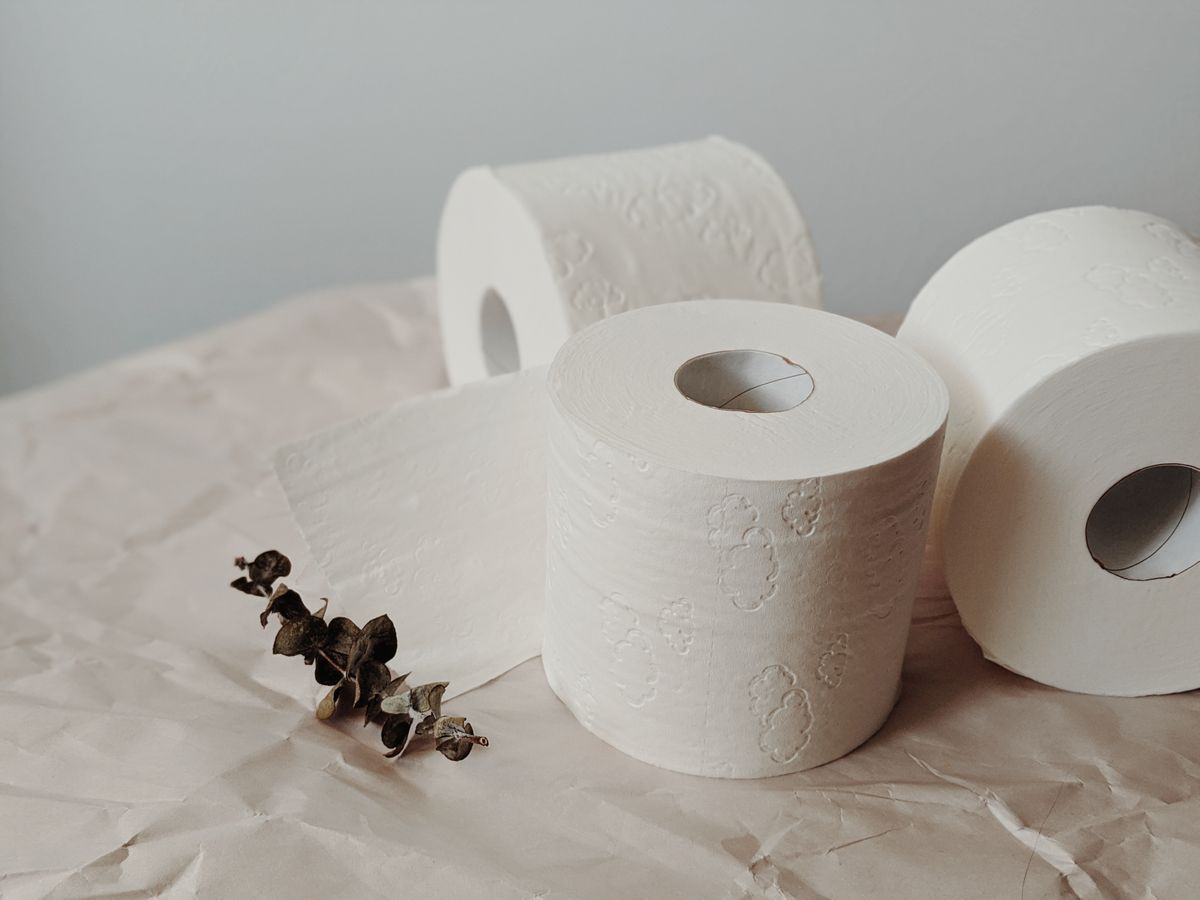
Long before toilet paper became the familiar bathroom roll we use today, an American inventor introduced a product that looked quite different.
In 1857, New Yorker Joseph Gayetty introduced a product called Gayetty’s Medicated Paper, also advertised as “Medicated Paper for the Water-Closet.” It contained aloe and came as individual flat sheets rather than perforated rolls.
Another unusual detail: Gayetty printed his name on every sheet. That meant his branding went directly onto the product rather than appearing only on its packaging.
According to Cottonelle’s historical account, the product sold for 50 cents for 500 sheets. A separate historical record from Lower Manhattan documents an 1859 advertisement offering 1,000 sheets for $1.
The word “medicated” was part of how the product was marketed at the time. It should not be confused with evidence of a proven medical treatment.
Today, bathroom products come in all kinds of variations, but Gayetty’s individually branded sheets show that manufacturers were experimenting with toilet paper long before the modern roll became commonplace.
A 19th-Century Patent Shows Toilet Paper Hanging Over the Roll
If you have ever disagreed with someone about whether toilet paper should hang over or under the roll, you might enjoy this historical detail.
In 1891, inventor Seth Wheeler received U.S. Patent No. 459,516 for a toilet paper roll design. The patent includes an illustration showing the loose end of the paper hanging over the front of the roll.
That image is particularly interesting because the over-versus-under debate remains a familiar household disagreement today.
However, the patent covers more than the direction the paper hangs. Wheeler’s invention focused on the way perforated sheets connected and separated. The arrangement was designed to make it easier to pull away an individual sheet.
So, while the illustration gives fans of the over-the-roll position something to point at, it does not establish an official bathroom rule.
It is simply a fascinating example of how even the small details of an everyday household product were being worked out more than a century ago.
Black Toilet Paper Is Actually Available
White toilet paper is so familiar that most people probably never think to buy another color. But if you want something different for your bathroom, black toilet paper is real.
Renova sells black toilet paper designed to stand out from traditional bathroom tissue. Its black rolls are available in a three-ply version, with 140 embossed sheets per roll.
One listed package contains six rolls, with an observed price of $21.99 on the cited retail listings.
The product is an interesting example of how an ordinary household essential can become part of bathroom decoration. Instead of treating toilet paper as something that needs to be hidden away, a homeowner could use a black roll as a noticeable detail in a modern-looking powder room.
Of course, it is not necessarily a practical choice for everyone. Traditional white toilet paper remains the familiar option, while black tissue is more of a decorative alternative.
Still, it is strange to think that something most people buy without much thought can also be sold as a design statement.
One Toilet Paper Roll Can Measure 12 Inches Across
Most toilet paper rolls are small enough to fit comfortably on a standard bathroom holder. Charmin, however, has taken a very different approach with its Forever Roll.
The Charmin Forever Roll measures 12 inches in diameter and contains 1,700 two-ply sheets. That makes it considerably larger than the ordinary roll most households are accustomed to buying.
Charmin also sells a starter kit containing two rolls and a freestanding holder. The listed kit price is $39.99, while a separate three-roll refill pack is listed at $34.99.
The included holder is approximately 21 inches tall and has a brushed stainless-steel finish. It is designed specifically to accommodate the oversized rolls.
Charmin markets the product as lasting up to a month, although how long it actually lasts depends on household usage.
For anyone who dislikes replacing bathroom supplies often, the idea might sound appealing. However, the large size also means it needs its own dedicated holder rather than fitting into every standard toilet paper dispenser.
It is certainly not the kind of roll you would overlook when walking into a bathroom.
Some Toilet Paper Is Designed Specifically for Boats and RVs
Not all toilet paper is designed for the same bathroom setup. Some products are made for the particular needs of recreational vehicles and marine bathrooms.
Scott’s Rapid-Dissolving Toilet Paper is one example. The product is marketed specifically for RVs and boats, where toilet systems can differ from the plumbing found in ordinary houses.
Scott states that its tissue dissolves 10 times faster than leading one-ply premium toilet paper. That comparison comes from the manufacturer’s own product information, not an independent comparison across toilet paper brands.
A Walmart listing shows a four-double-roll package priced at an observed $3.48, with 231 sheets per roll.
The main difference is the product’s emphasis on breaking apart quickly rather than simply focusing on softness or appearance.
It reminds us that toilet paper manufacturers consider where and how their products will be used. A roll intended for a recreational vehicle may have different priorities from one designed for a large family bathroom.
And while rapid-dissolving tissue can be useful for certain toilet systems, it does not guarantee that plumbing problems or clogs will never happen.
Toilet Paper Can Be Made Entirely From Bamboo
When people think of toilet paper, wood pulp is probably the first material that comes to mind. But bamboo is another material used to make bathroom tissue.
Some manufacturers now sell toilet paper made from 100% bamboo fibers. One example is Motherlode Co.’s Premium 100% Bamboo Toilet Paper.
Its product listing describes three-ply tissue with 370 sheets per roll. The rolls are also described as double-length, offering another variation on the familiar bathroom essential.
Toilètte also sells 100% bamboo toilet paper in a three-ply, 370-sheet format.
The interesting part is that the finished product still looks and functions like the toilet paper people recognize, even though the material is different.
Bamboo toilet paper also gives shoppers another option when comparing household paper products. However, choosing bamboo does not automatically mean a product has a lower environmental impact than recycled alternatives. Manufacturing methods, sourcing, and packaging all matter.
It is another example of how manufacturers continue to experiment with the materials used in everyday household products.
An Ordinary Bathroom Essential With an Unusual History
Toilet paper might never become the most exciting item on a shopping list, but its history and modern variations are surprisingly interesting.
From individually branded sheets in the 1850s to oversized rolls, black tissue, and bamboo alternatives, this everyday essential has changed in more ways than most people realize.
And the next time someone starts an argument about which direction the toilet paper should hang, you can bring a little 19th-century patent history into the conversation.