7 Thanksgiving Dishes That Were Invented by Food Companies
Thanksgiving feels like one of the oldest, most traditional meals of the year. Many families believe their menu goes back generations, handed down from great-grandmothers who cooked over wood stoves. In some cases, that’s true. But a surprising number of today’s holiday “classics” were actually dreamed up in corporate test kitchens and printed on the backs of cans, boxes and recipe booklets.
Food companies have always wanted families to buy more of their products, and the holidays were a perfect opportunity. A clever recipe could turn a can of soup or a bag of marshmallows into a Thanksgiving must-have, and it often worked better than any advertisement.
That doesn’t make these dishes any less beloved. Many of them have been on American tables for so long that they’ve become genuine family traditions. Here are seven Thanksgiving favorites that got their start with a food company, and how they ended up on so many holiday menus.
1. Green Bean Casserole
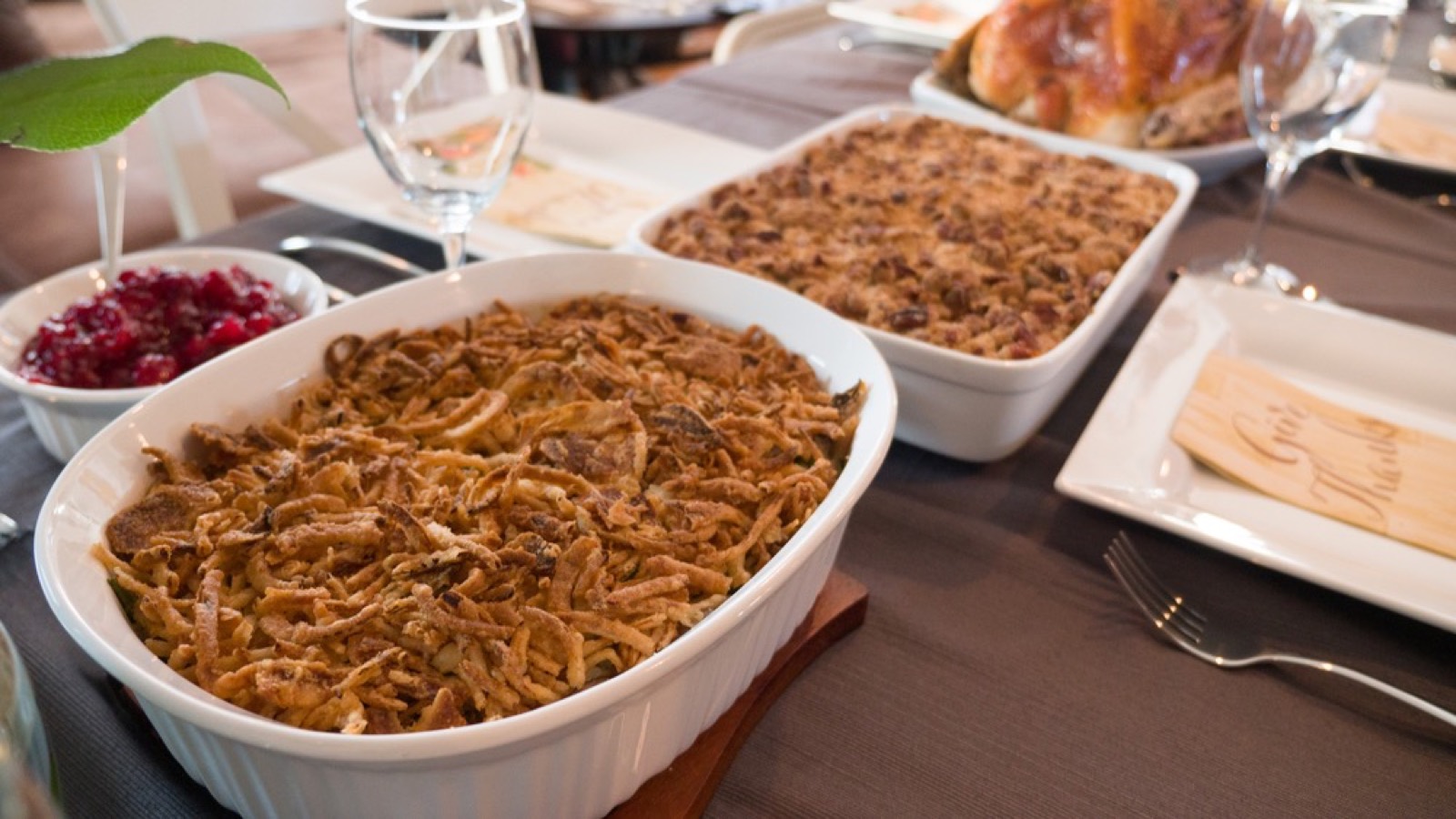
Few side dishes are as closely tied to Thanksgiving as green bean casserole. Green beans, cream of mushroom soup, a splash of milk and soy sauce, and a crunchy topping of fried onions make up the classic recipe. It’s simple, cheap and comforting.
The dish was created in 1955 by Dorcas Reilly, who worked in the test kitchen at the Campbell Soup Company. According to the history of green bean casserole, the recipe was designed to use ingredients most households already had on hand. It was printed on Campbell’s soup labels and in ads, and it quickly became a holiday staple. It’s still one of the most common Thanksgiving sides today.
2. Canned Jellied Cranberry Sauce
For many families, Thanksgiving isn’t complete without a log of jellied cranberry sauce, ridges and all, sliced into rounds on a little dish. The canned version comes out of the can in one perfect cylinder, and some people love it more than homemade.
Canned cranberry sauce was developed by Marcus Urann, a Massachusetts cranberry grower who began making and canning sauce in 1912. As the Smithsonian has reported, his business later became part of the cooperative now known as Ocean Spray. Canned cranberry sauce went into national distribution in 1941, and it’s been a holiday fixture ever since.
3. Sweet Potatoes With Marshmallows
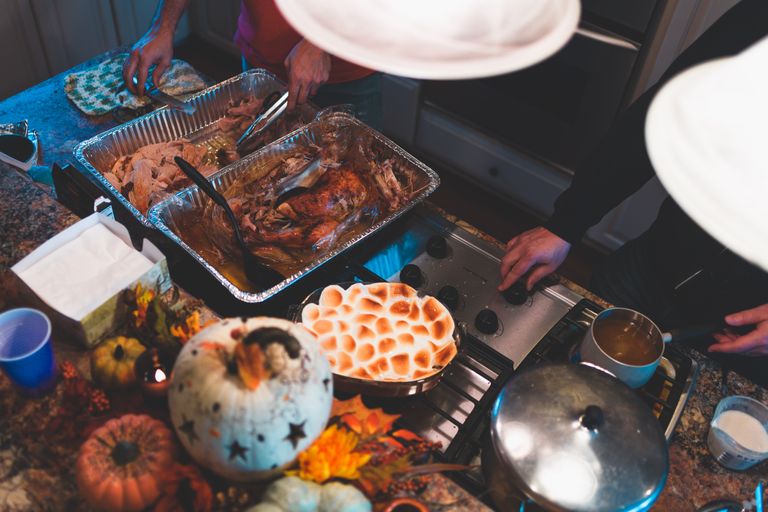
Sweet potato casserole topped with golden, toasted marshmallows is a Thanksgiving tradition in many homes, especially in the South. It’s sweet enough to be dessert, but it sits right on the plate next to the turkey and stuffing.
The idea comes from a marshmallow company. In 1917, the makers of Angelus Marshmallows hired cookbook author Janet McKenzie Hill to write a recipe booklet showing new ways to use their product. That booklet included sweet potatoes baked with marshmallows, and the combination caught on, according to Smithsonian Magazine. More than a century later, it’s still on countless holiday tables.
4. Stove Top Stuffing
Homemade stuffing has been around for centuries, but boxed stuffing is a much newer invention. General Foods introduced Stove Top stuffing in 1972. The product was developed by a food scientist named Ruth Siems, who figured out how to create bread crumbs that would stay fluffy rather than soggy when mixed with liquid.
Stove Top made stuffing quick enough to serve on any weeknight, but it also found a permanent spot on many Thanksgiving tables. Some families use it as a shortcut, while others mix it with sausage, celery and onions to make it feel more homemade.
5. Libby’s Pumpkin Pie
Many Americans make their pumpkin pie using the recipe printed right on the can of pumpkin puree. That recipe comes from Libby’s, one of the best-known brands of canned pumpkin. The “Famous Pumpkin Pie” recipe has been printed on Libby’s labels for decades and has become the standard version for countless home bakers.
The recipe uses canned pumpkin, evaporated milk, eggs, sugar and spices. It’s easy to follow, reliable and produces a smooth, classic pie. Some families have tweaked it over the years, but many still follow it to the letter every November.
6. Crescent Rolls
Flaky crescent rolls, popped out of a cardboard tube and rolled up into little half-moons, have been a holiday shortcut for decades. Pillsbury introduced its refrigerated crescent rolls in the 1960s, and they quickly became a favorite for busy cooks who didn’t have time to make yeast rolls from scratch.
On Thanksgiving, crescent rolls are often a job given to the kids, who love unrolling the dough and shaping the triangles. The “pop” of the can is part of the fun. For many families, they’ve replaced Grandma’s homemade rolls as the bread of choice on the holiday table.
7. Jell-O Salads
Gelatin salads were once a centerpiece of holiday buffets, and many of them came straight from the Jell-O company. Cranberry Jell-O molds, lime gelatin with pineapple and cottage cheese, and layered “ribbon” salads all appeared in Jell-O advertisements and recipe books over the years.
The brand worked hard to convince families that gelatin was elegant, economical and perfect for entertaining. It worked. For much of the 20th century, a shimmering molded salad was a common sight on Thanksgiving tables. Some families still make the same recipe their grandmothers clipped from a magazine.
Honorable Mentions
A few other holiday staples have strong ties to food brands, too. French’s crispy fried onions became famous largely because of the green bean casserole, and many cooks buy them only once a year. Whipped topping in a tub, introduced in the 1960s, became the go-to finish for pumpkin pie in many homes.
Even the turkey itself got a brand-name makeover in the 20th century, as frozen, ready-to-roast birds made it easier for families to buy one at the supermarket. These products didn’t invent new dishes, but they changed how the holiday meal was made.
Why These Recipes Caught On
These dishes succeeded because they solved real problems for home cooks. They used affordable ingredients, saved time and turned out the same way every time. Printing recipes on labels and in magazines made them easy to find, and many women passed them along to friends and daughters.
Over the decades, the corporate origins faded from memory. What remained were the family traditions built around them. A casserole that started in a soup company’s kitchen became “Mom’s green beans,” and that’s what matters to the people who gather around the table.
Traditions Can Start Anywhere
It might be surprising to learn that so many holiday favorites came from food companies. But traditions have always evolved, and new dishes become classics when families embrace them year after year. These recipes have earned their place by bringing people together.
Which of these dishes shows up on your Thanksgiving table? And did you know where it came from?