7 Ways Trump’s Feud With Pope Leo Turned Rubio’s Vatican Visit Into a Diplomatic Headache
Marco Rubio’s Vatican visit should have looked like a polished diplomatic stop, but Trump’s feud with Pope Leo turned it into something far more loaded. The U.S. secretary of state met Pope Leo XIV on May 7, 2026, after weeks of tension between the Trump administration and the first American pope.
The public dispute had already touched some of the world’s most sensitive issues, including Iran, migration, nuclear weapons, Cuba, and the moral role of the Catholic Church in global politics.
Rubio’s meeting with Pope Leo, therefore, became a test of whether Washington could still manage U.S. Vatican relations with discipline after the president’s attacks had raised the temperature.
The official message from Washington sounded calm. The State Department said Rubio and Pope Leo discussed the Middle East and mutual interests in the Western Hemisphere, with both sides emphasizing peace and human dignity.
Yet the timing gave the meeting a sharper edge. Trump had repeatedly criticized Pope Leo over the pontiff’s views on the Iran conflict and immigration, making Rubio’s visit feel less like a ceremony and more like diplomatic repair work.
Trump’s Attacks Made Rubio’s Vatican Visit Harder Before It Began
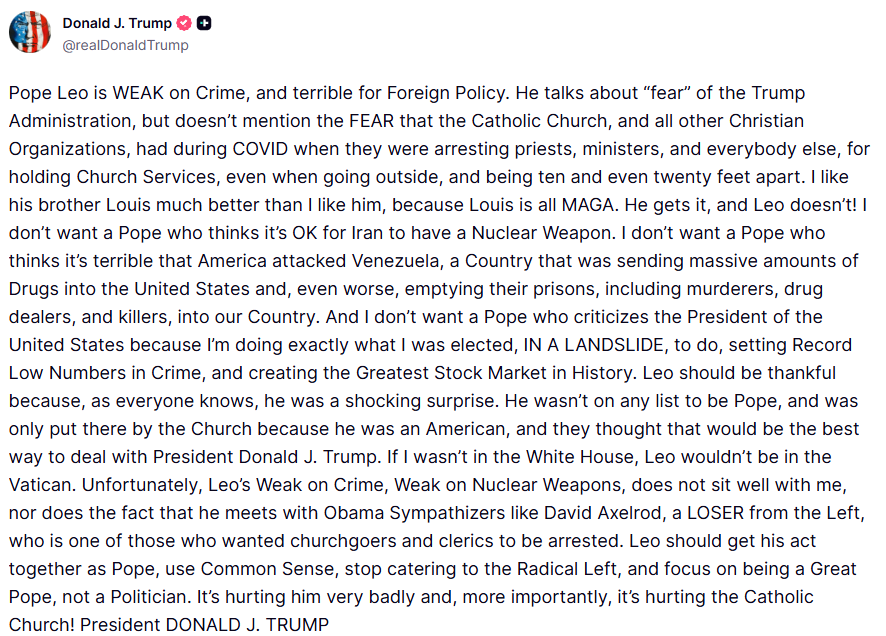
Rubio arrived at the Vatican with Trump’s feud with Pope Leo already hanging over the meeting. Reuters reported that the pope’s criticism of the U.S. and Israeli war on Iran, along with his opposition to hardline immigration policies, had deepened tensions between the Vatican and the Trump administration.
That meant Rubio was not stepping into a quiet room. He was walking into a diplomatic setting shaped by public criticism, religious sensitivity, and global attention.
The problem for Rubio was simple but serious. He had to represent the Trump administration without allowing Trump’s personal attacks to define the entire relationship with the Holy See.
That is a difficult balance because the Vatican does not operate like a normal political opponent. When a president attacks a pope, the argument transcends policy and enters the moral imagination of millions of Catholics worldwide.
Pope Leo’s Iran Position Put Peace at the Center of the Rift
The Iran conflict became one of the clearest reasons Rubio’s meeting with Pope Leo carried extra pressure.
Pope Leo had criticized the war and defended the Church’s long-standing opposition to nuclear weapons, while Trump accused the pope of taking a dangerous position.
The Guardian reported that Pope Leo rejected claims that he supported nuclear weapons and emphasized that the Church has spoken against nuclear arms for years.
This disagreement created a diplomatic headache because both sides were speaking from very different traditions. Trump framed Iran in terms of security, force, and deterrence. Pope Leo framed the issue in terms of peace, human dignity, and the Church’s moral teaching.
Rubio had to sit between those two languages and keep the conversation useful, even though the public debate had already turned tense.
The First American Pope Made the Clash More Personal
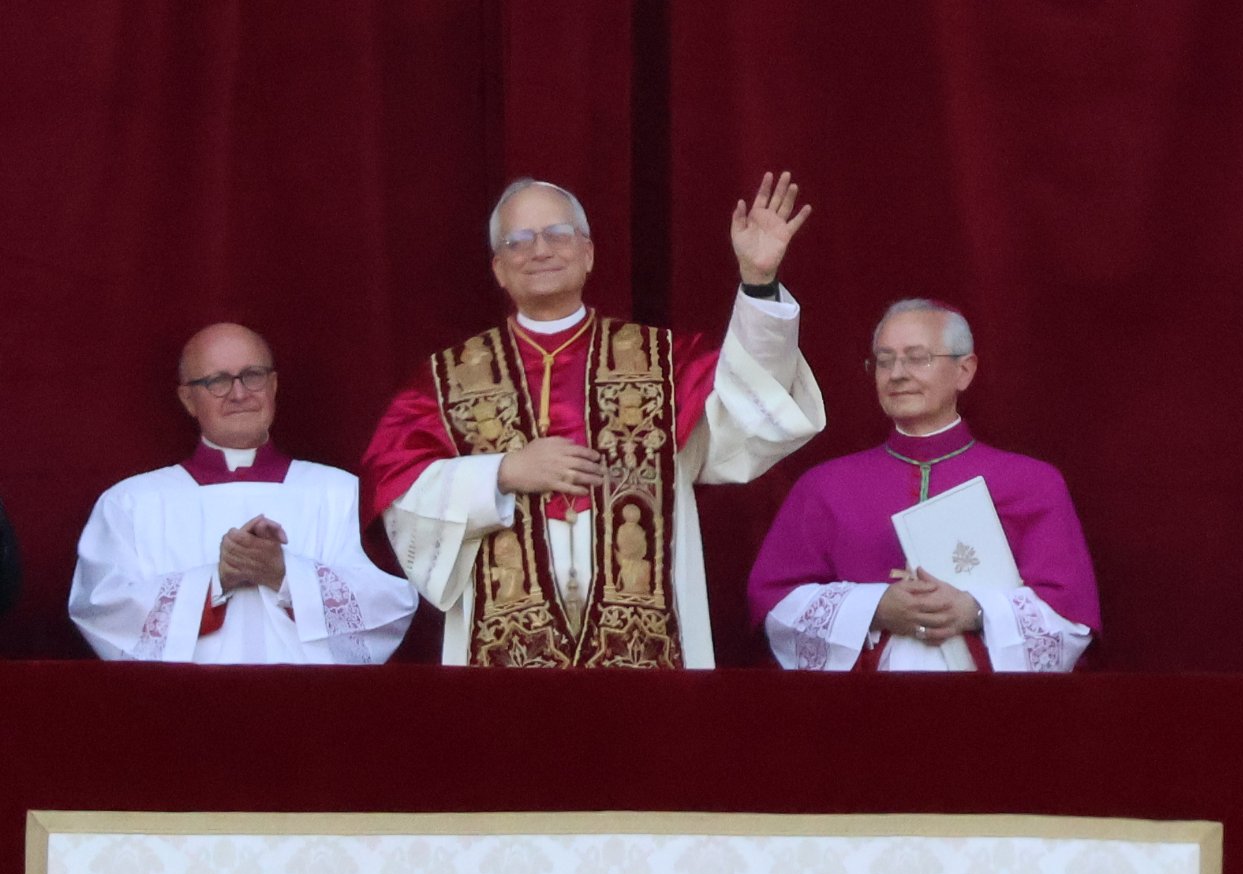
Edgar Beltrán / The Pillar via Wikimedia Commons licensed under CC BY-SA 4.0
Pope Leo XIV’s American identity made the dispute far more powerful than an ordinary disagreement between Washington and Rome. As the first American pontiff, his words about war, migrants, refugees, and nuclear weapons land directly in the American political debate.
That gives his criticism unusual force because he is not speaking as a distant foreign religious figure. He is an American-born pope challenging the moral direction of an American administration.
That background made Rubio’s role more delicate. He is also Catholic, and his visit placed him between a president known for confrontational rhetoric and a pope whose authority rests on moral witness.
The meeting, therefore, carried symbolism that went beyond diplomacy. It spoke to American Catholics, European allies, Vatican officials, and political observers watching to see whether the Trump administration could treat the papacy with restraint.
Migration Turned Moral Teaching Into Political Conflict
Trump’s feud with Pope Leo also grew sharper because of migration. Reuters reported that Pope Leo’s criticism of hardline U.S. immigration policies had contributed to the tension with Washington.
That issue sits at the heart of modern Catholic social teaching, where the Church often speaks about the dignity of migrants, refugees, displaced people, and families caught between borders.
For the Trump administration, immigration has been a defining political battlefield. For Pope Leo, it has become a moral test of how powerful countries treat vulnerable people. Rubio’s Vatican visit had to move through that tension carefully.
Any conversation about peace and human dignity would naturally touch those affected by war, forced displacement, poverty, and political instability.
Cuba Added a Practical Layer to the Vatican Talks
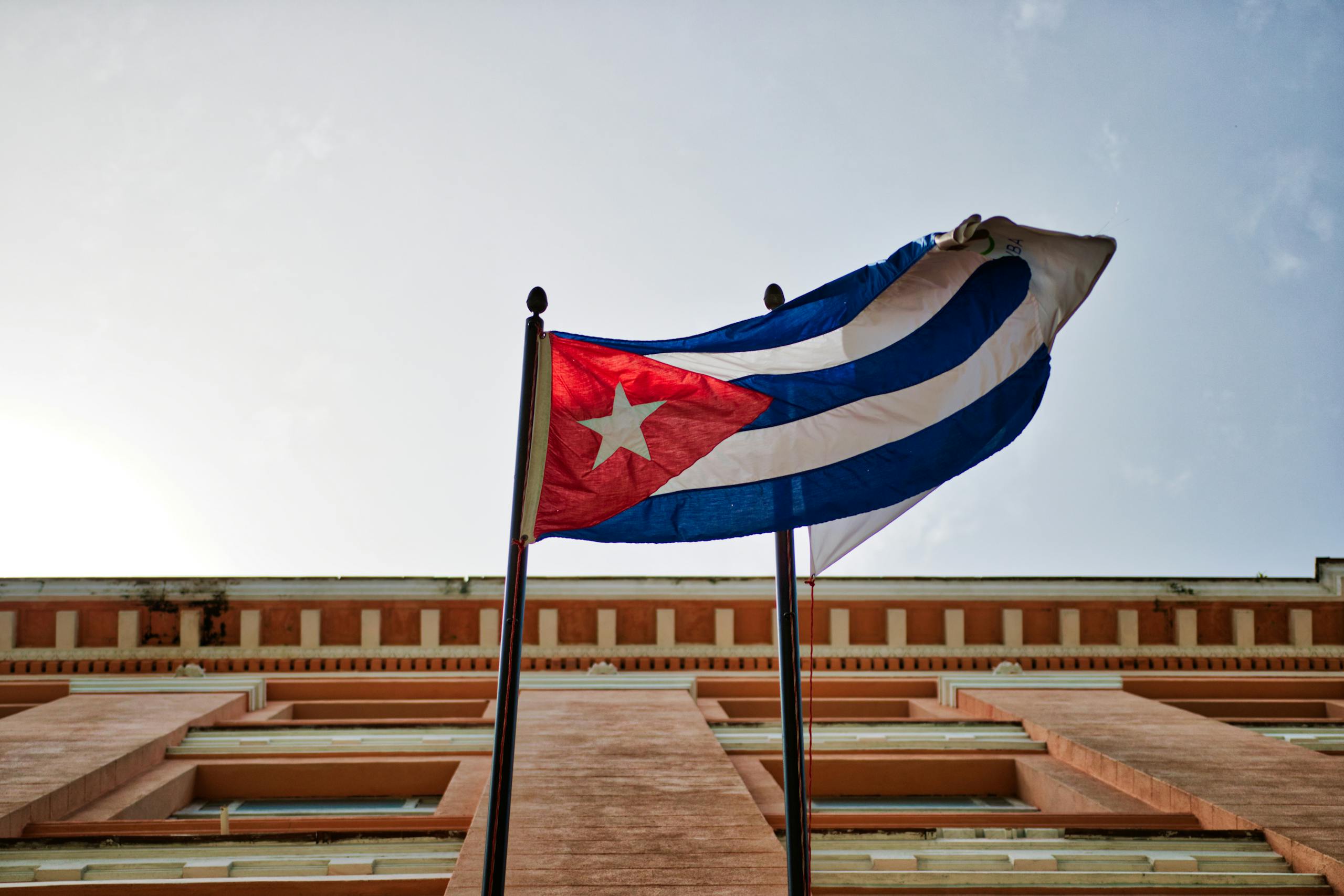
The Rubio Pope Leo meeting was not only about public tension. It also involved practical diplomacy in the Western Hemisphere.
The State Department said the two discussed topics of mutual interest in the region, and the Associated Press reported that Rubio’s Vatican talks included humanitarian efforts in the Western Hemisphere, religious freedom, and efforts to reach a durable peace in the Middle East.
Cuba gave the meeting special weight because Rubio has long been closely associated with U.S. policy toward the island. The Catholic Church has also played an important humanitarian and diplomatic role in places where political trust is fragile.
That shared concern offered Rubio and the Vatican a reason to keep working together, even as Trump’s feud with Pope Francis strained public relations.
The Meeting With Cardinal Parolin Showed the Vatican Wanted Substance
Rubio’s visit included a meeting with Cardinal Pietro Parolin, the Vatican secretary of state, after he met with Pope Leo. That detail matters because Parolin is one of the Holy See’s most important diplomatic figures.
The pope sets the moral tone, but the Vatican secretary of state helps turn that moral direction into diplomatic work with governments.
This made Rubio’s Vatican visit more than a photo opportunity. The meeting lasted about two and a half hours. It included talks with senior Vatican officials, suggesting that both sides wanted to discuss policy substance rather than simply smooth over awkward headlines.
Religious freedom, humanitarian work, Middle East peace, and the Western Hemisphere all provided Washington and the Holy See with areas of cooperation despite serious disagreement.
The Visit Exposed How Fragile U.S. Vatican Relations Have Become
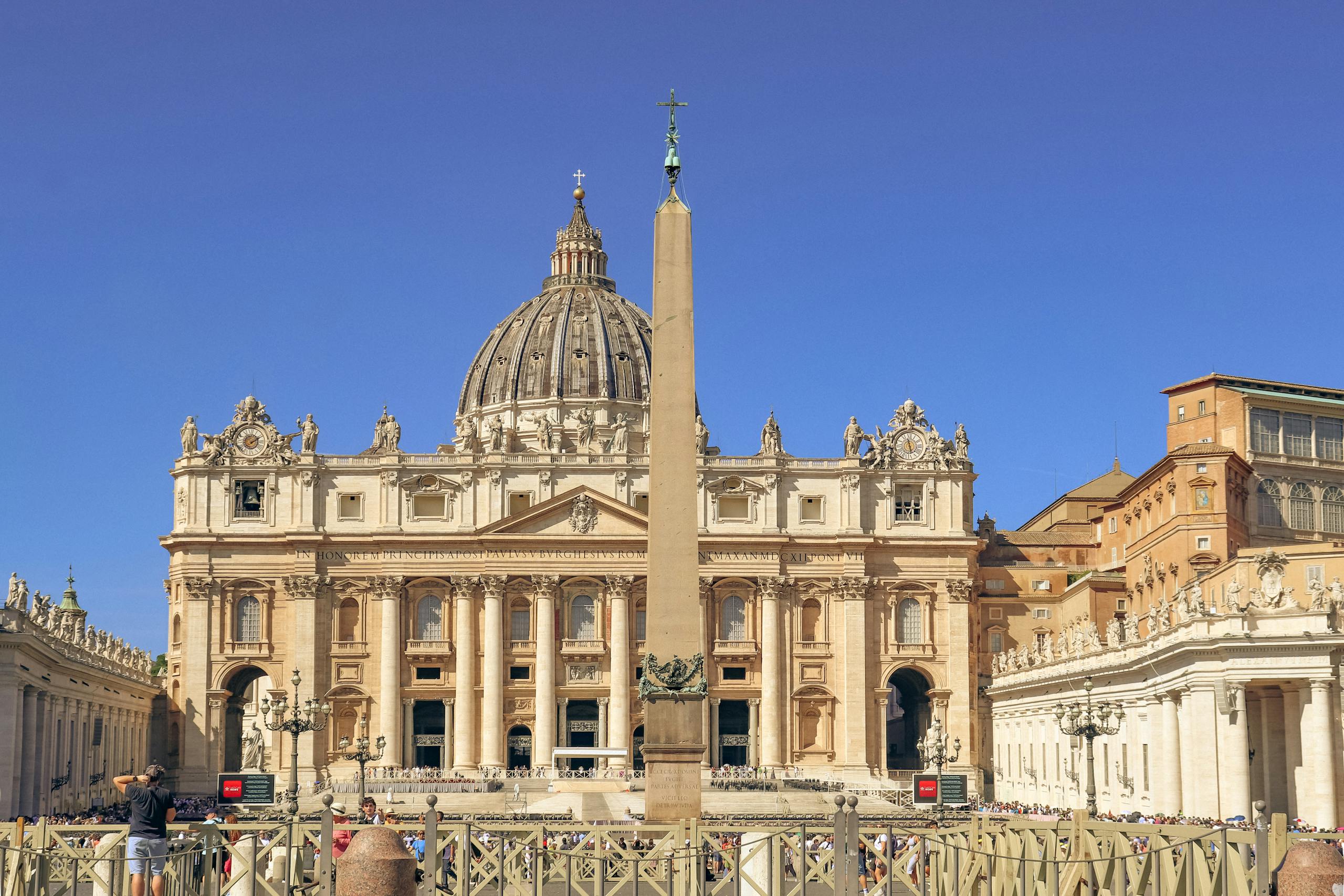
The biggest diplomatic headache was the state of U.S.-Vatican relations itself. The State Department described the relationship as strong, but the public tension showed how quickly that strength can be tested when a president attacks a pope.
Reuters described the meeting as taking place amid escalating tensions, and AP framed the visit as an attempt to mend fences after Trump’s broadsides against Pope Leo.
Rubio’s challenge was not to erase every disagreement. That was never realistic. His real task was to keep the relationship from being swallowed by Trump’s rhetoric.
Diplomacy often survives by giving both sides a private room after public remarks have made the situation harder. Rubio’s Vatican visit did exactly that, even if the deeper conflict over Iran, migration, and moral authority remains unresolved.
Key Takeaway
Trump’s feud with Pope Leo turned Rubio’s Vatican visit into a diplomatic headache, forcing Washington to manage a public clash with the first American pope while still trying to preserve cooperation with the Holy See.
The meeting touched on the Middle East, the Western Hemisphere, Cuba, religious freedom, migration, nuclear weapons, and the future of U.S.-Vatican relations.
Rubio did not end the tension. He lowered the temperature. That difference matters because diplomacy rarely resolves a crisis in a single meeting.
It creates enough space for both sides to keep talking, and in this case, that may be the most important outcome Washington and the Vatican could reach.