8 Everyday Foods That Became Popular in America Because of Convenience
Many foods Americans consider ordinary today became familiar because companies found ways to make them easier to purchase, store, or prepare. Some products existed for decades before a new manufacturing method helped them reach more households.
Changing work schedules, refrigeration, packaging, and transportation also influenced what families ate. Convenience didn’t always mean better flavor or nutrition, but it often made particular foods more accessible. These eight examples show how practical innovations helped reshape American eating habits.

1. Sliced Bread
Commercially sliced bread became a major convenience product during the early 20th century. It eliminated the need for households to slice every loaf before preparing sandwiches or toast.
The innovation also helped standardize sandwich preparation. Uniform slices were particularly convenient for packed lunches and quick breakfasts.
The automatic bread-slicing machine developed by Otto Frederick Rohwedder played an important role in this change. Commercial use began in 1928, helping popularize a product that eventually became a grocery staple. Packaged sliced bread remains familiar today, although bakeries and supermarkets offer many additional varieties.
2. Frozen Vegetables
Freezing allowed households to keep vegetables available beyond their normal growing seasons. Developments in quick-freezing technology helped improve the quality of frozen food products.
Clarence Birdseye became closely associated with the commercialization of quick-frozen foods. His work contributed to the development of a major American food industry.
Frozen vegetables reduced preparation time for families and offered alternatives when fresh produce wasn’t available. Peas, corn, and green beans became familiar freezer staples.
Modern frozen vegetables include a much wider range of products. The basic appeal, however, remains convenience and storage flexibility.
3. Instant Coffee
Instant coffee offered a way to prepare a hot beverage without brewing ground coffee. The product became increasingly familiar as manufacturing and packaging improved.
Its convenience was particularly useful for households and workplaces that wanted coffee quickly. It also required less specialized brewing equipment.
Instant coffee has a different flavor profile from freshly brewed coffee, which influences consumer preferences. Some people appreciate its speed, while others prefer ground beans. The product remains available because it continues to serve a practical purpose.
4. Canned Soup
Canned soup helped families prepare meals without making every component from scratch. A container could provide the foundation for lunch or become an ingredient in another dish.

Condensed soups became particularly important in American casserole recipes. They offered a convenient way to create creamy sauces without preparing a separate mixture.
The approach influenced mid-century household cooking. Tuna noodle casserole and similar meals became closely associated with packaged soup products.
Today, canned soup remains available alongside fresh, frozen, and refrigerated alternatives. Its usefulness depends on flavor preferences, ingredients, and price.
5. Peanut Butter
Peanut butter became an American staple through developments in processing, packaging, and mass marketing. Its spreadable form made it convenient for sandwiches and snacks.
Commercial production helped make the product widely available. It could be stored in the pantry and used without cooking.
The familiar peanut butter and jelly sandwich became particularly associated with American childhood. Many families appreciated its affordability and simplicity.
Modern peanut butter varieties differ in added sugar, salt, and oils. Ingredient labels help consumers understand those differences.
6. TV Dinners
Frozen TV dinners became symbols of convenience during the 1950s. They offered complete meals in divided trays that could be heated in the oven.
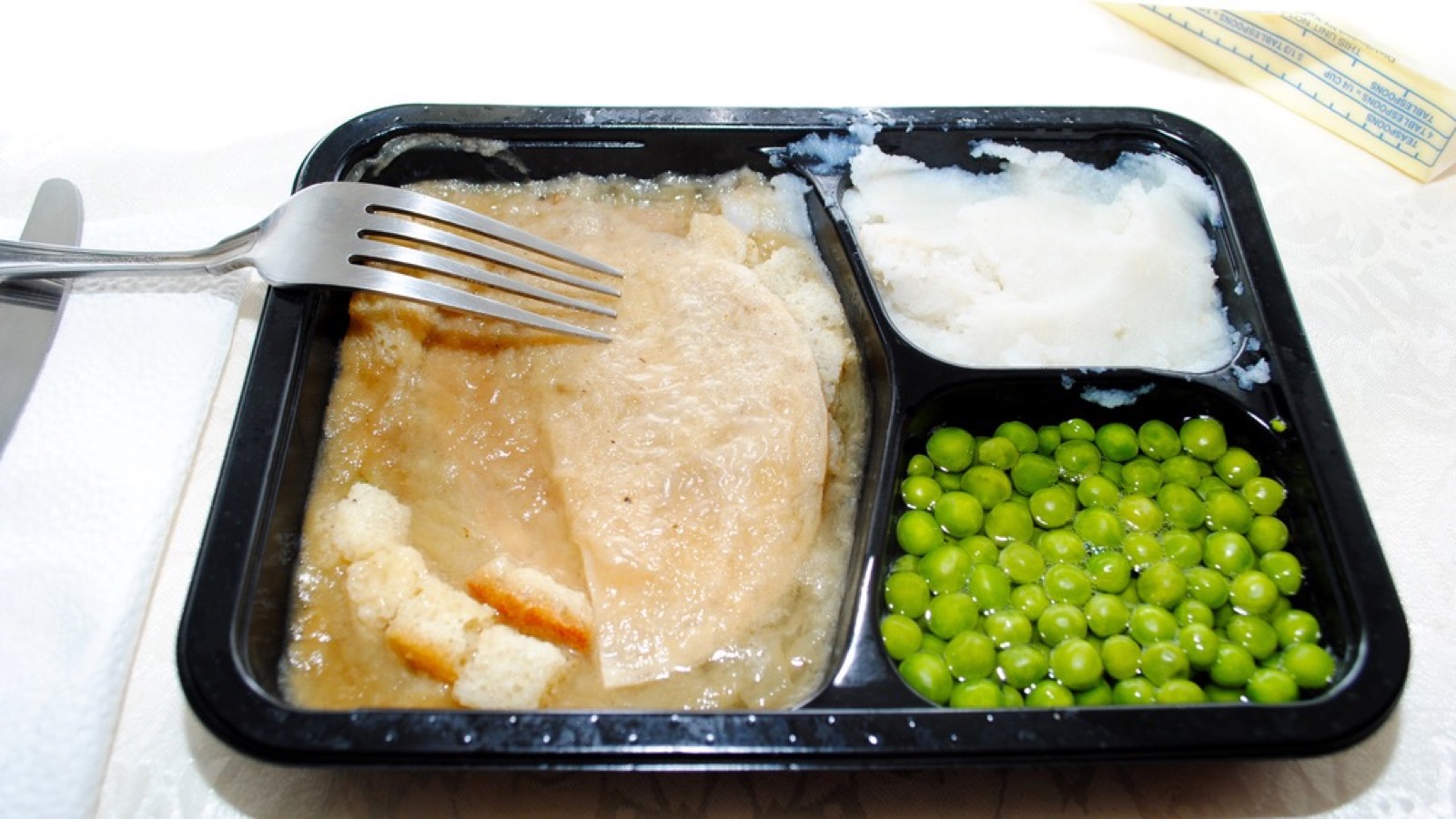
Swanson helped popularize the format in 1954, although frozen prepared meals had earlier predecessors. The product fit the growing popularity of television and changing household routines.
The Smithsonian’s food history exhibits document how convenience products reduced cooking work. They also changed expectations about how meals could be prepared and served. Modern frozen meals use different packaging and preparation methods, but they continue offering convenience.
7. Breakfast Cereal
Ready-to-eat breakfast cereals offered an alternative to preparing cooked grains every morning. Packaged cereals could be served quickly with milk or eaten without additional preparation.

Manufacturers introduced different shapes, flavors, and advertising characters to attract customers. Children’s cereals became particularly recognizable during the television advertising era.
Today’s cereal products vary widely in ingredients and nutritional content. Some are high in added sugar, while others emphasize whole grains or fiber. The convenience of cereal remains a major reason households purchase it.
8. Packaged Cake Mixes
Packaged cake mixes reduced the number of ingredients and preparation steps required for baking. Instead of measuring every dry ingredient separately, home cooks could combine a prepared mixture with a few additional ingredients.
The products became increasingly familiar during the postwar period. Companies marketed them as convenient ways to produce attractive homemade desserts.
Cake mixes also influenced what families considered ordinary baking. Some foods from 1970s kitchens reflected the growing popularity of packaged ingredients. Modern mixes remain useful, although many cooks prefer preparing cakes entirely from scratch.
How Convenience Changed American Cooking
Convenience foods developed alongside changes in technology, household routines, and supermarket distribution. They reduced preparation time and introduced new products to customers.
But convenience also created trade-offs. Packaged foods can differ in price, ingredients, nutritional composition, and environmental impact.
The most useful approach is to evaluate individual products rather than assuming convenience makes a food better or worse. Frozen vegetables, for example, can be practical without requiring elaborate preparation.
American kitchens continue changing as new products and appliances become available. The history of convenience foods shows that today’s ordinary grocery item may have once seemed like a remarkable innovation.