9 Explosive Supreme Court’s Rulings That Could Redefine Birthright Citizenship, Trump Power, and American Rights
The Supreme Court is heading into its most dramatic stretch of the year, and this time, the final rulings are not just legal housekeeping. They could touch birth certificates, deportation protections, gun rights, elections, campaign money, transgender athletes, federal agencies, and even the weedkiller sitting in garages and farm sheds across America. This is not one court term. It feels like a national power test.
The justices are being asked to decide where presidential power ends, where constitutional rights begin, how much states can control hot-button issues, and whether long-standing American rules can be rewritten in a matter of months.
Here are the biggest Supreme Court decisions to watch, and why each one could hit harder than people expect.
Birthright Citizenship Could Become the Case Everyone Remembers
The most explosive case centers on President Donald Trump’s effort to limit birthright citizenship for some children born in the United States. For generations, most Americans have understood the rule this way: if you are born on U.S. soil, you are a U.S. citizen. That idea comes from the 14th Amendment, which says people born or naturalized in the United States and subject to its jurisdiction are citizens.
Trump’s executive order challenges that understanding for children born to certain noncitizen parents. His administration argues the citizenship guarantee has been stretched too far. Opponents argue the order is a direct attack on one of the clearest promises in the Constitution. This is why the case feels so personal. It is not just about immigration policy. It is about babies, families, passports, school enrollment, Social Security numbers, and the meaning of belonging in America.
A ruling against Trump could shut down one of the boldest immigration moves of his second term. A ruling in his favor could trigger a legal earthquake and force the country to rethink who automatically counts as American from birth.
Trump’s Power Over Federal Agencies Could Get a Major Boost
Another huge fight is over whether the president can more easily fire leaders of independent federal agencies. That may sound like a dry Washington personnel issue, but it could change how the federal government works. Independent agencies help regulate finance, labor, trade, consumer protection, communications, and other parts of daily life. Congress often gives officials at these agencies some protection from political firing so they can make decisions without being controlled completely by the White House.
Trump’s side argues that the president should have stronger control over executive branch officials. Critics warn that if the Court agrees too broadly, agencies designed to be independent could become more directly political. The result could shift power away from Congress and toward the Oval Office. That means future presidents, not just Trump, could have a much stronger hand over regulators who shape markets, workers’ rights, corporate conduct, and consumer protections.
The Federal Reserve Case Could Hit Americans in Their Wallets
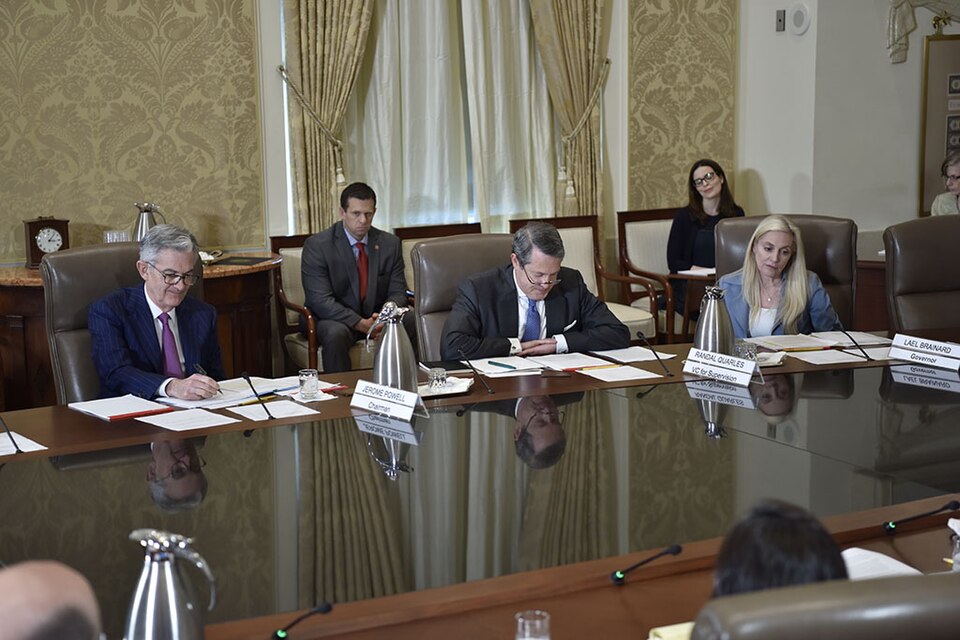
Federal reserve,via Wikimedia Commons
A closely watched case involves Trump’s attempt to remove Lisa Cook from the Federal Reserve Board of Governors. The Federal Reserve is unique among agencies in that it influences interest rates, inflation, mortgage costs, credit card rates, car loan rates, and the broader economy.
If presidents can remove Fed governors too easily, markets may start to wonder whether interest rate decisions are based on economic data or political pressure. That kind of doubt can be dangerous because the Fed’s power depends heavily on public and investor confidence.
The Court may be willing to grant presidents greater control over many agencies, but the Fed could be treated as special, given its role in the financial system. For ordinary Americans, this case could quietly matter more than the loudest culture war headlines. A ruling that weakens Fed independence could eventually be felt in monthly payments, borrowing costs, and the cost of living.
Temporary Protected Status Cases Could Upend Thousands of Lives
The Court is also weighing fights over Temporary Protected Status, known as TPS, for immigrants from countries such as Haiti and Syria. TPS allows people from unsafe countries to live and work in the United States temporarily when war, disaster, or other dangerous conditions make return unsafe. The Trump administration argues that decisions to end those protections should receive strong deference and not be second-guessed by courts.
Immigrant rights groups argue the administration rushed toward predetermined conclusions and ignored real dangers in those countries. This case could decide whether courts can review major humanitarian immigration decisions or whether the executive branch gets almost complete control.
For families living under TPS, this is not an abstract legal theory. It could affect jobs, homes, children, school stability, and whether people who have lived in the United States for years may suddenly lose legal protection.
Mail Ballot Rules Could Become a New Election Flashpoint
The Court is also facing a major election case over mailed ballots that arrive after Election Day. Some states count absentee ballots if they are postmarked by Election Day and arrive within a short grace period. Republicans challenging those rules argue that federal Election Day should be the real deadline for receiving ballots, not just mailing them.
Supporters of grace periods say voters should not be punished for postal delays after they legally mailed their ballots on time. This could matter in close races. A handful of late-arriving ballots may not matter in a landslide, but in a tight congressional or presidential contest, the rules for mail ballots can become explosive.
A Supreme Court ruling against grace periods could force states to change election laws and could affect overseas voters, military voters, rural voters, elderly voters, and anyone who depends on the mail.
Campaign Spending Limits Could Be Blown Wide Open

Another case could reshape campaign money by challenging limits on how much political parties can spend in coordination with candidates. These limits were created to stop wealthy donors from using party committees as a back door around contribution caps. Supporters of the limits say they protect elections from corruption and mega donor influence. Opponents say they restrict political speech and weaken parties. If the Court strikes down the limits, political parties could work much more closely with candidates while spending larger sums.
That could make campaigns louder, more expensive, and more nationally controlled. It could also make wealthy donors even more powerful because parties would have a greater incentive to raise massive checks and spend them directly on key races. For voters already exhausted by campaign ads, the result could be an even noisier future.
The Border Asylum Case Could Decide Who Gets a Chance to Ask for Protection
Another immigration case focuses on asylum seekers at the U.S.-Mexico border. At issue is a practice sometimes called metering. Under that system, officials can limit the number of asylum seekers processed at ports of entry. The government says it needs flexibility to manage the border. Critics say officials cannot block people from accessing the asylum process by stopping them at the doorway.
A ruling in favor of the administration could give the federal government more power to manage border flows. A ruling against it could strengthen the rights of asylum seekers who present themselves at legal entry points. This case could shape the next chapter of America’s border policy.
Transgender Athlete Cases Could Set the Rules for School Sports
The Court is also expected to rule on state restrictions involving transgender girls and women in female sports. Supporters of the bans argue they protect fairness and preserve sex based athletic categories. Opponents argue that the laws discriminate against transgender students and exclude them from school life.
The Court could allow states to enforce bans without requiring every state to adopt them. That would leave the country divided, with red states and blue states taking very different approaches. Or the Court could write more broadly and create a national constitutional rule.
Either way, the decision will fall in the middle of one of America’s most emotional culture-war debates. For schools, parents, students, and athletic associations, the ruling could determine how teams are organized for years to come.
Gun Rights Cases Could Push the Second Amendment Even Further

The Supreme Court is still working through the consequences of its recent expansion of gun rights. One case looks at whether states can make it harder to carry firearms onto private property open to the public, such as stores or restaurants, unless the owner gives permission. Gun rights advocates say that flips the right to carry into a practical ban. Supporters say property owners should not be forced to allow guns by default.
Another case involves whether someone who regularly uses marijuana can be criminally barred from owning a gun under federal law. That case matters because marijuana law is now deeply conflicted in America. Many states allow medical or recreational marijuana, but federal law still treats it as illegal. The Court may have to decide how that tension affects gun ownership.
These rulings could decide how far the Court’s Second Amendment revolution goes next.