9 Gelatin Dishes Boomers Grew Up With That Younger Generations Can’t Understand
If you grew up in the 1950s or 1960s, you probably remember a shimmering, wobbling mold sitting proudly in the middle of the table. It might have been green, red or orange, and it might have had fruit, vegetables or even tuna suspended inside it. Nobody questioned it. Gelatin was modern, it was pretty, and it showed that the hostess had planned ahead.
Show those same dishes to someone under 35 and you’ll usually get a blank stare, or a horrified laugh. Cabbage in lime gelatin? Ham in a mold? To younger cooks it sounds like a dare, not a dinner. Yet these recipes filled cookbooks, church suppers and holiday tables for decades, and for good reasons. These nine gelatin dishes were everywhere when boomers were growing up, and they still leave younger generations scratching their heads.
1. Tomato Aspic
Tomato aspic was a savory gelatin made from tomato juice, lemon, onion, celery and spices, set in a ring mold and served on a bed of lettuce. A dollop of mayonnaise usually went on top. It was considered an elegant first course at luncheons and ladies’ bridge parties, especially in the South.
To younger diners, it tastes like cold, jiggly tomato soup, and that’s a hard sell. But for many women who hosted in the 1950s and 1960s, aspic was a sign of sophistication. Some Southern families still serve it at Easter and Thanksgiving, though it’s increasingly rare.
2. Perfection Salad
Perfection Salad was made of shredded cabbage, celery and sometimes pimentos or green peppers, set in lemon or plain gelatin with vinegar and sugar. It became famous after a version took a prize in a recipe contest run by Knox gelatin in the early 1900s, and it stayed popular for decades.
The name promised perfection, but to modern eyes it looks like coleslaw trapped in glass. Home cooks of the era loved it because it was cheap, colorful and could be made a day ahead. It’s one of the clearest examples of how much tastes have changed.
3. Lime Gelatin With Cottage Cheese and Pineapple
This one went by many names, from “green salad” to “lime delight.” It combined lime gelatin with crushed pineapple, cottage cheese and sometimes chopped pecans or whipped topping. It was served as a side dish next to ham or turkey, even though it was sweet enough to be dessert.
Many boomers have strong feelings about this salad, one way or the other. The pale green color and lumpy texture make younger guests nervous. But plenty of families still make it every holiday because Grandma did, and it wouldn’t feel right to skip it.
4. Under-the-Sea Salad
Under-the-Sea Salad was a layered mold with lime gelatin, canned pears and cream cheese, often whipped into one of the layers to make it pale and creamy. The result was a two-toned, sea-green mold that looked impressive when turned out on a platter.
It was a favorite at showers and luncheons in the 1950s and 1960s. Younger generations tend to find the mix of pears, cream cheese and lime confusing, but it was designed to look beautiful, not to follow modern flavor rules.
5. Sunshine Salad With Shredded Carrots
Sunshine Salad combined lemon or orange gelatin with shredded carrots and crushed pineapple. It was bright, cheerful and a way to sneak vegetables into kids, which is probably why so many mothers made it.
The idea of carrots in sweet gelatin puzzles younger cooks, who tend to keep vegetables and dessert far apart. But Sunshine Salad was a staple of school cafeterias, potlucks and family dinners for years, and many boomers can still picture its orange glow.
6. Ham or Tuna in a Mold
Savory molds were a big deal in midcentury cooking. Cooks folded chopped ham, chicken, shrimp or canned tuna into gelatin with mayonnaise, celery and onion, then set it in a fish-shaped or ring mold. Some were decorated with olive slices for eyes and cucumber “scales.”
These dishes are the ones that make modern viewers gasp when they see old cookbook photos. They were practical in their time, a way to stretch leftovers and serve something cool on a hot day before air conditioning was common. Several of them show up on lists of 1960s food trends that people would rather forget.
7. Broken Glass Dessert
Broken Glass Dessert, also called stained glass or cathedral window dessert, was made by cutting several flavors of gelatin into cubes and folding them into a creamy base of whipped topping or sweetened gelatin, usually over a graham cracker crust. When sliced, it looked like a stained glass window.
This is one dessert younger people tend to like once they try it, though they’re often amazed at how much work went into it. It took hours of chilling and several boxes of gelatin. It was a showpiece at church suppers and holiday gatherings.
8. Jell-O Poke Cake
Poke cake became popular around the late 1960s and 1970s. You baked a white cake, poked holes all over it with a fork or wooden spoon handle, then poured liquid gelatin over the top so it soaked in and created colorful stripes inside. It was topped with whipped topping and chilled.
Poke cake still has fans, but many younger bakers have never made one. The bright streaks of red or green inside the cake are pure nostalgia for anyone who grew up eating it at birthday parties and Fourth of July picnics.
9. Fruit Cocktail Suspended in a Ring
The simplest of all, this was a ring of red or orange gelatin with canned fruit cocktail suspended inside. Getting the fruit to float evenly instead of sinking to the bottom was a sign of skill. Cooks did it by chilling the gelatin until it was partly set, then folding in the fruit.
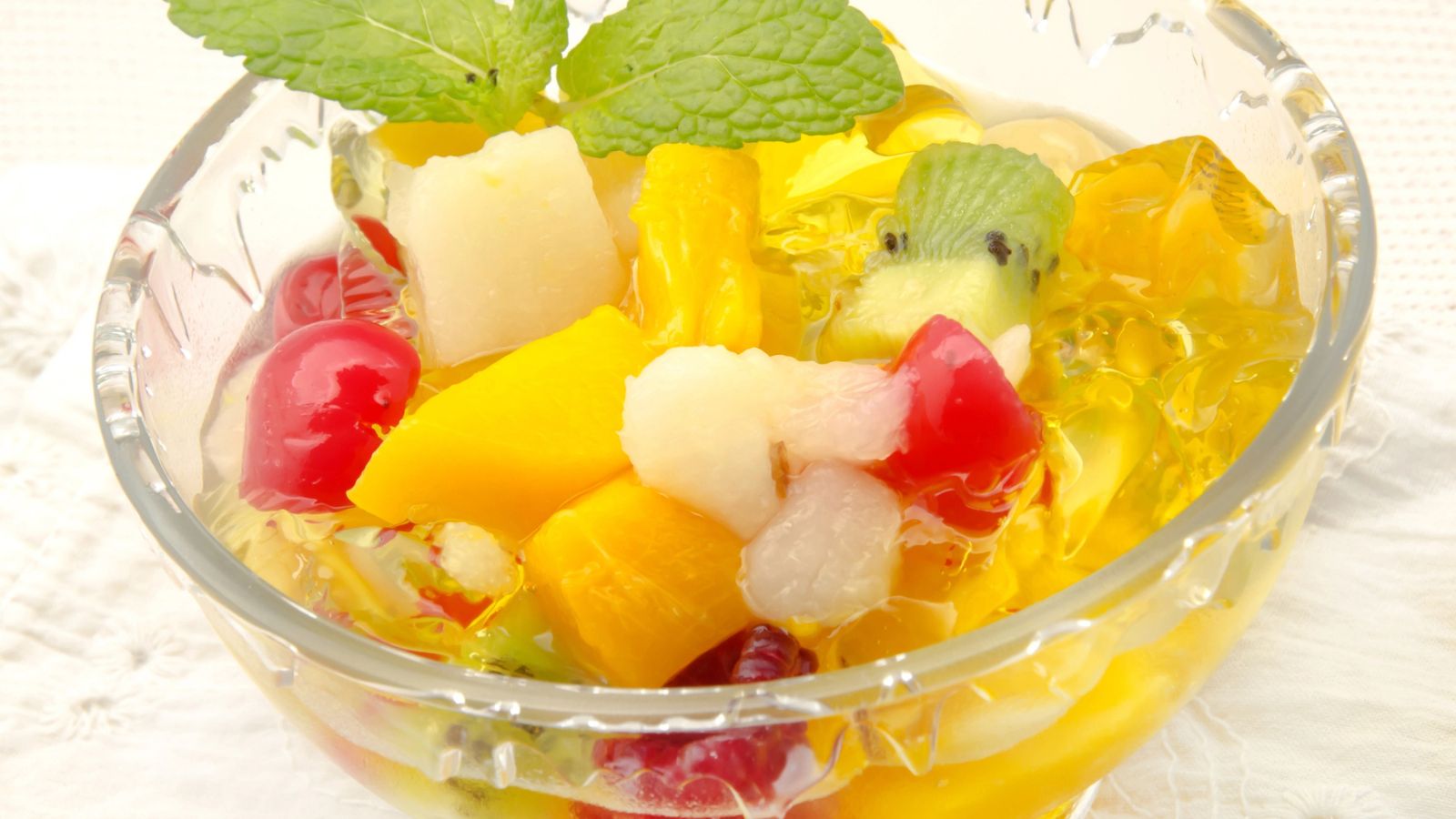
It was served everywhere, from hospital trays to Sunday dinners. Younger generations see it as cafeteria food, but for many boomers, it brings back memories of their mothers carefully unmolding it onto a plate.
Why Gelatin Was Everywhere
Gelatin had a long run. Jell-O was first sold in LeRoy, New York, in the late 1890s, and by the middle of the 20th century, boxed gelatin was cheap, easy and endlessly adaptable. Refrigerators had become standard in American homes, and molded dishes showed them off. Food companies printed recipe booklets full of new ideas, and women traded recipes at church and club meetings.
Gelatin also made small amounts of food look generous, which mattered for families on a budget. Utah even named Jell-O its official state snack in 2001 after a campaign that showed how much the state’s families loved it.
Today, gelatin salads are mostly a nostalgic curiosity, but they are not completely gone. Did your family serve any of these, and is there one you still make?