9 Popular Fruits and Vegetables That Originally Looked Very Different
The apples, bananas, carrots, and watermelons sitting in grocery stores today look nothing like some of their wild ancestors.
For example, when you first see an image of an ancient watermelon, it can be hard to believe it belongs to the same fruit family as the juicy red slices served at summer cookouts. Early varieties were paler, harder, and far less sweet.
That transformation did not happen overnight. For thousands of years, farmers repeatedly saved seeds from plants with desirable traits, gradually producing larger, sweeter, softer, less bitter fruits and vegetables that were easier to eat.
The result is the produce aisle we recognize today.
Here are nine familiar fruits and vegetables that once looked surprisingly different.
Bananas Were Packed With Hard Seeds
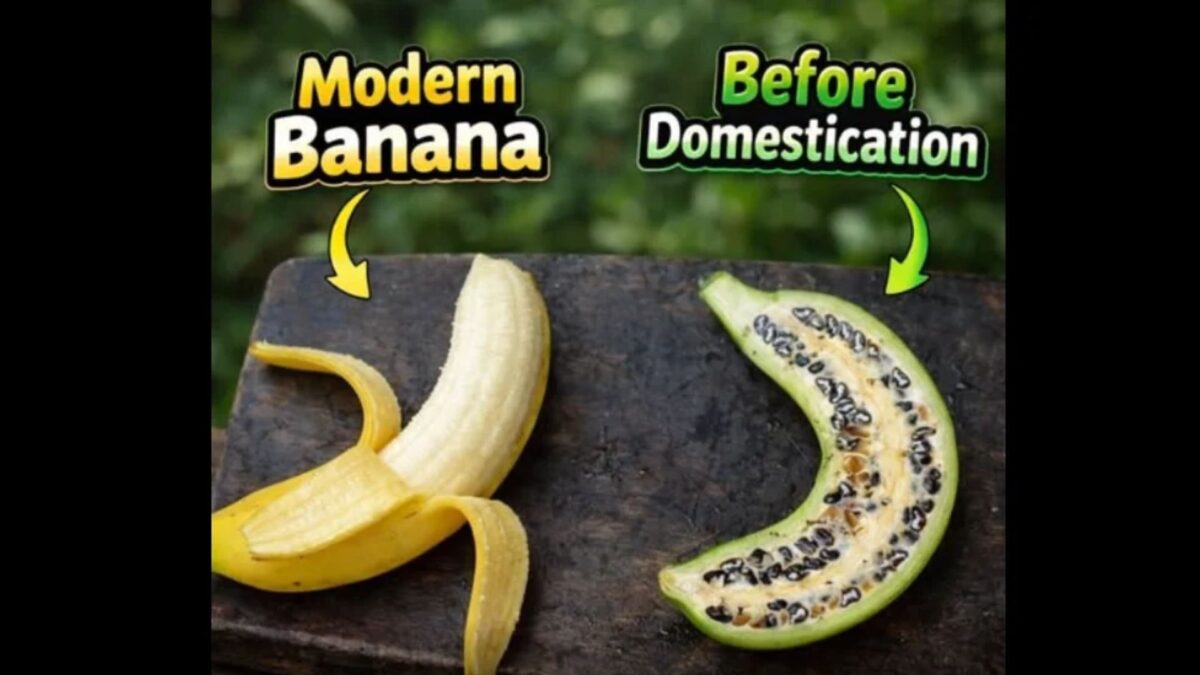
Modern bananas are soft, sweet, and almost effortless to eat. Their wild ancestors were another story.
Early bananas cultivated in Southeast Asia thousands of years ago had numerous large, hard black seeds and relatively little edible flesh. They were also starchier and less sweet than today’s varieties.
Generations of cultivation and hybridization eventually produced bananas with more edible flesh and tiny undeveloped seeds.
Today, the Cavendish variety dominates international banana trade. According to the Food and Agriculture Organization of the United Nations, Cavendish bananas account for a significant share of global production.
That smooth yellow fruit in your kitchen is therefore the result of thousands of years of agricultural selection.
Carrots Weren’t Originally Orange
Ask someone to draw a carrot, and they will likely reach for an orange crayon.
Historically, however, cultivated carrots came in colors including purple, yellow, white, and red.
Early carrots grown in Central Asia were also generally tougher and less sweet than the varieties commonly sold today. Some early forms were valued as much for their leaves and seeds as for their roots.
Orange carrots became increasingly prominent in Europe several centuries ago as growers selected plants for color, sweetness, and texture.
Today, orange may dominate supermarket shelves, but purple and yellow carrots have never completely disappeared.
Corn Started as a Wild Grass
Few foods demonstrate selective breeding as dramatically as corn.
Modern ears can contain hundreds of large, soft kernels packed tightly around a cob. Its wild ancestor, teosinte, looked more like an ordinary grass.
Teosinte produced small seed cases with only a handful of hard kernels. Thousands of years ago, people in what is now Mexico began choosing and replanting plants with desirable characteristics.
Over many generations, the ears grew larger, the kernels became easier to eat, and the plant gradually developed into maize.
Corn eventually became one of the most important crops in the Americas and today appears in everything from tortillas and cereals to popcorn and countless processed foods.
Peaches Were Much Smaller
A modern peach can nearly fill your palm. Ancient peaches were considerably less impressive.
Early peaches cultivated in China thousands of years ago were much smaller, with less flesh surrounding the pit. Researchers studying ancient peach stones found evidence that the fruit grew dramatically in size over centuries of cultivation.
Farmers repeatedly selected trees that produced larger, more desirable fruit.
Eventually, those small fruits became the juicy peaches we recognize today.
It is an impressive transformation considering that farmers accomplished it long before anyone understood genetics.
Watermelons Were Pale and Bitter
Few transformations are more dramatic than the watermelon.
Modern watermelon is famous for its bright red flesh and sweetness, but its ancient relatives weren’t necessarily sweet either.
Research into watermelon genetics and archaeological evidence suggests that domesticated watermelon has roots in northeastern Africa. Early forms were generally harder and more bitter than modern dessert varieties.
Some were valued partly because the fruit could hold water in dry environments.
Centuries of selection gradually encouraged sweeter flesh, different colors, and larger fruit.
Eventually, watermelon became the refreshing summer staple now associated with picnics, barbecues, and backyard cookouts.
Tomatoes Were Tiny
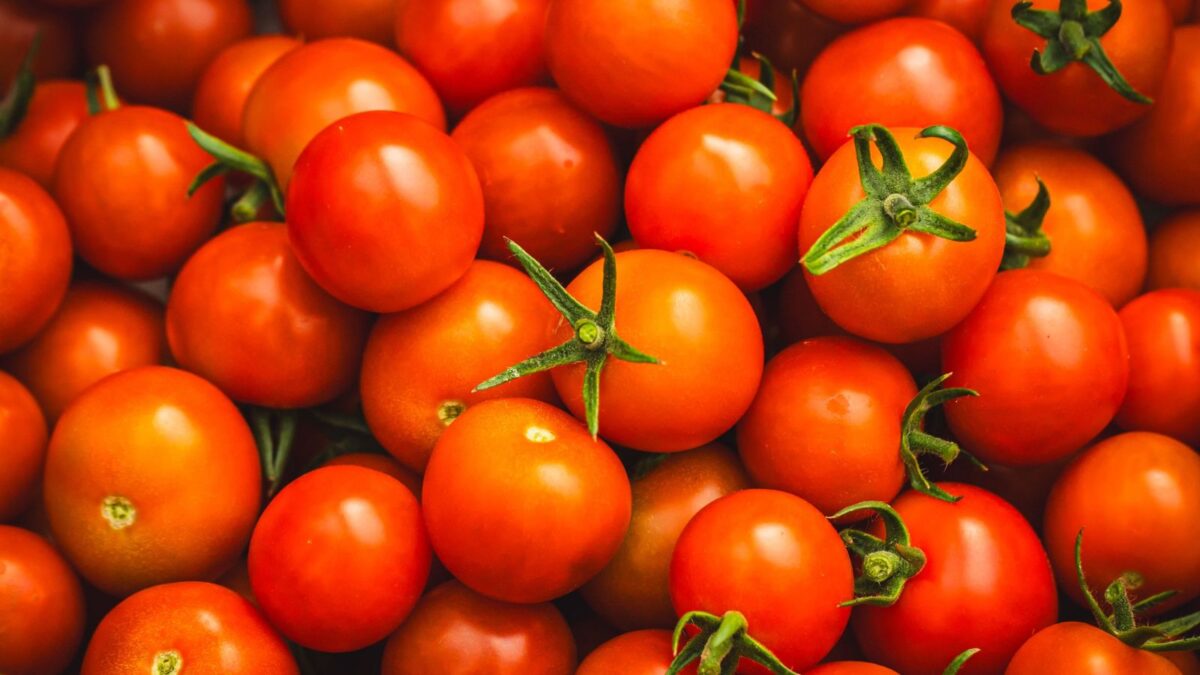
The enormous beefsteak tomato sitting on a supermarket shelf would look almost alien next to some of its wild relatives.
Wild tomatoes native to South America generally produced small, berry-like fruits. Over centuries, cultivation favored larger fruit and an enormous variety of shapes and colors.
Tomatoes eventually traveled to Europe following contact between the Americas and Europeans.
Some parts of Europe initially greeted them with suspicion, partly because tomatoes belong to the nightshade family, which includes several poisonous plants.
Eventually, however, tomatoes became indispensable to cuisines around the world.
Today you can find everything from tiny cherry tomatoes to giant slicing varieties, all descended from much smaller ancestors.
Strawberries Used to Be Tiny
Wild strawberries still exist, and anyone who has seen them knows just how small they can be.
The large strawberries commonly sold today largely trace their origins to hybridization in 18th-century Europe.
European gardeners crossed strawberry plants originating from North and South America, eventually producing plants with larger fruit.
Those hybrids helped create the foundation for today’s garden strawberry.
Modern breeding continued the process, selecting plants for characteristics such as fruit size, firmness, appearance, and productivity.
That oversized berry in your grocery container is therefore relatively new compared with strawberries humans ate centuries ago.
Related: 7 Ways to Significantly Reduce Food Waste and Save Money
Cucumbers Were Smaller and More Bitter
Modern cucumbers are mild enough to slice directly into salads, sandwiches, and pitchers of water.
Wild relatives were considerably less inviting.
Cucumbers originated in South Asia and have been cultivated for thousands of years. Earlier varieties could be smaller, more bitter, and covered with noticeable spines or bumps.
One reason for their bitterness is a group of naturally occurring compounds called cucurbitacins.
Over generations, growers selected cucumbers with milder flavors and other desirable characteristics.
Today, shoppers can choose among long English cucumbers, small pickling varieties, Persian cucumbers, and traditional slicing cucumbers.
Apples Were Smaller and Much More Tart
The enormous selection of sweet apples available today would have been unimaginable to early fruit gatherers.
Modern domesticated apples are closely linked to wild apple populations in Central Asia. Their ancestors were generally smaller and often more tart than many supermarket varieties.
Humans transformed apples not only by planting seeds but also by grafting, a technique that lets growers reproduce trees with desirable fruit.
That matters because planting a delicious apple seed does not guarantee the new tree will produce identical fruit.
Centuries of cultivation have produced thousands of named apple varieties, from intensely tart to exceptionally sweet.
The Produce Aisle Is Really a History Lesson
The fruits and vegetables we eat today did not simply appear in their modern forms.
Bananas lost their enormous seeds. Corn grew from a wild grass into large ears packed with kernels. Peaches became dramatically bigger. Watermelon grew sweeter and redder, while farmers transformed tiny wild tomatoes into countless modern varieties.
These changes illustrate how deeply agriculture has shaped everyday food.
Long before modern laboratories and genetic technology, farmers influenced plants by saving seeds and propagating the specimens they liked most.
So the next time you walk through the produce section, remember that what looks completely ordinary today may represent thousands of years of human experimentation.
Other Posts You May Like
. 6 Common Food Mistakes You’re Probably Making (How To Avoid Them)