Walmart’s Paper Price Tags Are Vanishing, and Shoppers Have Questions
The old paper price tag at Walmart is slowly heading for retirement, and honestly, it had a good run. For years, those tiny labels sat quietly under cereal boxes, frozen pizzas, shampoo bottles, school supplies, and every “I only came in for one thing” purchase that somehow became a full cart.
Now Walmart is replacing many of those paper tags with digital shelf labels, small electronic screens that show product prices and other store information. The company says the technology will help workers update prices faster, stock shelves more easily, and pick online orders with less confusion.
That sounds neat on paper, but shoppers are not wrong to raise an eyebrow. A price tag that can change in minutes feels very different from one printed on paper. The big question is simple: Does this make shopping easier, or does it make prices feel less predictable?
Walmart Says the New Tags Will Make Stores Faster
Walmart has said digital shelf labels are part of a larger push to modernize its stores. Instead of employees spending hours removing old paper tags and replacing them by hand, workers can update labels through store technology.
That matters because a Walmart store carries a huge number of products. Prices change for many reasons, including sales, markdowns, new items, Rollbacks, and inventory updates. Under the old system, employees had to walk the aisles, check tags, print new ones, and make sure shelf prices matched what shoppers saw at checkout.
Daniela Boscan, a Walmart food and consumables team lead in Hurst, Texas, described the change as a time saver for workers. She said, “This efficiency means we can spend more time assisting customers.”
That is the version Walmart wants shoppers to see. The company says digital labels can help workers find items faster, restock shelves more smoothly, and handle online pickup and delivery orders with better accuracy. Some labels can even light up to guide employees directly to the right shelf.
In other words, the shelf tag is no longer just a quiet little price sticker. It is becoming part of Walmart’s store system. For workers, that could mean less repetitive tag-changing. For customers, it could mean fewer price mismatches, faster service, and easier-to-manage shelves.
Still, anytime a big retailer adds smarter pricing technology, people start asking smarter questions.
The Biggest Fear Is Surge Pricing
The concern around Walmart’s digital price tags is not really about screens. It is about trust.
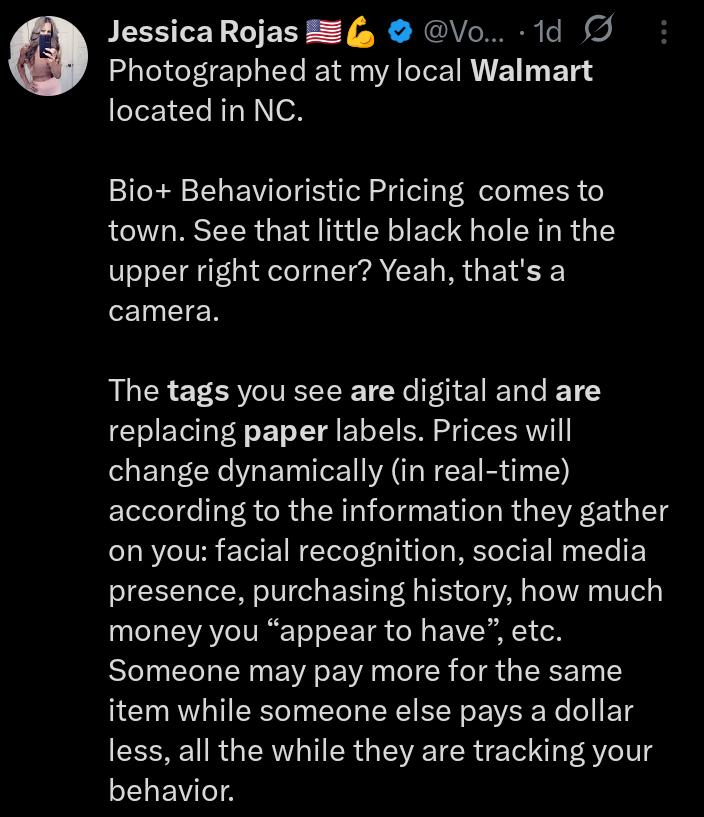
Shoppers worry that if prices can change quickly, stores could eventually raise prices during busy hours, before storms, during holidays, or when demand for certain products rises. Nobody wants to walk into Walmart for bottled water, diapers, or eggs and wonder if the shelf price has suddenly developed a mood.
Walmart has pushed back strongly against that fear. Greg Cathey, Walmart’s senior vice president of transformation and innovation, told Reuters, “It is absolutely not going to be one hour it is this price and the next hour it is not.”
That quote matters because the public suspicion is real. Grocery prices have already left many families feeling squeezed, so even a small digital screen can seem suspicious if people believe it gives retailers too much power.
Lawmakers have also raised concerns about digital shelf labels in grocery stores more broadly. Senators have questioned whether electronic tags could open the door to dynamic pricing, in which prices shift based on demand, timing, or other factors. Labor groups have also warned that this kind of technology should not be used to squeeze shoppers or workers.
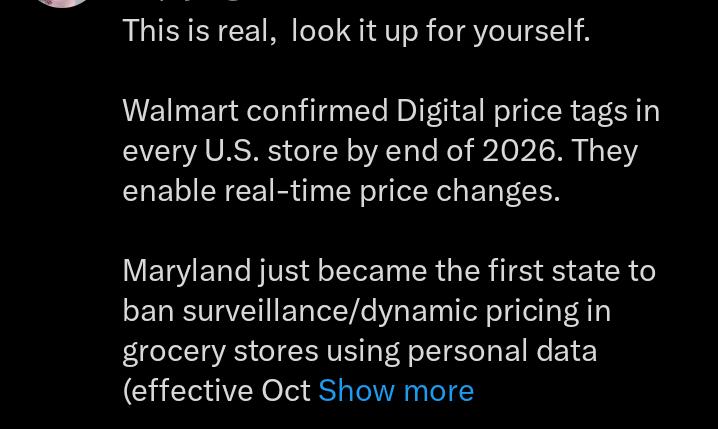
To be clear, there is no verified proof that Walmart is using these digital labels for surge pricing. Walmart says the system is not designed to change prices based on who is shopping, what time it is, or how high demand gets during the day.
That distinction is important. Digital labels can enable faster price changes, but that does not automatically prove that Walmart is using them unfairly. At the same time, shoppers are not being dramatic for wanting clear answers. When grocery bills already feel painful, price transparency matters more than ever.
What Shoppers Should Know Before Checkout
For shoppers, the best reaction is not panic. It is paying attention.
Digital shelf labels may actually solve one of the oldest shopping headaches: shelf prices that do not match the register. Since digital labels can be updated more quickly, Walmart argues they can help keep shelf prices more accurate.
That would be good news if it works as promised. Anyone who has argued over a sale price at checkout knows how frustrating it can be when a shelf tag says one thing and the register says another. If digital tags reduce those mistakes, shoppers could benefit.
Retail experts have also suggested that electronic shelf labels are often more about efficiency than dramatic price games. Ioannis Stamatopoulos, who has studied electronic shelf labels, told AP, “Selling groceries is not selling a couch.” His point was simple: grocery stores depend on shoppers returning week after week, so breaking trust can be costly.
Amanda Oren, vice president of industry strategy for North American grocery at Relex Solutions, also described the technology as “working smarter, not harder.” That view supports Walmart’s argument that the labels are meant to save time and improve store operations.
Still, shoppers should keep their eyes open. If a product rings up at a different price from the shelf price, take a photo of the label and ask an employee to check it. That is not being difficult. That is being careful with your money.
The real story is bigger than paper tags. Walmart is changing how prices appear in stores, and shoppers are deciding whether they trust that change. The company says the new labels will make stores faster, cleaner, and more accurate. Critics worry the same technology could someday make pricing feel too flexible.
For now, the most important verified fact is this: Walmart is replacing paper tags with digital shelf labels, but the company says it is not using them for surge pricing. Shoppers should welcome any tool that makes prices clearer, but they should also keep doing what smart shoppers have always done.
Check the shelf. Watch the register. Keep the receipt.
The paper tag may be disappearing, but the shopper’s right to a fair, clear price should not disappear with it.