7 Ways Rite Aid’s Collapse Changed Thrifty Ice Cream Forever
For generations, Thrifty Ice Cream was never just a cheap cone from a drugstore counter. It was the sweet little reward at the end of a prescription run, the childhood stop after school, the Southern California ritual hiding beside fluorescent lights, pharmacy shelves, bargain toys, greeting cards, and those strange “As Seen on TV” gadgets nobody really needed, but everyone wanted to touch.
Now that Rite Aid’s store era has collapsed, the future of Thrifty Ice Cream looks very different from the version many Americans remember. The brand itself is not gone, but the old experience has been cracked open, scooped apart, and rebuilt into something more corporate, more packaged, and far less tied to the neighborhood drugstore counter that made it famous.
The Rite Aid counter experience is the biggest thing fans lost.
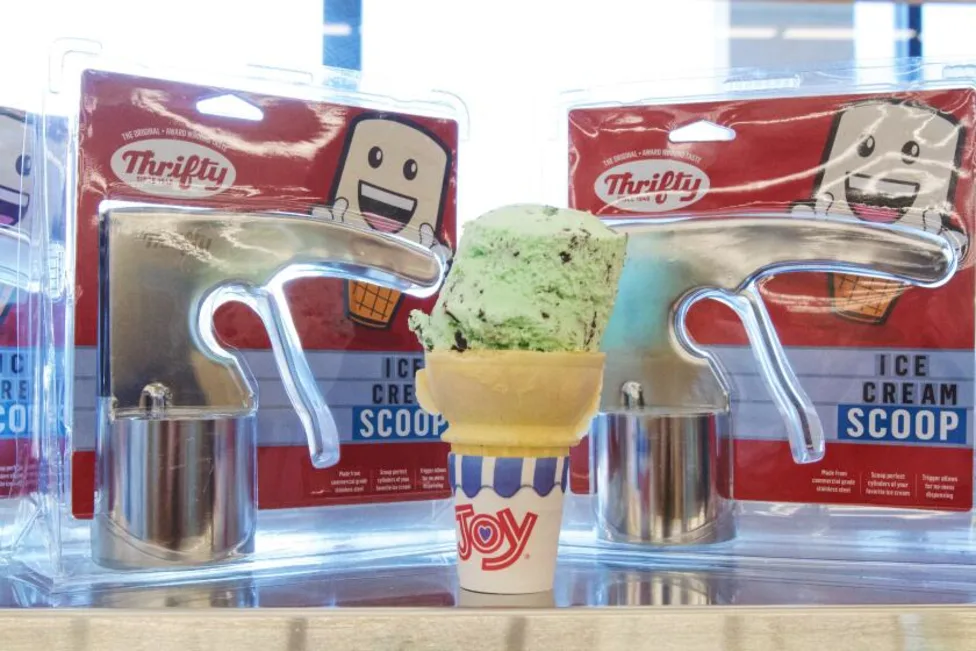
The hardest part of the Thrifty Ice Cream story is not simply that Rite Aid closed stores. It is that the old scoop counter was the brand’s emotional engine. A carton from a freezer aisle can still taste good, but it does not recreate the moment of standing under drugstore lights, watching an employee press that famous cylindrical scoop into a tub, and walking away with a perfectly shaped tower of ice cream balanced on a cake cone.
That experience mattered because it made Thrifty feel local, affordable, and oddly personal. We could buy ice cream from hundreds of brands, but Thrifty had a rhythm people remembered. The flavors sat in big tubs, the scoops came out with those flat-edged curves, and the price always felt connected to an older California where a simple cone could still feel like a bargain. Losing that counter means losing the theater around the product.
Thrifty Ice Cream survived, but the old Rite Aid version did not.
The good news is clear: Thrifty Ice Cream did not vanish with Rite Aid. The bad news is just as clear: the Rite Aid version of Thrifty is effectively over. The brand has moved from a drugstore ritual to a rescued-food label trying to build a second life through grocery distribution, online sales, independent retailers, and nostalgia marketing.
That changes the story in a major way. A brand can survive on shelves and still lose part of its soul. Thrifty’s comeback may keep Chocolate Malted Krunch, black cherry, rocky road, rainbow sherbet, and other familiar flavors alive, but longtime fans know the old formula was never only about ingredients. It was about the setting, the price, the scoop, the wait at the counter, and the small thrill of getting dessert in a place that was never designed to feel magical.
Chocolate Malted Krunch became the flavor everyone measured the future against
Every beloved ice cream brand has one flavor that carries the mythology, and for Thrifty, Chocolate Malted Krunch has long held that job. It is the flavor people mention when they talk about childhood, loyalty, and the difference between a grocery carton and a fresh scoop from the counter. Its appeal sits in the contrast: creamy chocolate ice cream, crunchy malted pieces, and small bursts of texture that make every bite feel busy without becoming messy.
That is why the freezer aisle debate matters. When fans compare hand-scooped Thrifty with packaged Thrifty, they are really asking a bigger question: can a nostalgia brand scale up without flattening the thing people loved? Packaged ice cream often spends longer in cold storage, moves through more steps, and sits in smaller containers than the big tubs used at counters. Even when the recipe stays close, texture, mix-in distribution, and freshness can change how the final scoop feels.
The El Monte plant is now the heart of the comeback story.
The most important piece of the Thrifty comeback is not a flavor, a logo, or a social media campaign. It is the El Monte production plant. That facility connects the modern brand to the old Hollywood roots of Thrifty’s ice cream operation, which began producing its own ice cream after customer demand made the frozen side of the business too important to outsource.
Keeping production anchored in California gives the brand a stronger story than many packaged desserts can claim. It lets Thrifty say it still belongs to the region that made it famous. In a crowded ice cream market full of premium pints, celebrity-backed sweets, protein-packed frozen desserts, and limited-edition gimmicks, that local continuity may become Thrifty’s sharpest advantage. Nostalgia sells best when customers believe the product still has a real home.
The new owners face a dangerous balancing act.
Thrifty’s new ownership gives the brand a second chance, but it also creates pressure. New owners usually want growth, and growth often means wider distribution, new packaging, fresh flavors, stronger retail partnerships, and bigger marketing. That can help Thrifty reach customers who never lived near a Rite Aid counter, but it can also make devoted fans nervous.
The risk is simple: over-modernizing could turn Thrifty into just another freezer brand in a vintage costume. The comeback works only if the company protects the core details people care about most. That means keeping the cylindrical scoop’s identity alive, preserving classic flavors, protecting texture, avoiding unnecessary recipe changes, and ensuring the brand still feels affordable enough to match its name.
Grocery shelves cannot fully replace the neighborhood counter.
A freezer carton can carry the flavor, but it cannot carry the full memory. That is the challenge Thrifty now faces. Grocery availability makes the brand easier to buy, especially for families who want to keep a tub at home. Online ordering and store locators also help fans find the product without hunting through dying Rite Aid locations or relying on rumor.
Still, convenience is not the same as atmosphere. The old counter turned an everyday errand into a tiny event. A child could go in for nothing more exciting than cold medicine or toothpaste and leave with a scoop of mint chip, butter pecan, or Chocolate Malted Krunch. That emotional link is difficult to rebuild in a supermarket aisle, where Thrifty must compete beside dozens of brands shouting for attention from nearly identical cartons.
The Thrifty Scoop may become more important than ever.
The famous Thrifty scoop is no longer just a serving tool. It is a symbol of continuity. Its cylindrical shape gave the brand a visual identity long before food brands understood the power of instant recognition on social media. One look at that flat-sided scoop, and fans know exactly what brand they are seeing.
That matters in the comeback era because Thrifty needs more than flavor recognition. It needs ritual recognition. Selling the scoop to customers gives fans a way to recreate part of the counter experience at home, even if the original setting has disappeared. It turns the product into an activity, which may be one of the smartest ways to keep existing customers emotionally attached while introducing younger buyers to the brand.
The comeback could make Thrifty bigger, but less intimate.
There is a strange possibility hiding inside this whole story: Thrifty Ice Cream may become more widely available after Rite Aid’s collapse than it was before. If the brand expands into more grocery chains, ships to more states, and builds stronger retail partnerships, new customers may discover it without ever knowing what a Rite Aid scoop counter felt like.
That growth would be bittersweet. We may see more Thrifty in more freezers, more flavors in more markets, and more people posting the classic scoop online. Yet the brand’s emotional center will always belong to those drugstore counters where the ice cream felt cheap, familiar, and deeply connected to place. Thrifty may survive this new era, but the version many people loved most has already become a memory.