Voting Rights Concerns Rise Across America After DHS Chief’s Remarks on ICE Near Polling Stations
A new political flashpoint is emerging in Washington after comments from the Department of Homeland Security chief raised questions about whether federal immigration enforcement could be present near polling locations during the 2026 midterm elections. The remarks have raised concerns among civil rights advocates, election officials, and voters, who warn that the proposal could undermine public trust in the voting process.
At the center of the controversy is a broader national debate over election integrity, immigration enforcement, and how federal agencies should operate during one of the most sensitive civic duties in the United States: casting a ballot.
As the 2026 midterms approach, even suggestions tied to polling site security are drawing heightened attention, reflecting the growing political stakes surrounding election administration.
What Happened
According to reporting from NewsBreak and Fox News, Department of Homeland Security Secretary Markwayne Mullin said the agency is actively reviewing voter information and election-related records as part of its early preparations for the 2026 midterm elections.
During those remarks, Mullin also refused to rule out the possibility that Immigration and Customs Enforcement (ICE) agents could be present at or near polling locations. He emphasized that only American citizens should be standing in voting lines, framing the department’s work as part of a broader effort to ensure lawful participation in federal elections.
The comments immediately drew attention because ICE is typically focused on immigration enforcement activities such as detention, deportation, and workplace operations, not election administration or polling place oversight. No formal policy has been announced, and DHS has not confirmed any operational plan involving ICE’s presence at voting locations.
Still, the suggestion alone has already sparked strong reactions across political, legal, and advocacy circles, with critics warning about potential impacts on voter confidence.
Some election observers say even the perception of enforcement activity near polling locations can raise concerns, regardless of whether any policy is ultimately implemented.
Why Locals Care
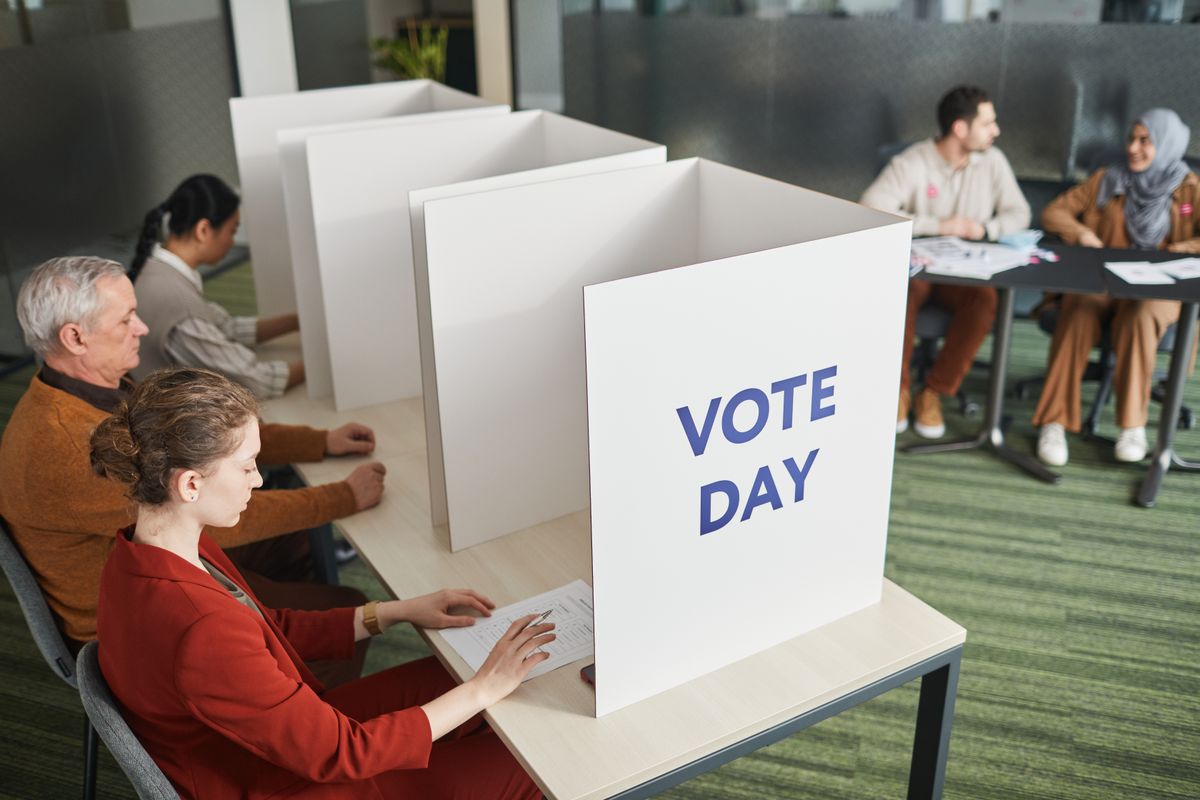
For voters across the United States, polling places are expected to remain neutral, safe, and free from pressure or intimidation. They are designed to be spaces where citizens can cast ballots privately and without outside influence.
That is why the idea of federal immigration enforcement appearing near voting sites has quickly become a sensitive issue.
Immigrant communities, including naturalized citizens, lawful permanent residents, and mixed-status families, are particularly attentive to any law enforcement presence in civic spaces. Advocates argue that even the possibility of ICE activity near polling locations could discourage eligible voters from participating due to fear, misunderstanding, or confusion about enforcement priorities.
Civil rights groups have also raised concerns in past election cycles about maintaining a clear separation between law enforcement activity and voter access. They stress that polling sites must remain environments where voters can participate freely without hesitation or disruption.
At the same time, supporters of stronger election security measures argue that ensuring only eligible citizens vote is essential to maintaining trust in election outcomes. From their perspective, increased oversight or federal coordination may be viewed as a necessary safeguard rather than a source of intimidation.
This divide highlights a broader tension in American politics: how to balance election security with voter accessibility while maintaining both integrity and public confidence.
Background and Context
The comments come as federal and state governments begin preparing for what is expected to be a closely watched and highly competitive 2026 midterm election cycle.
In recent years, debates over voter identification laws, registration systems, mail-in voting rules, and election security have intensified across the country. Some states have expanded voter verification requirements, while others have focused on increasing access to registration and ballot participation.
Within this environment, election policy has become one of the most politically sensitive issues in Washington and state capitals alike.
ICE, a federal agency within the Department of Homeland Security, is primarily responsible for immigration enforcement, including detention operations, deportation proceedings, and investigations into immigration violations. The agency has not historically played a role in managing polling locations or supervising election-day voting activity.
Election administration in the United States is largely decentralized. State and local officials oversee polling sites, voter registration, ballot counting, and certification processes. Federal agencies typically provide limited support, often focused on cybersecurity coordination and protection of election infrastructure rather than physical presence at polling stations.
Because of this structure, any proposal involving federal law enforcement presence at voting locations would likely face significant legal, political, and logistical scrutiny before implementation.
Mullin’s remarks, therefore, add a new layer of complexity to an already contentious national debate over how elections should be secured and who should be involved in that process.
What Happens Next
As of now, there is no confirmed plan to deploy ICE agents to polling locations, and the Department of Homeland Security has not issued formal guidance indicating such a move will occur.
Election officials at the state and local levels are expected to seek clarification from federal authorities as preparations for the 2026 cycle continue. Many jurisdictions are already updating procedures for staffing, security coordination, and voter access policies ahead of early voting periods and election day operations.
If any formal proposal involving law enforcement presence near polling sites is introduced, it would likely require legal review, public comment periods, and possibly court challenges before it could be implemented.
For now, the issue remains at the level of public discussion and policy signaling, with no operational rollout announced or scheduled.
Why It Matters
This controversy underscores how fragile the balance between election security and voter access has become in the United States.
Even without formal policy changes, statements from senior government officials can shape public perception, influence voter confidence, and fuel broader political debate about the integrity of the electoral process.
For many Americans, the key concern is not only how elections are administered, but whether they feel confident and comfortable participating in them without fear of misunderstanding or interference.
As the 2026 midterms draw closer, questions about the role of federal agencies in election-related activity are likely to remain central to political discussions in Washington. The outcome of this debate could help define not only how elections are secured, but how trust in the system is maintained in an increasingly polarized environment.
A new political flashpoint is emerging in Washington after comments from the Department of Homeland Security chief raised questions about whether federal immigration enforcement could be present near polling locations during the 2026 midterm elections. The remarks have raised concerns among civil rights advocates, election officials, and voters, who warn that the proposal could undermine public trust in the voting process.
At the center of the controversy is a broader national debate over election integrity, immigration enforcement, and how federal agencies should operate during one of the most sensitive civic duties in the United States: casting a ballot.
As the 2026 midterms approach, even suggestions tied to polling site security are drawing heightened attention, reflecting the growing political stakes surrounding election administration.