Elizabeth Banks Sparks Debate After Questioning Why White Women Voted for Trump Over Harris
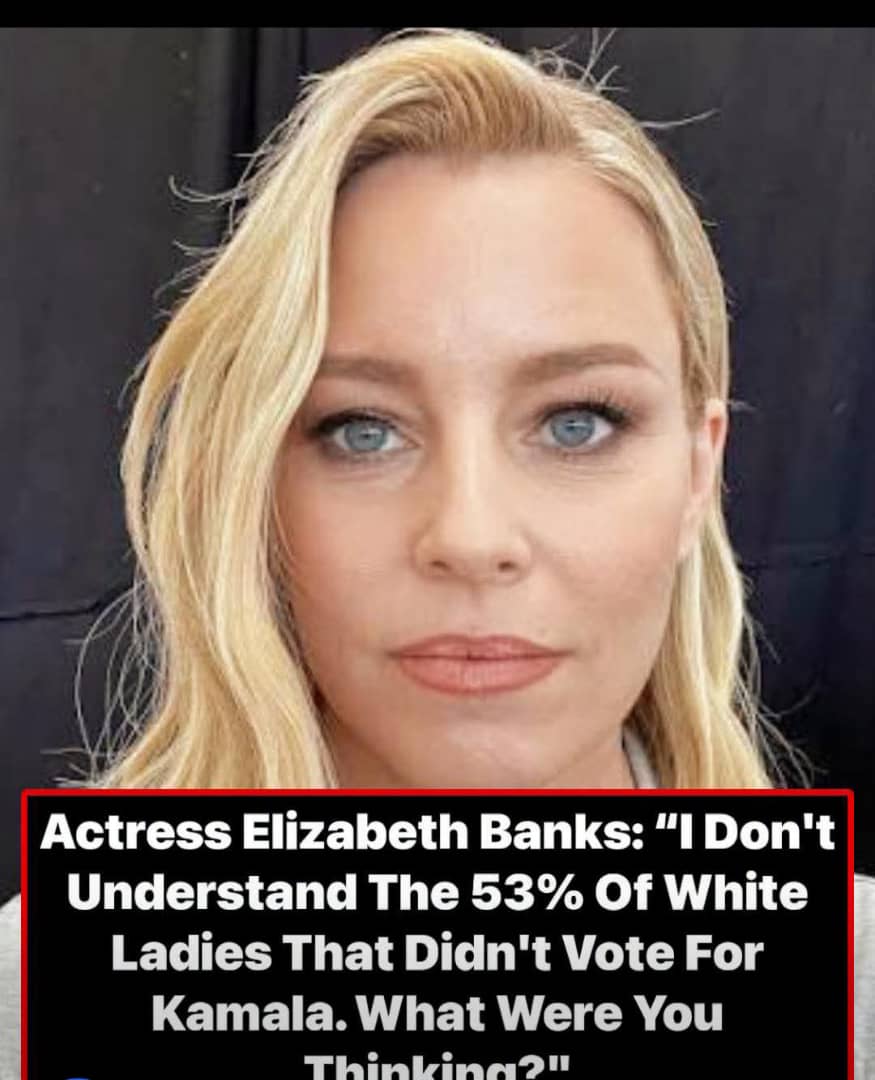
A Hollywood actress’s question about the 2024 election has reopened one of America’s biggest political conversations: why do millions of voters choose candidates who appear to conflict with the expectations others place on them? Elizabeth Banks sparked a wave of reactions after questioning why a majority of white women voted for Donald Trump rather than Kamala Harris, turning a podcast discussion into a broader debate about gender, politics, and personal priorities.
Banks, best known for roles in films such as The Hunger Games franchise, has long been open about her political views. During an appearance on Bustle’s “One Nightstand” podcast, she reflected on her character Effie Trinket. She used the fictional world of Panem to discuss how people change their beliefs when they recognize what she described as unfair systems. Her comments quickly gained attention because they touched on a sensitive question surrounding American elections: Do voters with shared identities always support the same political candidates? The answer, according to election analysts and voters themselves, is far more complicated.
Elizabeth Banks Connects Effie Trinket’s Story to Modern Politics
During the podcast conversation, Banks discussed Effie Trinket’s transformation throughout The Hunger Games series. When audiences first meet Effie, she represents the Capitol, the powerful government structure controlling Panem. Over time, her character begins questioning the system she once supported and eventually becomes involved with those fighting against it. Banks described Effie’s journey as one of the most significant character developments she has portrayed.
“Effie is the model,” Banks said while discussing the character’s evolution. She questioned why some white women voters supported Trump over Harris, citing exit polling from the 2024 election. Banks argued that Effie’s story represented the possibility of people changing their views after recognizing inequality or injustice. Her comparison linked a fictional story about rebellion and power to a real political debate unfolding across the United States.
The Election Numbers Behind Banks’ Comment
Banks’ remarks focused on 2024 election data showing that white women voters were divided between Trump and Harris. Exit polling reported that 53% of white women voted for Donald Trump, while the remaining voters supported Harris or other candidates. For many Democrats and Harris supporters, those numbers became a source of frustration because they believed issues such as reproductive rights, gender equality, and women’s representation should have pushed more women toward the Democratic ticket.
Banks was among the celebrities who publicly supported Harris during the campaign. She participated in events supporting the Democratic candidate and encouraged voters to consider issues that align with her political views. However, election results also showed that voters rarely make decisions based on a single issue or aspect of identity.
Political scientists have repeatedly found that voters consider a wide range of factors, including:
- Economic conditions
- Inflation and household costs
- Immigration policy
- Healthcare
- National security
- Social issues
- Government leadership. For many Trump supporters, their votes reflected their views on these issues rather than a rejection of women’s concerns.
Why Women Voters Do Not Always Vote the Same Way
One of the biggest debates following Banks’ comments involved the assumption that women should naturally support certain political positions. Political analysts have long noted that women are not a single voting group. Age, income, education, location, religion, family background, and personal experiences can all influence political decisions. A woman living in a large city may have different priorities from a woman living in a rural community. A younger voter may focus on different issues than an older voter.
Even among women who share similar backgrounds, opinions can differ dramatically. This complexity has appeared throughout American elections. Gender remains an important factor in voting behavior, but it does not determine every voter’s choice. The debate surrounding Banks’ comments reflects a broader challenge in politics: understanding why people with similar identities can reach completely different conclusions.
Celebrity Political Comments Continue to Spark Reactions
Elizabeth Banks joins a long list of celebrities whose political statements have created public discussion. Actors, musicians, and entertainers often use their platforms to support candidates, discuss social issues, or encourage political participation. Supporters argue celebrities have the same right as any citizen to express their opinions. They believe public figures can help increase awareness and motivate people to participate in elections.
Critics, however, sometimes argue that celebrities may not understand the everyday concerns influencing voters outside entertainment and major cities. The reaction to Banks’ comments followed this familiar pattern. Some people praised her for challenging political assumptions, while others criticized her for appearing to dismiss the reasons millions of Americans voted differently.
The Continuing Influence of ‘The Hunger Games’ Themes
The discussion also highlights the lasting cultural impact of The Hunger Games franchise. The series, based on Suzanne Collins’ novels, explores themes of power, inequality, government control, rebellion, and social change. Banks’ use of Effie Trinket as a political comparison shows how fictional stories can continue influencing real-world conversations years after their release.
Many fans view Effie’s character as an example of someone who changes after confronting difficult truths. Others argue that applying fictional narratives to real political decisions can oversimplify complicated issues. The disagreement reflects the power of storytelling in shaping how people understand politics.
A Larger Debate About Identity and Political Choice
At the center of the controversy is a question that extends beyond one actress’s remarks: Should personal identity determine political beliefs? Some voters believe certain experiences naturally lead people toward particular policies. Others argue that individuals should be free to prioritize whichever issues matter most to them. The 2024 election demonstrated that American voters remain deeply divided, even among groups that appear similar on the surface.
Women, like all voters, make decisions based on personal experiences, beliefs, economic concerns, and views about the country’s future. Banks’ comments may have started with a discussion about a fictional character, but they opened a much larger conversation about democracy, identity, and the complicated reasons people choose their candidates. The debate shows that political choices are rarely as simple as outside observers expect. Behind every vote is an individual weighing competing concerns and deciding which issues matter most.