Families Speak in Court as Gilgo Beach Killer Rex Heuermann Receives Life Sentence Without Parole
For years, families of missing women on Long Island lived with unanswered questions, fading hope, and the painful uncertainty of not knowing what happened to their loved ones. On Wednesday, those years of waiting met a final courtroom moment as the man prosecutors say was responsible for their deaths was sentenced to life in prison without parole.
Rex Heuermann, a Manhattan architect accused of methodically killing multiple women over nearly two decades, received the maximum sentence allowed under New York law. The ruling closes one of the most disturbing serial murder cases in recent U.S. history, centered around the Gilgo Beach investigation.
What Happened In Court
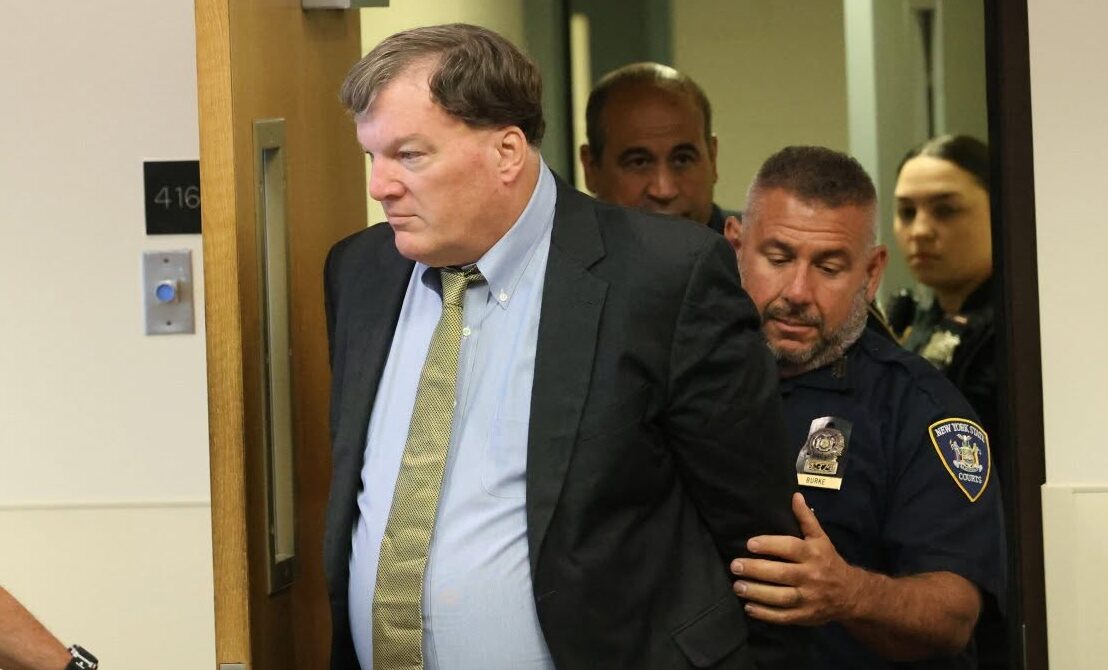
According to court proceedings and statements reported from the sentencing, Heuermann, 63, was sentenced to life in prison without the possibility of parole after pleading guilty to the murders of seven women and admitting responsibility for an eighth victim as part of a plea agreement.
Judge Timothy Mazzei handed down the sentence following emotional victim impact statements from families who described years of grief, unanswered questions, and permanent loss.
Family members of victims used their time in court to speak directly about the lives that were taken and the long shadow the case has left behind.
One relative of victim Jessica Taylor told the court, “A million years isn’t enough. Nothing will ever make this right.”
Another family member, speaking about victim Valerie Mack, said the sentencing brought justice in a legal sense, but not emotional closure.
The court also heard from the daughter of Megan Waterman, who was only a child when her mother disappeared, describing how her life was shaped by the loss and unanswered questions.
Heuermann was given the opportunity to address the court, though reports focused heavily on the victims’ families’ statements and the judge’s final ruling.
Why The Case Matters To Long Island Communities
The Gilgo Beach case has long haunted Long Island communities, particularly because the victims’ remains were discovered along a remote stretch of coastline over several years.
For residents, the case represented more than a headline. It was a years-long reminder that a serial killer had operated undetected in the region for more than a decade.
Families of the victims lived through what many described as a painful cycle of discovery, silence, and renewed fear as more remains were identified over time.
The sentencing now brings legal finality, but it does not erase the years of uncertainty that shaped entire families and communities.
Background: A Decades-Long Investigation
According to investigators, the case first drew major attention in 2010 and 2011 after human remains were discovered near Gilgo Beach. What initially appeared to be a single missing persons case expanded into a broader investigation when multiple sets of remains were found in the same area.
Over time, authorities linked several victims to a pattern, eventually identifying more women whose deaths were connected to the same suspect.
Investigators later said Heuermann was identified through a combination of surveillance footage, witness descriptions, cellphone data, and DNA evidence recovered from discarded materials, including a pizza box.
Authorities say the investigation revealed a pattern spanning at least 17 years, with victims largely identified as young women who had arranged meetings with the suspect.
Heuermann was arrested in 2023, more than a decade after the first remains were discovered.
How Investigators Say The Case Broke Open
Law enforcement officials say the breakthrough came when investigators re-examined earlier witness descriptions, including a vehicle seen near one of the victims’ associates and a description of a large man linked to the case.
From there, investigators built a timeline using cellphone data, travel patterns, and physical evidence that allegedly connected Heuermann to multiple crime scenes.
The use of DNA from discarded items became one of the key developments that allowed prosecutors to move forward with charges after years of stalled leads.
What Happens Next
With sentencing complete, Heuermann will serve life in prison without parole under New York state custody.
While the criminal case has reached its conclusion, the broader investigation into the Gilgo Beach killings has not fully ended. Authorities have previously indicated that they continue to review evidence tied to other potential cases and unanswered questions in the region.
Families of victims will continue to live with the emotional aftermath of the crimes, even as the legal process has now reached its final stage.
There is no indication of further sentencing hearings or appeals affecting the life-without-parole outcome at this time.
Why It Matters
The Gilgo Beach case is one of those rare investigations that reshaped public awareness of long-unsolved serial killings in the United States.
It highlights how modern investigative tools, such as DNA analysis, digital records, and long-term evidence re-evaluation, can eventually bring resolution even after many years of silence.
But beyond the legal outcome, the case is defined by the voices heard in court: families who spent more than a decade waiting for answers that only came in fragments.
The sentence delivers justice in a legal sense, but as the court made clear through victim statements, it cannot restore the lives that were lost or the years that were taken from those left behind.
For Long Island, the case now moves from investigation to history, but the impact of what happened there will remain for generations.
For years, families of missing women on Long Island lived with unanswered questions, fading hope, and the painful uncertainty of not knowing what happened to their loved ones. On Wednesday, those years of waiting met a final courtroom moment as the man prosecutors say was responsible for their deaths was sentenced to life in prison without parole.
Rex Heuermann, a Manhattan architect accused of methodically killing multiple women over nearly two decades, received the maximum sentence allowed under New York law. The ruling closes one of the most disturbing serial murder cases in recent U.S. history, centered around the Gilgo Beach investigation.