Netanyahu’s Defiance of Trump’s Iran Deal Turns Into a Political Firestorm
Benjamin Netanyahu has spent much of his career selling himself as the man who can stare down Iran, outlast pressure from Washington, and keep Israel’s enemies guessing. But President Donald Trump’s new interim agreement with Iran has now placed the Israeli prime minister in one of the tightest political corners of his long career.
The issue is not just the U.S.-Iran deal itself. It is what the deal says about Lebanon, what Iran says it requires, what Israel says it will not accept, and what Trump is now saying publicly about Netanyahu’s military instincts.

At the center of the storm is a simple but explosive question: can Netanyahu keep fighting on Israel’s terms after Washington has moved toward a wider regional ceasefire?
Netanyahu has not publicly used the exact phrase that he “will not comply” with Trump’s peace deal. But he has made clear that Israel is not a signatory to the U.S. Iran agreement, that Israel will defend its own security interests, and that he is “not limiting” himself when it comes to preventing Iran from obtaining a nuclear weapon. He has also said Israeli forces will remain in the buffer zone in southern Lebanon “for as long as necessary.”
That is more than diplomatic hair-splitting. It is a direct collision between Trump’s push to freeze the fighting and Netanyahu’s insistence that Israel must keep its military options open.
A Peace Deal Meets Israel’s Red Line
The U.S.-Iran memorandum is not a final peace treaty. It is an interim framework designed to stop the war, reopen the Strait of Hormuz, create a 60-day negotiating window, and move the nuclear issue into another phase of talks.
But one part of the deal has landed like a grenade in Israeli politics: Lebanon.
According to the text read out by a U.S. official, the agreement declares an immediate and permanent end to military operations on all fronts, including Lebanon, and includes language about Lebanon’s territorial integrity and sovereignty. Iran has seized on that clause, arguing that Israeli troops must leave southern Lebanon and that any further Israeli strike there would violate the deal.
Iranian Foreign Minister Abbas Araghchi put it plainly, saying that when Iran agreed to a ceasefire, it meant “across all fronts, with particular emphasis on Lebanon.” He also said that any continued occupation of Lebanese territory would be seen by Tehran as a violation of the memorandum.
Israel’s answer has been just as blunt.
National Security Minister Itamar Ben Gvir said, “Trump’s agreement does not bind us.” He added that Israel is an independent country and is not subordinate to the United States. Defense Minister Israel Katz went even further, saying the IDF would remain in security zones in Lebanon, Syria, and Gaza “without any time limit.”
Katz also warned that if Iran attacks Israel because of events in Lebanon, Israel would strike Iran “with full force.”
That is the heart of the crisis. Trump is trying to stitch together a regional pause. Iran is trying to include Lebanon in the package. Netanyahu’s government is saying Lebanon is Israel’s security arena and cannot be locked inside a U.S. Iran bargain.
In other words, the ink is barely dry on the diplomatic framework, and everyone is already fighting over what it means.
Trump Tells Bibi to Ease Up, Netanyahu Says Israel Won’t Be Boxed In
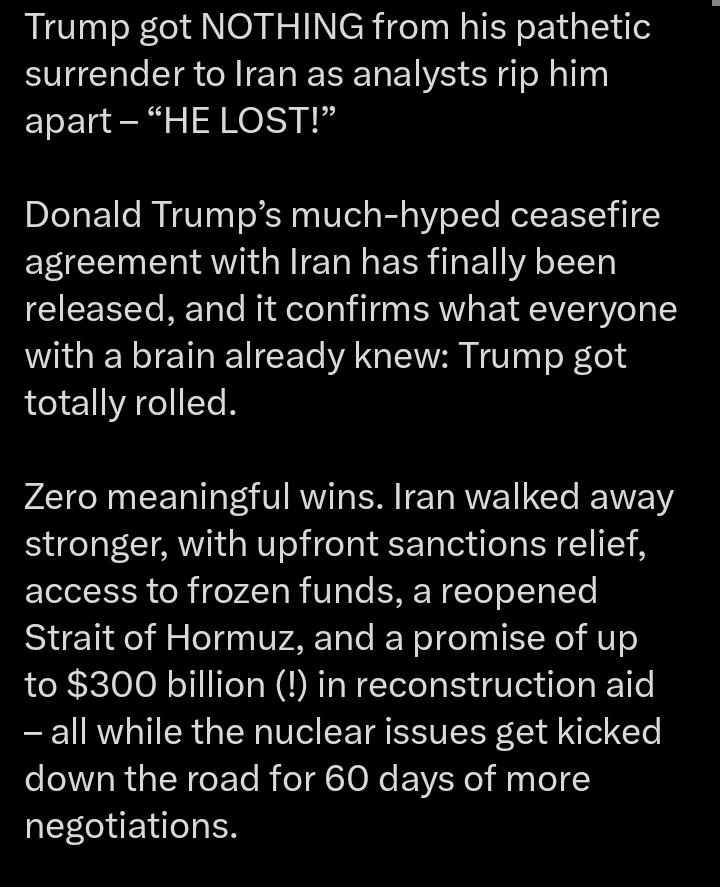
The most surprising twist is not that Iran and Israel disagree. That was expected. The bigger drama is that Trump and Netanyahu, two leaders often described as close allies, are now openly out of sync.
Trump has publicly criticized Israeli strikes in Lebanon, including a Beirut attack that came as Washington was trying to finalize the Iran framework. In one post, he said the attack “should not have happened,” especially when the region was close to a peace deal. He urged all sides to stand down.
Then came the sharper line.
Speaking to reporters, Trump said, “Netanyahu happens to be a good man, gets a little excited sometimes.” He added, “We have a little dispute over Lebanon. I say you can do a little softer touch, Bibi. You don’t have to knock down a building every time somebody walks into it that’s from Hezbollah.”
That is vintage Trump, part praise, part jab, part headline machine. But beneath the humor is a serious split. Trump wants the war cooled down enough to make the Iran deal work. Netanyahu wants to preserve freedom of action against Hezbollah and Iran. Those two goals are now rubbing against each other like dry sticks.
Netanyahu, for his part, has tried not to attack Trump directly. Instead, he has framed the disagreement as a normal dispute between partners.
“In the U.S., they say that President Trump does everything I ask, and in Israel, they say the opposite, that I do everything he asks,” Netanyahu said. “Neither is true.”
He added that he and Trump have “a relationship of partners who know each other,” and that “many times, we agree; sometimes we don’t agree.”
That sounds calm. But Netanyahu’s next message was tougher: “I am responsible for Israel’s security interests. I stand up for them.”
On Iran, he said Israel “will do what is necessary” to prevent Tehran from obtaining a nuclear weapon and stressed, “I am not limiting myself in any way regarding this goal.”
That is the line that matters most. Netanyahu is saying he respects the United States, but he will not let Washington’s deal become a cage around Israel’s military decisions.
For his supporters, that is leadership. For his critics, it is the same old Netanyahu: always at war, always blaming pressure from abroad, always promising victory while the bill keeps growing.
Why the Pressure to Replace Netanyahu Is Getting Louder
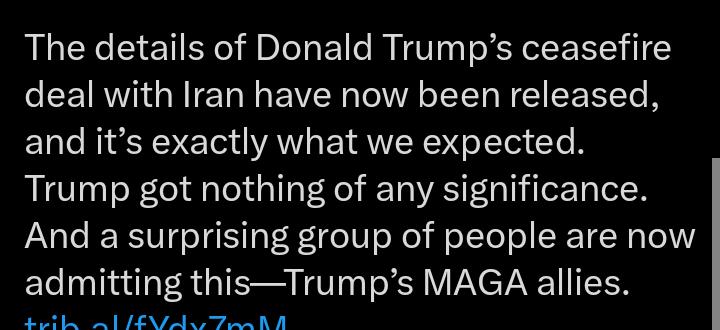
Inside Israel, the Iran deal has not simply created a foreign policy debate. It has become a political weapon.
Opposition leader Yair Lapid accused Netanyahu of failing at the decisive moment. He said Netanyahu “lost the war” and called the situation “the most absolute failure” of Netanyahu’s diplomacy on the Iranian front.
Lapid’s message was brutal but clear: the Israeli military delivered, but Netanyahu did not turn battlefield gains into a durable political outcome. In his words, “The State of Israel won the battle; Netanyahu lost the war.”
Former Prime Minister Naftali Bennett also slammed the government, saying Israel’s soldiers and security forces performed extraordinarily, but the government failed to turn those achievements into lasting security. Bennett argued that the problem was not fate, but failed leadership.
This is where the call for Netanyahu’s removal becomes politically serious. It is not about rage for rage’s sake. It is about whether one leader, after years of war, crisis, division, and diplomatic strain, can still deliver security rather than further escalation.
Netanyahu’s defenders argue that he has kept Israel alive in a brutal region, weakened Iran’s network, and refused to let foreign governments dictate Israeli security. They believe a softer approach would reward Hezbollah and Iran.
His critics see the opposite. They argue that Israel is now diplomatically isolated, exhausted by war, and watching its closest ally cut a deal that leaves Netanyahu reacting from the sidelines. They also point to the unresolved fallout from the October 7 failures, the Gaza war, the Lebanon front, and corruption allegations, as well as the deep distrust his leadership has created at home and abroad.
The removal question, however, must be answered through lawful democratic channels: elections, coalition politics, public accountability, and parliamentary process. Netanyahu should not be removed by chaos, violence, or revenge. If Israelis decide he has failed, the ballot box and the Knesset are the proper places to make that judgment.
But politically, the ground is shaking.
Trump’s Iran deal has exposed a painful reality for Netanyahu. For years, he built his brand around being the leader who understood Washington better than anyone, managed American presidents better than anyone, and knew how to keep Iran under pressure better than anyone.
Now, Trump is telling him to cool down in Lebanon. Iran is claiming the deal covers Hezbollah. Israeli ministers are saying the agreement does not bind them. Opposition leaders are calling the moment a historic failure. And Netanyahu is trying to convince Israelis that he still controls the wheel.
That is a hard sell.
The danger now is that every new strike in Lebanon could become more than a military action. It could become a test of Trump’s deal, a trigger for Iranian warnings, and another argument in Israel’s election season.
Netanyahu may believe that staying aggressive keeps Israel safe. But the political question is whether voters still believe him. Because once a leader’s strongest card becomes his weakest point, the game changes quickly.
For Netanyahu, Iran was supposed to be the issue that proved his greatness. Instead, Trump’s deal may become the mirror showing how much power he has lost.