The World’s Wealthiest People Are Still Choosing America. What Keeps Drawing Them In?
The world’s richest individuals are on the move again. From private wealth advisers in Zurich to investment migration firms in Dubai, a quiet but powerful shift is reshaping global capital flows. High-net-worth individuals are relocating across borders at a pace not seen in years. According to the Henley Private Wealth Migration Report 2025, global millionaire migration is expected to exceed 140,000 people in a single year, bringing hundreds of billions in investable wealth with them.
Yet even in this high-speed reshuffling of global fortunes, one destination continues to stand out with remarkable consistency.
The United States. Despite political polarization, rising living costs, and intense global competition from emerging wealth hubs, America remains one of the strongest magnets for the world’s wealthiest people. It is not the easiest place to live; it remains the most powerful place to build, scale, and protect wealth.
So what keeps drawing them in? That answer lies in a rare combination of economic scale, financial depth, institutional resilience, and cultural momentum that few countries can replicate and even fewer can sustain.
A Global Wealth Magnet That Still Dominates the Flow
While countries such as the United Arab Emirates, Singapore, and Switzerland continue to attract wealthy migrants, the United States remains structurally dominant in attracting global wealth.
Henley & Partners’ 2025 outlook projects that the United States will remain one of the top net beneficiaries of millionaire migration, with an estimated inflow of around 7,500 high-net-worth individuals representing over $40 billion in transferable wealth.
At the same time, the broader U.S. economy continues to anchor global financial behavior. The country accounts for roughly a quarter of global GDP, despite representing less than 5 percent of the world’s population. Its stock markets, led by the S&P 500 and Nasdaq, represent more than half of global equity market capitalization. That concentration gives wealthy investors a powerful reason to stay connected to the U.S. Because wealth does not simply move where life is comfortable. It moves where capital has gravity.
America Is Still the Deepest Pool of Capital on Earth
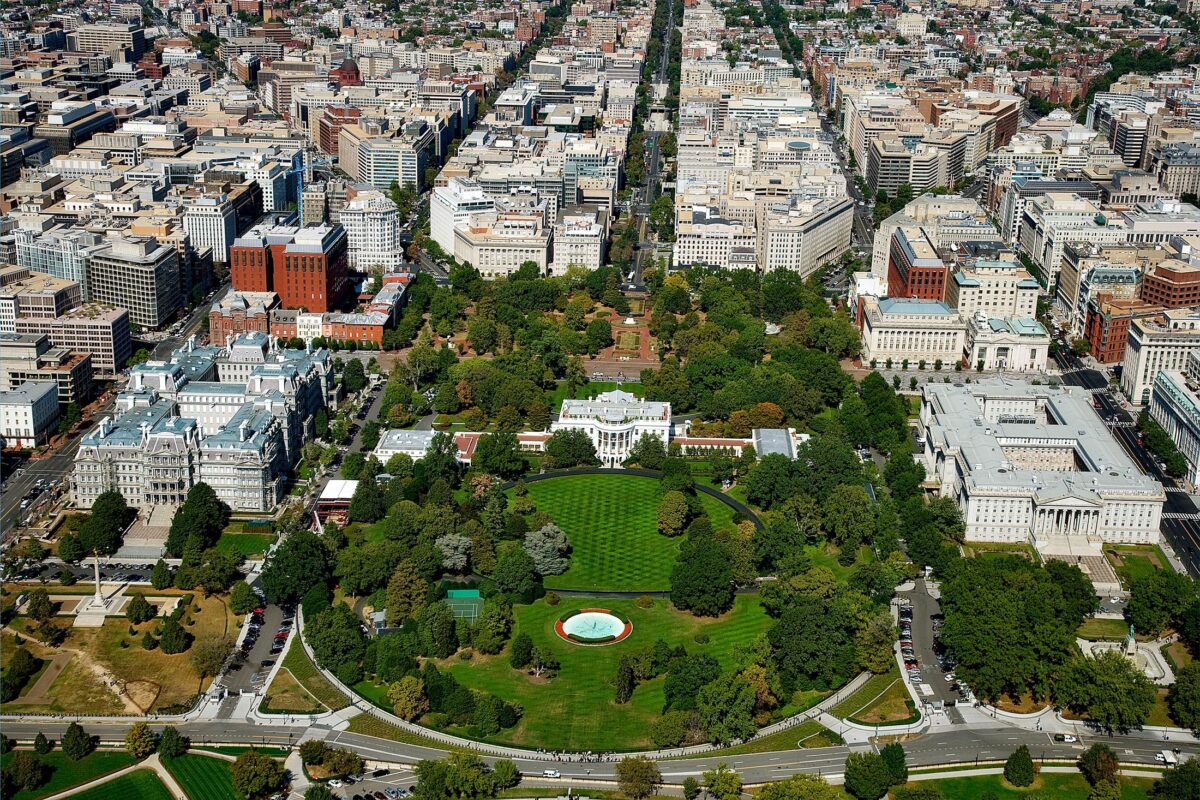
For the world’s elite, the United States is not simply a country; it is a financial ecosystem with unmatched depth that gives capital room to grow.
The U.S. venture capital market continues to account for more than 40 percent of global VC funding, powering industries from artificial intelligence and biotechnology to fintech and clean energy. In 2025, American startups still dominate global unicorn creation, with more billion-dollar companies emerging from U.S. ecosystems than from Europe and Asia combined.
New York remains the world’s most influential financial hub, home to hedge funds, private equity firms, and global investment banks. Silicon Valley continues to set the pace for innovation capital, even as Austin, Miami, and Seattle expand the geography of tech wealth.
This multi-city financial architecture gives wealthy migrants something rare: choice within scale and multiple ways to deploy capital. They are not entering a single economy. They are entering a continental system of capital.
The U.S. Dollar Still Anchors Global Wealth Decisions
Even as the world experiments with alternative payment systems and regional trade currencies, the U.S. dollar remains the backbone of global finance.
Around 58 to 60 percent of global foreign exchange reserves are still held in U.S. dollars, according to IMF-linked estimates, and the majority of global trade continues to be invoiced in dollars. For wealthy individuals, this stability is not abstract. It is practical risk management.
Dollar-based wealth offers liquidity, mobility, and global acceptance, making it easier to move and deploy capital across markets. This reinforces America’s position not only as a destination, but as a financial anchor for the world.
The Reinvention Economy Where Wealth Learns to Scale
One of the most powerful yet least discussed reasons wealthy individuals continue to choose the United States is cultural. America remains the world’s most powerful reinvention economy.
In many parts of the world, wealth is preserved. In America, wealth is expanded. This difference shapes behavior at the highest level of capital.
A tech founder who fails in Europe may struggle to raise capital again. In the United States, failure is often treated as data rather than identity. A foreign entrepreneur can arrive with limited networks and still access venture capital, accelerators, angel investors, and institutional funding within months.
The infrastructure behind this is real. The United States accounts for more than 30 percent of global unicorn companies and consistently leads in patent filings, artificial intelligence research output, and startup formation. Institutions such as Stanford, MIT, and Harvard act as global pipelines feeding talent directly into high-growth industries.
For wealthy migrants, this creates a powerful equation in which capital, talent, and tolerance for risk combine to accelerate growth and opportunity.
Wealth Migration as a Search for Stability in a Fragmenting World
While America benefits from its strengths, global instability is also pushing capital inward. Across parts of Europe, rising tax burdens and regulatory shifts are changing how wealthy families view long-term residency.
In the United Kingdom, fiscal tightening and post-Brexit uncertainty have contributed to increased outbound wealth migration. In China, regulatory restructuring and slower growth have altered confidence in private wealth. In emerging markets, currency volatility and political risk continue to drive diversification strategies. In this context, the United States functions as a second base for global elites.
A place not necessarily chosen for escape, but for optionality. A U.S. residency or investment footprint provides access to a stable legal system, diversified financial markets, and globally recognized institutions, giving wealthy families a hedge against uncertainty elsewhere.
America’s Internal Wealth Map Keeps Expanding
Unlike most countries, the United States does not concentrate wealth in a single capital city. Instead, it distributes it across specialized economic zones.
New York remains the center of global finance, where capital markets and institutional investors shape international flows. The San Francisco Bay Area continues to dominate artificial intelligence, software, and venture capital. Miami has become a magnet for international finance, crypto wealth, and Latin American capital. Austin is rapidly emerging as a hub for tech migration and startup acceleration. Los Angeles anchors the entertainment and creative industries. Houston remains a powerhouse for energy and industrial capital.
This decentralization is a hidden advantage. Wealthy migrants are not forced into one lifestyle. They are selecting from multiple economic identities within a single national system, which gives them more room to align wealth with goals. That level of internal diversity is rare globally.
Foreign Capital Still Flows Into the United States at a Massive Scale
Beyond migration, foreign direct investment continues to reinforce America’s status as a wealth magnet. The United States remains one of the largest recipients of foreign direct investment globally, with inflows consistently exceeding $100 billion annually in recent years.
Sovereign wealth funds, pension funds, and institutional investors continue to allocate large portions of global portfolios into U.S. equities, infrastructure, real estate, and private markets. Even during global downturns, U.S. assets are often the first to recover and attract renewed inflows.
This creates a reinforcing cycle where capital enters, innovation accelerates, returns increase, and more capital follows, strengthening the payoff for investors.
The Lifestyle Factor Where Luxury Meets Infrastructure
While economics dominate the decision-making process, lifestyle still plays a role. The United States offers a rare combination of high-end lifestyle infrastructure and economic opportunity. From elite private schools and world-class healthcare systems to luxury real estate markets in California, Florida, and New York, the country provides services tailored to high-net-worth living.
In cities such as Miami and Los Angeles, ultra-luxury property markets continue to expand, with global buyers competing for waterfront estates, gated communities, and trophy assets.
Yet unlike purely lifestyle destinations, America pairs luxury with productivity, allowing wealth and daily life to reinforce each other. A billionaire can live on the coast and still participate in global markets within hours. The line between living well and building wealth need not be drawn. It coexists in the same system, so living well and building wealth happen together.