Mamdani’s Netanyahu Protest Call Sparks New Tensions Between New York City Hall and the NYPD.
New York City Mayor Zohran Mamdani has transformed an abandoned arrest promise into a fresh political confrontation, urging New Yorkers to protest Israeli Prime Minister Benjamin Netanyahu when he is expected to return to the city.
The appeal may strengthen Mamdani’s standing among progressive supporters who want New York’s mayor to challenge Israel’s conduct in Gaza. Inside the New York Police Department, however, the message has landed differently. Police representatives argue that City Hall is encouraging a politically charged demonstration that officers will later be expected to control.
The growing dispute exposes a fundamental tension at the center of Mamdani’s administration: the instincts of an activist mayor are colliding with the responsibilities of the city’s chief executive.
An arrest pledge runs into legal limits.

Mamdani previously promised that Netanyahu would be arrested if he entered New York while subject to an International Criminal Court warrant. The pledge became one of the most internationally recognized positions of his mayoral campaign.
That promise was always likely to face serious legal obstacles.
The ICC issued arrest warrants for Netanyahu and former Israeli Defense Minister Yoav Gallant in November 2024. Judges said there were reasonable grounds to believe the two men bore responsibility for alleged war crimes and crimes against humanity connected to the Gaza conflict, including the alleged use of starvation as a method of warfare. Israel has rejected the allegations and challenged the court’s authority.
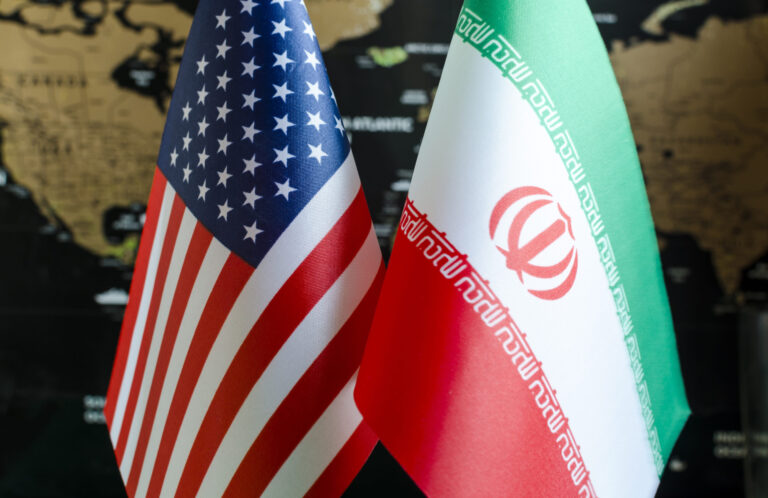
Neither the United States nor Israel is a member of the ICC. Washington does not generally recognize the court’s jurisdiction over nationals of countries that have not consented to its authority.
That federal position has become even more explicit. In July 2026, the U.S. Department of Justice said the country would not cooperate with ICC investigations, summonses or proceedings involving Americans. The Trump administration has also opposed ICC action against Israel and other U.S. allies.
After reviewing the issue, Mamdani acknowledged that New York City lacked the independent legal authority to execute the warrant against Netanyahu. He then redirected his demand toward Washington, calling on the federal government to join the ICC and enforce its decision.
The admission removed the immediate threat of a municipal arrest. It did not end the political campaign. Instead, Mamdani declared that Netanyahu was not welcome in New York and urged residents to make their opposition visible during the Israeli leader’s anticipated visit.
City Hall’s protest call alarms police unions.

Police union leaders responded with anger, accusing the mayor of inflaming a situation that the NYPD will be responsible for managing.
Their concern is not simply that New Yorkers may demonstrate. The city has a long history of mass protest, and officers routinely protect the rights of people expressing deeply unpopular or controversial views. The more difficult issue is that the mayor himself has encouraged participation.
That places the NYPD in an uncomfortable position. Officers may be ordered to secure Netanyahu’s movements, maintain access around the United Nations, prevent confrontations between rival groups and arrest demonstrators who violate the law. At the same time, the mayor who oversees the department has publicly endorsed the underlying protest.
Police representatives have warned that the call could push the city toward the “edge of chaos,” particularly if large pro-Palestinian crowds encounter pro-Israel demonstrators or groups supporting Netanyahu. Union officials nevertheless said officers would be prepared to respond.
The dispute raises a question that extends beyond one protest: Can City Hall encourage a movement while convincingly directing the police response to it?
For Mamdani’s supporters, the answer is yes. They see no contradiction between defending lawful protest and expecting officers to maintain public safety.
For critics inside law enforcement, the problem is one of command, credibility and risk. A mayor’s words can shape crowd size, public expectations and the emotional temperature surrounding an event. When those words appear to endorse one side, policing decisions can quickly be interpreted as political acts.
The United Nations visit will test the city.
Netanyahu is expected to visit New York during the United Nations General Assembly period in September. The annual gathering already creates one of the city’s most demanding security operations.
World leaders arrive with diplomatic protection, motorcades and heavily guarded schedules. Streets around the United Nations headquarters are closed or restricted. Protesters gather behind barricades. Rival groups compete for space, attention and media coverage.
Netanyahu’s presence would add another layer of intensity. The Gaza conflict has generated emotionally charged demonstrations across New York, including campus encampments, street blockades, sit-ins and counterprotests. Some gatherings have remained peaceful. Others have resulted in arrests, property damage and accusations that police either used excessive force or failed to intervene quickly enough.
Mamdani’s protest call could increase participation and national attention. It could also force officers to operate under unusually close political scrutiny.
Any decision to move a crowd, remove an encampment or make arrests may be viewed as a test of whether the mayor truly supports the demonstrators. Any failure to protect Netanyahu’s delegation or opposing protesters would raise questions about the city’s ability to separate political sympathy from public-safety obligations.
The NYPD will not merely be policing a protest. It will be policing the consequences of a message issued from City Hall.
Mamdani refuses to abandon his central argument.

Although Mamdani has conceded that the city cannot arrest Netanyahu, he has not moderated his criticism of the Israeli leader.
He continues to describe Netanyahu as a war criminal and argues that legal limitations should not require political silence. His administration appears determined to frame the reversal not as a retreat, but as an acknowledgment of jurisdictional reality.
People close to the mayor have described the video announcing his position as a calculated effort to address the failed arrest pledge while reaffirming his support for Palestinian rights. The strategy allows Mamdani to admit that City Hall lacks enforcement power without abandoning the moral argument that helped define his campaign.
That approach carries obvious political advantages. Mamdani’s supporters elected him partly because he was willing to confront institutions and leaders that more cautious politicians avoided. A quiet reversal would have risked disappointing activists who expected him to use the mayoralty as a platform for international justice.
By encouraging protests, he has offered supporters a substitute form of action. He cannot deliver an arrest, but he can provide political legitimacy to those who want to demonstrate.
The strategy also carries substantial risks. A mayor’s responsibilities extend far beyond maintaining campaign credibility. Mamdani now oversees the officers, emergency planners and city agencies that must manage the events his rhetoric may help create.
Federal power leaves New York with little room.
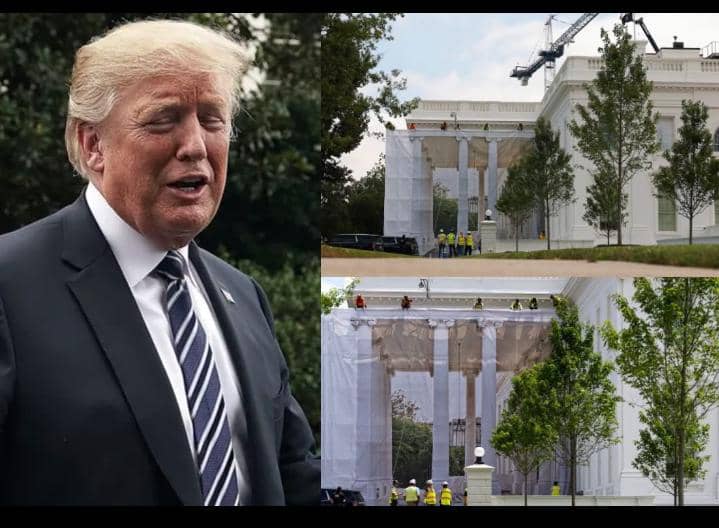
President Donald Trump has made clear that Netanyahu will not be arrested while visiting the United States. The statement effectively closed off any possibility that federal authorities would cooperate with Mamdani’s demand.
The White House position highlights the narrow limits of municipal influence over international affairs. New York may host the United Nations, but the mayor does not control U.S. foreign policy. City Hall cannot independently alter federal treaty obligations, direct diplomatic security or create jurisdiction where none exists.
Netanyahu’s visit would also involve federal agencies and diplomatic protocols that extend well beyond the authority of the NYPD.
Israeli officials have seized on that gap between Mamdani’s rhetoric and his legal power. Israel’s ambassador to the United Nations, Danny Danon, accused the mayor of spreading propaganda and urged him to focus on his obligations to New Yorkers.
The criticism reflects a broader concern among Mamdani’s opponents: that the mayor is using New York’s international profile to conduct symbolic foreign policy while domestic problems demand attention.
His allies would counter that New York is not an ordinary American city. It is a global political stage, home to the United Nations and one of the world’s largest Jewish and Muslim populations. International conflicts regularly become local questions of protest, policing, hate crimes and community trust.
A fragile relationship faces another strain.

The confrontation comes at a sensitive moment for relations between Mamdani and the NYPD. The mayor’s political rise was rooted in progressive organizing and criticism of traditional policing. Many officers remain skeptical of leaders they believe underestimate the dangers of street enforcement or treat the department as an obstacle to reform.
Mamdani, meanwhile, must prove that he can pursue change without weakening command structures or alienating the people responsible for carrying out his public-safety agenda. The Netanyahu dispute magnifies that challenge.
Police officers do not choose which foreign leaders visit New York, which political causes inspire protests or which communities feel threatened. Their task is to enforce the law while protecting everyone involved.
Yet neutrality becomes harder to demonstrate when City Hall has publicly encouraged one side to mobilize.
This does not mean a mayor must remain silent on every controversial issue. It does mean that words issued from the mayor’s office carry consequences that campaign speeches do not.
The real test will come in the streets.
Mamdani’s call has already succeeded in keeping attention on Netanyahu, Gaza and the ICC warrant. It has also prevented the mayor’s abandoned arrest promise from being remembered simply as an impossible campaign pledge. But the political victory may be temporary.
The true test will arrive when protesters gather, counterprotesters respond, and police commanders must make rapid decisions under intense scrutiny. At that moment, abstract arguments about international law will give way to barricades, security zones and competing demands for protection.
Mamdani will have to defend the right to protest without appearing indifferent to disorder. The NYPD will have to enforce the law without appearing hostile to a movement endorsed by the mayor. What began as a promise to arrest a foreign leader has therefore evolved into something more immediate.
It is now a test of whether New York City Hall and the nation’s largest police department can manage their political differences without allowing those differences to weaken public safety, institutional trust or the city’s ability to govern itself.