
UFC Fighter Who Called Michelle Obama a Man Posts ‘Apology’ That Seems to Be More Trolling
A UFC fighter who sparked outrage after making a false and offensive comment about former First Lady Michelle Obama is now facing a second wave of backlash, this time over what looked like an apology, but appeared to be another troll.
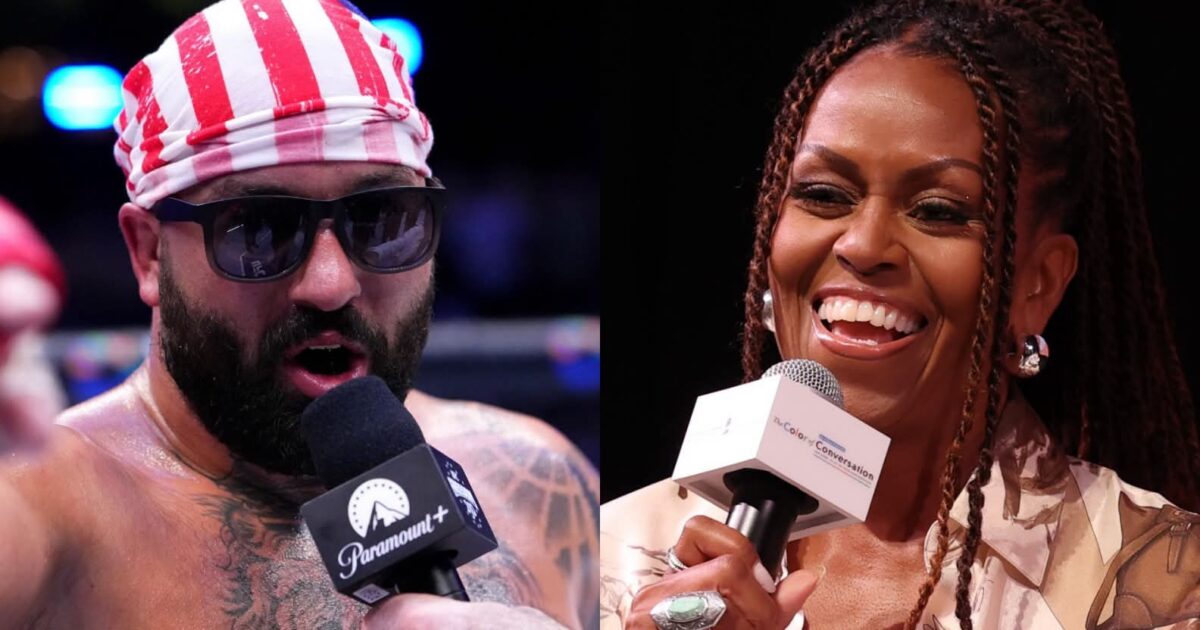
Josh Hokit, a heavyweight fighter who competed at the UFC Freedom 250 event on the White House South Lawn, became the center of a political and sports-media firestorm after his post-fight interview took a sharp turn away from fighting and into personal insult.
After winning his bout by TKO, Hokit used the microphone to repeat a long-running and false conspiracy about Michelle Obama’s gender. The remark drew a mixed reaction from the crowd, but the online response was far less divided. Critics called it ugly, unnecessary, and beneath the moment.
Then came the so-called apology.
According to Mediaite, Hokit later shared an Instagram Story featuring an image that appeared to show him and Michelle Obama smiling together. The caption claimed he had spoken with the former First Lady, apologized for his “distasteful comments,” pledged $50,000 to the Obama Foundation, and promised to become “an active spokesman for Black Women in America.”
At first glance, it looked like a clean-up job.
At second glance, it looked like a joke.
The post reportedly came from the Show Me The Money podcast, an account that warns followers not to take it too seriously. A Community Note described the apology claim as false. Hokit also added one keyword to the top of the Story: “Cap.”
In internet slang, “cap” means a lie. In other words, the message seemed less an apology and more a wink to those who understood the joke.
The Controversy Did Not End With the Fight
The first problem was the comment itself. The second problem was the stage.
This was not a random gym clip or a late-night podcast rant. It happened after a UFC event staged at the White House, with cameras rolling and major political attention already attached to the evening.
That setting made the insult much bigger than one fighter trying to be edgy. It turned a sports victory into a national argument about decency, race, gender, politics, and the targeting of public figures for cheap laughs.
Michelle Obama has spent years being hit with racist and sexist conspiracy theories. Hokit’s comment did not arrive in a vacuum. That is why so many people saw it not as harmless trash talk but as a deliberate attempt to drag an old smear into the public spotlight.
Even UFC boss Dana White, who often defends fighters’ freedom to speak, made it clear he did not support this one. He said he hated that kind of “nonsense” and was “completely against” false and nasty comments about people’s families.
That response mattered because UFC culture is not exactly known for being soft. Fighters talk trash. Fans expect drama. The sport sells intensity. But even inside that world, there are lines that make people stop laughing.
This was one of them.
The Fake Apology Made It Worse
If Hokit had apologized plainly, the story might have started to cool down. Instead, the Instagram Story poured gasoline on it.
The fake-apology format gave the whole thing a second life. It gave critics a new reason to say he was not sorry. It also gave supporters a new meme to share. That is how modern outrage works: the original comment starts the fire, then the reaction becomes content, then the “reaction to the reaction” becomes content too.
That is why the word “cap” mattered so much.
It was small, but it changed the entire meaning of the post. Without it, some people may have thought Hokit was trying to repair the damage. With it, the post looked like a signal that the apology itself was fake.
And that may be the most important part of the story. In today’s online culture, trolling is not just about saying something offensive. It is about watching the response, mocking the response, and then using that anger as proof that the joke “worked.”
That is why this controversy has stretched beyond sports pages. It is not just about one UFC fighter. It is about the reward system around public cruelty. A shocking comment gets attention. A fake apology gets more attention. Then everyone fights over whether it was comedy, politics, racism, sexism, or just another viral stunt.
The result is exactly what the troll wants: everyone is still talking.
UFC Now Has a Bigger Image Problem Than One Fighter
The UFC has spent years becoming a mainstream American powerhouse. It has celebrity fans, major broadcast deals, political connections, and a growing place in pop culture. But moments like this create the kind of headline no league wants.
Instead of the conversation staying on Hokit’s win, it moved to whether UFC is becoming too comfortable with political spectacle and personal attacks. That is a problem for a sport that already fights stereotypes about its fan base and its public image.
Barstool founder Dave Portnoy reportedly criticized Hokit, saying people like him give the UFC a bad name. Former UFC champion Daniel Cormier also criticized the remark, calling it irresponsible and unnecessary. Those reactions matter because they did not come from people looking to cancel the sport. They came from inside the broader fight-media world.
That is what makes the backlash harder to dismiss.
There will always be fans who say this was just a joke. There will always be others who say people are too easily offended. But a joke usually has a punchline. This one had a target. And the target was a former First Lady who was not in the cage, not part of the fight, and not part of the event.
That is why the “apology” story landed so badly. It suggested the outrage was not an accident. It suggested Hokit knew exactly what he was doing and chose to keep the performance going.
For some fans, that may make him more entertaining. For others, it makes him look smaller than the moment he was handed.
Either way, the fake apology did not close the controversy. It extended it.
And now, instead of being remembered only for a TKO win at one of the most unusual UFC events in history, Josh Hokit may be remembered for the moment he had the microphone, the spotlight, and the chance to say anything and chose to turn a victory speech into a national insult.


