The Secret Ingredient Local Families Say Makes Their Holiday Recipes Taste Better
Every holiday kitchen has an ingredient that never appears quite the same way on a shopping list.
Sometimes it is a spoonful of chile sauce prepared exactly as a grandmother taught the family. Sometimes it is extra seasoning slipped into a familiar potato pancake. In another kitchen, it may be dried fruit soaked in alcohol long before Christmas dinner reaches the table.
But when family holiday recipes are examined closely, the real “secret ingredient” is rarely one mysterious spice. It is often the combination of an ingredient, a ritual, and the person who taught everyone else how to use it.
Across several documented family food traditions, recipes survive not because they remain completely unchanged, but because families preserve what matters while letting each generation add something of its own.
Tamales Seasoned With Memory
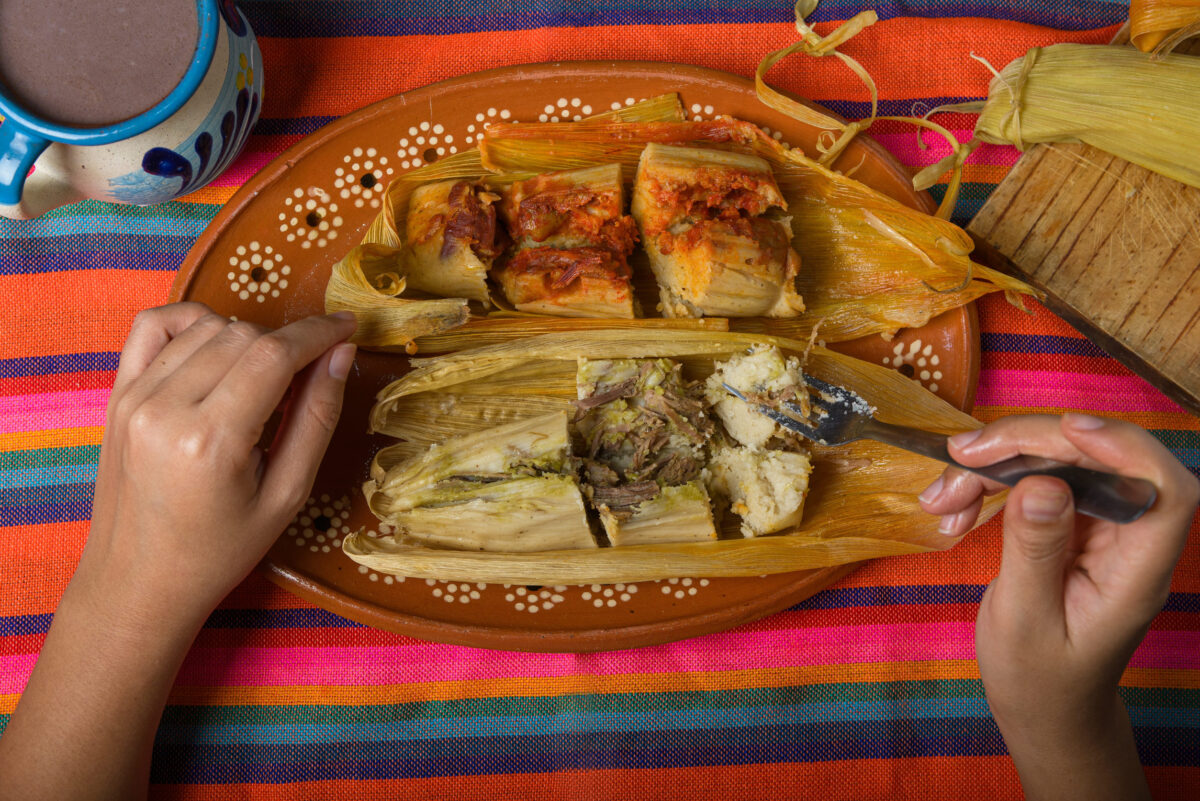
For Laura Wilmot Sheehy and her Mexican American family, Christmas tamales are connected to a tamalada. This communal tamale-making gathering stretches back several generations to San Luis Potosí, Mexico.
Writing for the Smithsonian Center for Folklife and Cultural Heritage, Sheehy describes how her grandmother, Manuelita “Mamo” Prado, made masa without relying on measuring cups. She kneaded it by hand and seasoned it with lard, cumin, garlic, oregano, chile sauce, salt, pepper, and broth from the meat.
No single bottled product drove the flavor. The technique was part of the recipe.
The family soaked corn husks, prepared meat, spread masa, filled tamales, tied them, and steamed them. It was labor-intensive work, which is one reason the tamalada became a group activity. Family members worked around a table while talking, joking, and listening to music.
That ritual continues, although some methods have changed. According to Sheehy, some relatives now use prepared masa or seasoning mixes, while others make components from scratch. Some use food processors, while another family member still uses the grandmother’s old-fashioned meat grinder. One practice they have preserved is making chile sauce from ancho peppers rather than relying solely on powdered chile.
The lesson is not that one method is automatically superior. It is that taste becomes connected to repetition. Knowing how thick to spread the masa, how much filling belongs inside, and how the seasoned mixture should feel can become family knowledge that is hard to capture in tablespoons and teaspoons.
The gathering itself also matters. The Smithsonian notes that this family traditionally makes tamales around Christmas and that the lengthy preparation becomes easier when relatives work together.
In other words, part of what makes the holiday food distinctive is the process surrounding it.
When Tradition Gets a New Seasoning
Hanukkah offers another example of how a familiar holiday food can carry tradition while still changing from household to household.
Fried foods have an established place in Hanukkah observance because they recall the holiday’s oil tradition. Latkes, commonly made as fried potato pancakes, are among the best-known examples.
Yet even a recognizable food such as a latke is far from fixed.
In a personal family story published by The Nosher, part of My Jewish Learning, one cook describes how her husband took over the family’s annual latke preparation. He introduced techniques and seasonings that had not necessarily been part of the earlier version, including cornstarch, za’atar, onion powder, and garlic powder. He also paid close attention to using enough salt and waiting for the oil to heat properly. The adapted latkes were well received, and making them became his recurring family task.
Another documented recipe blends Jewish and Mexican family influences by incorporating plantains, potatoes, and seasonings such as cumin, coriander, paprika, and chile into latkes. Its creator described the recipe as a way of bringing together her Latina and Jewish roots.
These adaptations illustrate something important about family recipes. Preserving tradition does not always mean freezing a dish at one moment in history.
Even the potato latke itself reflects culinary change. Food-history accounts note that earlier Hanukkah fried foods included other forms, while potato latkes became prominent after potatoes spread through Europe.
What feels timeless at the holiday table may already reflect generations of adaptation.
Related article: 10-surprising-and-unlikely-uses-for-spices-you-may-not-have-considered/
A Christmas Cake That Improves With Time
In Caribbean Christmas traditions, black cake offers a different kind of secret ingredient: patience.
A Smithsonian discussion of holiday foods describes black cake as a Caribbean relative of British plum pudding, with recipes that vary across islands and families. In one family version, the ingredient list includes prunes, sultanas, raisins, currants, port, white wine and stout. The resulting cake is rich and improves with age.
Here, flavor comes not only from what goes into the cake but also from allowing ingredients and aromas to develop over time.
That idea has echoes in many holiday kitchens. Certain dishes demand preparation well before guests sit down. Others involve repetitive work that makes little sense for an ordinary weekday dinner. The inconvenience becomes part of their significance.
Smithsonian has documented this quality in other family holiday foods as well. Traditional dishes such as Scandinavian lefse can require multiple stages, including cooking and preparing potatoes, chilling dough, and carefully rolling and cooking individual pieces.
The labor itself helps mark the meal as different from everyday eating.
So What Is the Secret Ingredient?
The tempting answer is butter, salt, spice, alcohol, broth, or a carefully guarded seasoning blend.
Sometimes it probably is.
But documented family traditions suggest a broader answer.
Holiday food tastes distinctive because ingredients are attached to rituals. A chile sauce matters because someone remembers how a grandmother prepared it. A latke becomes a family specialty because one person learns exactly how the mixture should be seasoned and fried. A Christmas cake develops its character because someone had the patience to prepare it ahead of time.
The recipes also survive because people participate in making them.
Children watch. Relatives take over particular jobs. Someone changes a technique. Someone else insists that one step cannot be skipped. Eventually, a modification that once seemed new may become the version the next generation remembers as traditional.
That is why asking for a family’s “secret ingredient” can produce a more interesting answer than the name of a spice.
The ingredient may be cumin, chile, oil, dried fruit, or something else entirely. But what makes it taste like the holidays is often the accumulated knowledge surrounding it: who makes the dish, how they make it, when they begin, and who gathers in the kitchen while the work gets done.
The real secret may be that a recipe becomes more than instructions once a family has repeated it long enough to turn cooking into ritual.
Other article you may like:
– 5-healthy-spices-to-keep-in-your-kitchen-simple-ingredients-worth-knowing/
– 8-natural-food-ingredients-that-make-everything-taste-better/
– 9-best-salad-ingredients-you-need-to-try-for-the-ultimate-salad-experience/