Americans Still Trust Small Businesses, the Military, and Science, but Faith in Institutions Is Fracturing Across Everything Else
Trust in American institutions is no longer a broad national baseline. It is selective, conditional, and sharply uneven.
That is the central picture emerging from recent Gallup data highlighted in NewsNation’s analysis of institutional confidence in the United States. Americans continue to place strong trust in a small group of core institutions, small business, the military, and science, while confidence in nearly every other major pillar of civic life remains significantly weaker.
The result is not a total collapse of trust. It is a narrowing of trust. Americans are not rejecting institutions wholesale; they are sorting them into credibility categories, keeping a few at the top, tolerating others, and distrusting many outright.
That hierarchy now defines how Americans see their country.
A Nation That Still Trusts What Feels Local, Practical, and Real

At the top of the trust ladder sits small business, with roughly seven in ten Americans expressing confidence in it.
That number is not accidental. It reflects proximity. Small businesses are not abstract systems. They are physical places and familiar faces. They are the café owner who knows regular customers by name, the mechanic who explains a repair without jargon, the contractor who shows up on time, and the family-run store that survives on reputation more than advertising.
Unlike national institutions, small businesses operate in immediate feedback loops. If they fail, they feel it quickly. If they succeed, they grow through word of mouth rather than institutional power.
That closeness creates accountability that feels personal rather than bureaucratic. This is the key pattern running through the trust landscape: Americans trust what they can see, touch, and evaluate directly.
The Military Still Holds a Rare Institutional Status
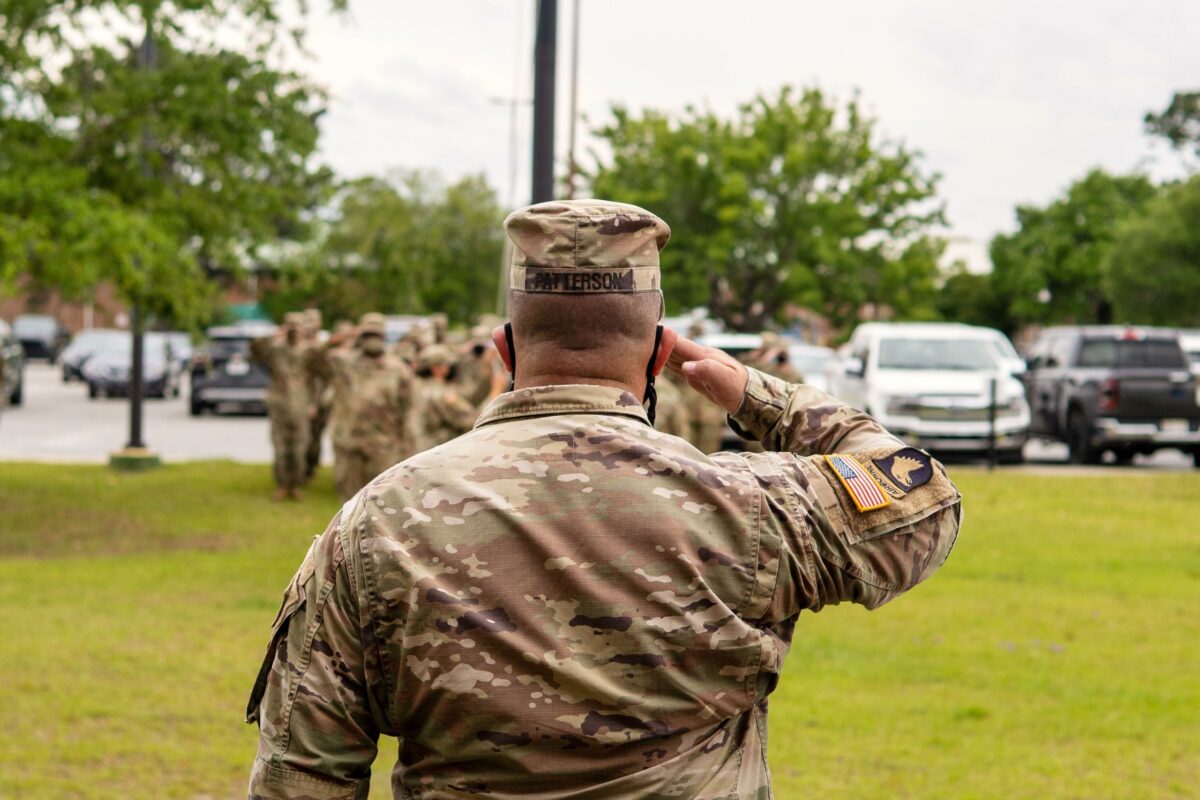
The military remains the second most trusted institution in the country, with roughly six in ten Americans expressing confidence in it.
This trust has deep historical roots. The military has long been associated with service, sacrifice, and national defense rather than partisan politics. Even during periods of political division, the armed forces often maintain a symbolic position above everyday political conflict.
The institution’s structure also reinforces trust. Clear hierarchy, discipline, and visible missions contribute to a sense of order that many other institutions lack in public perception.
Even here, trust is not absolute. Over the past two decades, confidence in most institutions has become more volatile, including those historically considered stable. Public confidence in the military remains high compared to other institutions, but it now exists in a more politically aware environment where foreign policy debates, prolonged conflicts, and budget scrutiny influence perceptions.
The military is still trusted but less unconditionally than in past generations.
Science Maintains Strong Support Despite Political Tension

Science is the third pillar of strong public confidence, with a majority of Americans expressing trust in it. This is especially notable given how politically charged scientific institutions have become in recent years. Public health debates, vaccine skepticism, climate policy disagreements, and broader concerns about expert authority have all tested public trust.
Yet the data show that science still holds a relatively strong standing as an institution. One reason is utility. Science is deeply embedded in daily life, medicine, technology, transportation, agriculture, weather forecasting, and digital systems, all of which depend on scientific progress. Even when people disagree with specific policies or agencies, they continue to rely on scientific outcomes.
Many Americans distinguish between “science” as a method of discovery and the institutions or policymakers who interpret it. That distinction helps preserve baseline trust even during politically charged periods.
The Collapse Zone: Congress, Media, and National Institutions
Below the top tier, trust drops sharply and stays low.
Congress remains one of the least trusted institutions in the country, with confidence levels near historic lows. This is not new. For decades, Congress has ranked at or near the bottom of major institutional trust surveys. Similar skepticism now extends to other national bodies that feel distant, slow, or hard to hold accountable.
The reasons are structural as much as political. Legislative gridlock, partisan polarization, procedural complexity, and high-profile conflicts contribute to a perception of dysfunction. For many Americans, Congress does not appear to solve problems quickly or clearly, even when major national issues are at stake.
Television news faces a similar credibility challenge. Trust in media institutions has declined steadily over the past several decades, with many Americans now viewing news outlets through a partisan or ideological lens. That skepticism extends to other information sources that feel repetitive, selective, or disconnected from lived experience.
This shift has reshaped how information spreads in the country. Instead of shared national narratives, Americans increasingly consume segmented information ecosystems that reinforce pre-existing beliefs.
The result is not just distrust of media institutions; it is the fragmentation of shared reality.
The Presidency Reflects a Polarized Trust System
Confidence in the presidency sits in the middle of the institutional ranking, but it carries one of the most polarized trust profiles.
Rather than stable institutional confidence, the presidency now reflects partisan identity. Supporters of the sitting president tend to express high confidence, while opponents express significantly lower levels of trust.
This pattern has become more pronounced in recent decades as political identity has become more central to how Americans interpret institutions.
Where earlier generations might have separated the office from the officeholder, today the two are often inseparable in public perception.
That shift makes the presidency less a unifying institution and more a contested one, with its legitimacy and level of trust fluctuating with electoral outcomes and political alignment.
A Long Decline in Institutional Trust
The current landscape becomes even more striking when viewed in historical context.
In the 1970s, confidence in major U.S. institutions was significantly higher across the board. Surveys from that era often showed a majority trust in Congress, the presidency, the press, and other core institutions.
Since then, trust has declined steadily across multiple decades, influenced by a series of national shocks and long-term trends:
The Vietnam War and the Watergate scandal in the 1970s
Economic instability and inflation in the 1970s and early 1980s
Government crises and political polarization in later decades
The 2008 financial crisis, which weakened trust in financial and regulatory systems
The COVID-19 pandemic, which intensified debates over expertise, governance, and public health
Each event added pressure to institutional credibility. Over time, those pressures accumulated rather than reset.
The result is today’s trust landscape: lower overall confidence, but not uniform collapse.
What Americans Still Trust Reveals a Bigger Pattern

Despite broad skepticism, Americans have not entirely abandoned trust. Instead, they have concentrated it in a small set of institutions.
The institutions that still command majority confidence share several traits:
First, they are visible. Small businesses operate in public view. The military is symbolically present in national life. Science produces tangible outcomes that people can observe in medicine and technology.
Second, they are functional. They solve direct problems rather than primarily debating them.
Third, they feel less partisan in everyday interaction. While politics inevitably touches all institutions, these three are less frequently experienced through a purely political lens in daily life.
Everything outside that group tends to be interpreted through the lens of ideology, bureaucracy, or perceived inefficiency.
The Quiet Middle: Institutions That Still Matter but Struggle for Trust
Between high- and low-trust categories lies a broad middle range of institutions that remain essential yet face uneven levels of confidence, alongside a lower tier that draws sustained skepticism.
These often include areas such as:
Banks and financial systems, which are trusted for stability but not always for fairness
Public schools, which remain important but vary widely in perceived quality
Police, who carry mixed confidence depending on community experiences
The medical system, which retains respect but faces concerns over cost and access
Major corporations, which are often seen as powerful but not always accountable
This middle layer shows that trust is not simply about approval or rejection. It is about complexity. Americans often rely on institutions they do not fully trust because daily life requires them.
Why This Matters Beyond Polling Data
Institutional trust is not just a political measurement. It is a functional condition of society.
High-trust societies tend to experience smoother governance, stronger civic participation, and greater compliance with public systems. Low-trust societies often face resistance to authority, fragmented information environments, and weaker collective problem-solving.
When trust is concentrated in only a few institutions, it creates an imbalance. The burden on those trusted institutions increases, while others struggle to regain credibility.
That dynamic is visible in the current American moment. Small businesses, the military, and science command a disproportionate share of public confidence, while other institutions face increasing skepticism.
The Core Question for the Next Era of Trust
The Gallup findings do not suggest that Americans have stopped believing in institutions. Instead, they suggest that Americans are recalibrating which institutions they believe in.
The central question moving forward is not whether trust exists, but whether it can be rebuilt where it has eroded.
Because in the current landscape, trust is no longer automatic. It is earned through performance, visibility, accountability, and relevance to everyday life.
And that may be the most important shift of all. America is not simply in a trust crisis.
It is an era of trust-sorting, in which every institution is being measured, consciously or not, against a single standard: Does it still feel real enough to believe in?