Police could be forced into a race-based guessing game after the Supreme Court move, Thomas joins the dissent
The Supreme Court’s quiet refusal to take up United States v. Donte J. Carter has opened a loud national debate over policing, race, and the Fourth Amendment. At the center of the dispute is one practical question with enormous legal consequences: Should a person’s race help determine whether a police encounter becomes an unconstitutional seizure?
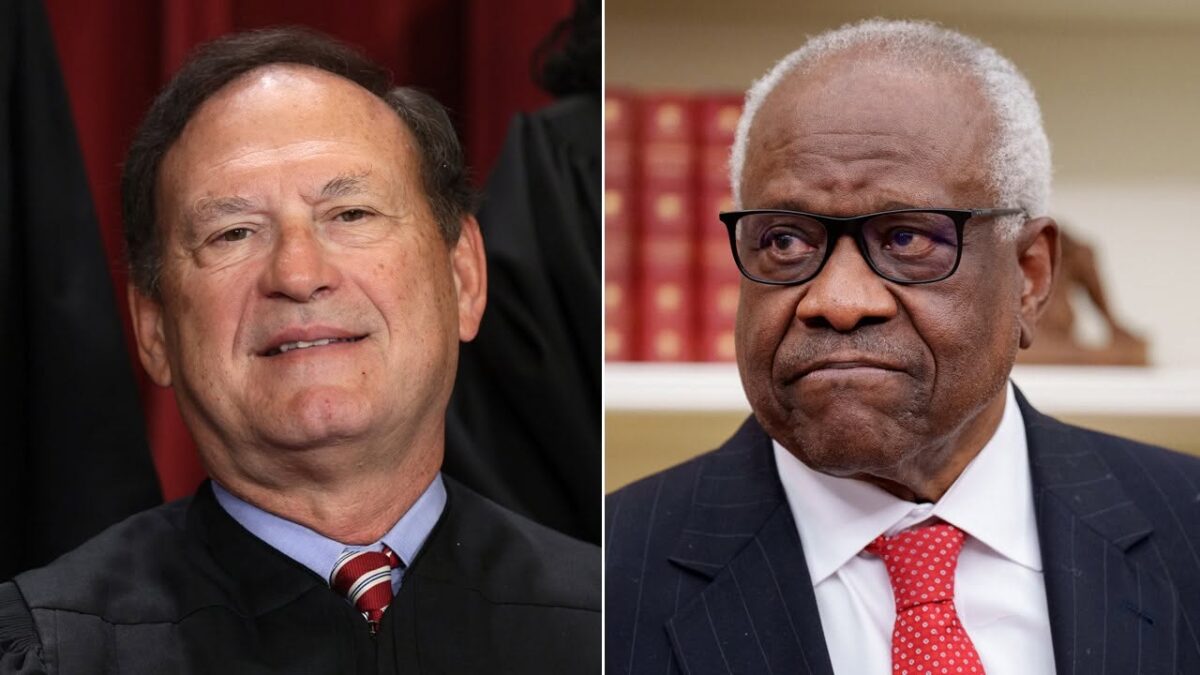
For Washington, D.C., this is not an abstract courtroom exercise. It reaches directly into how officers approach people on sidewalks, how judges review body-camera footage, how prosecutors defend gun arrests, and how residents understand their right to walk away from police questioning. The Court did not issue a full opinion from the majority, but Justices Samuel Alito and Clarence Thomas dissented from the denial of review, warning that the lower court’s approach could force officers and courts into a legally dangerous race-based calculation.
The case began with a street encounter in Ward Four in September 2020. Officers from the Metropolitan Police Department’s Gun Recovery Unit were patrolling an area where officials said there had been an uptick in shootings and gunfire. They approached a group of Black men on a sidewalk. Donte Carter was among them.
According to the lower court record, an officer asked Carter whether he had a gun. Carter said no and lifted his shirt more than once. The officer then asked him to pull up his pants. Carter complied. Another officer then noticed what appeared to be an L-shaped bulge, and police later recovered a firearm. Carter was charged and convicted on multiple firearm-related counts and other offenses, but the D.C. Court of Appeals later vacated those convictions after finding that police had seized him before they had reasonable suspicion.
Why the Carter Case Became Bigger Than One Gun Arrest
The case matters because the timing of a seizure can decide whether evidence survives in court. Under the Fourth Amendment, police may approach a person and ask questions without automatically creating a seizure. But once an officer’s conduct would make a reasonable person feel they are not free to leave, the encounter can become a seizure. At that point, officers usually need reasonable suspicion or probable cause.
That is where Carter’s case turned. Prosecutors argued that police had reasonable suspicion only after the bulge was observed. Carter argued that the seizure happened earlier, when the officer asked him to raise his pants. If Carter was already seized before the bulge was seen, the firearm and later statements could be treated as fruits of an unlawful stop.
The D.C. Court of Appeals agreed with Carter. It said the officer’s approach, the repeated questioning, the request involving Carter’s clothing, and the broader circumstances of the encounter all mattered. But the most controversial part of the ruling was the court’s decision to consider Carter’s race and the lived experience of Black men in police encounters.
The D.C. court reasoned that an objective and reasonable Black man in Carter’s position could feel less free to end the encounter than another person might. In other words, the court did not treat race as Carter’s private feeling alone. It treated race as part of the objective circumstances shaping how a reasonable person in his position would understand the police encounter.
Alito and Thomas Warned the Rule Could Divide Constitutional Rights by Race
Justice Alito, joined by Justice Thomas, argued that the Supreme Court should have taken the case because the D.C. court’s rule raises major constitutional and practical problems. Their dissent framed the issue sharply: if race becomes part of the Fourth Amendment seizure test, officers may have to make instant assumptions about a person’s racial identity and how that identity affects their reaction to police.
That concern goes beyond one defendant. The dissent suggested that a rule designed to protect one racial group in one case could later hurt individuals in other settings. If courts allow constitutional treatment to shift based on studies or statistics about racial groups, the dissent warned, the law risks turning people into representatives of a demographic category rather than judging them as individuals.
This is the heart of the debate. Supporters of the D.C. court’s approach may say it reflects real-world policing conditions and the documented distrust many Black Americans feel toward law enforcement. Critics say it creates unequal constitutional rules and requires police officers to make race-based guesses in fast-moving situations.
Both sides are speaking to a real problem. Communities do not experience policing in the same way. At the same time, constitutional rules are supposed to offer clarity, predictability, and equal treatment. Carter sits directly at that collision point.
The Fourth Amendment Question: Free to Leave or Forced to Stay?
The phrase “free to leave” sounds simple, but it becomes complicated on the street. A person may technically have the right to walk away from police, yet feel that doing so could escalate the encounter. An officer may speak politely, but the presence of armed officers, tactical vests, repeated questions, and requests to expose or adjust clothing can make the encounter feel compulsory.
The D.C. Court of Appeals focused on that reality. It did not treat the officer’s words in isolation. It looked at the scene: multiple officers, visible police equipment, the group setting, the questioning about firearms, and Carter’s repeated efforts to show that he was not armed. The court concluded that when the officer continued pressing after Carter denied having a gun, a reasonable person in Carter’s position would not have felt free to simply walk away.
The government saw it differently. It argued that the D.C. court moved beyond a neutral, reasonable-person standard and built race into the test in a way that conflicts with Supreme Court precedent. Prosecutors warned that the ruling could make policing in the District more difficult, especially in firearm interdiction cases where seconds matter.
Why This Ruling Could Affect Police Training in Washington, D.C.
Because the Supreme Court declined review, the D.C. Court of Appeals ruling remains in place. That does not mean the Supreme Court endorsed it nationwide. A denial of certiorari is not a ruling on the merits. Still, for officers, prosecutors, defense attorneys, and trial judges in D.C., the practical effect is clear: this framework remains part of local law unless it is later changed.
Police departments may now have to think carefully about how officers conduct “consensual” encounters. Asking accusatory questions, continuing after a denial, approaching from behind, displaying visible weapons, and requesting clothing adjustments may carry greater legal risk when courts later decide whether a reasonable person would have felt free to leave.
The ruling may also push law enforcement agencies to train officers to clarify consent. A simple statement such as “you are free to go” or “you do not have to answer” can matter in court. If police want an encounter to remain voluntary, they may need to avoid conduct that makes compliance feel mandatory.
For prosecutors, the decision creates another hurdle in gun cases that begin with street questioning. If a court finds that a seizure occurred too early, evidence recovered moments later can be suppressed, even if officers later saw something suspicious. In firearm cases, that can mean the difference between conviction and dismissal.
The Civil Liberties Argument Behind the D.C. Court’s Reasoning
The D.C. court’s approach did not appear from nowhere. It reflects a broader legal and social debate over whether the traditional “reasonable person” test can ignore the realities of race, community experience, and police distrust. Many civil liberties advocates argue that the law often imagines a person who feels comfortable asserting rights in front of armed officers. In heavily policed communities, that assumption may not match reality.
From that view, considering race does not create special treatment. Instead, it makes the Fourth Amendment more honest. A Black man approached by armed officers in a neighborhood with a long history of aggressive policing may reasonably understand the situation differently from someone who has never had reason to fear that walking away could be treated as defiance.
The D.C. court’s ruling gives legal weight to that argument. It says that race and lived experience can be part of the objective circumstances, not because every Black person thinks the same way, but because the law should account for the social reality surrounding police encounters.
The Equal Treatment Argument Behind the Alito-Thomas Dissent
The dissent took the opposite path. Alito and Thomas argued that the Constitution generally does not permit government actors to treat people differently on the basis of race. Their concern was not only about this case, where the race-based analysis helped Carter. It was also about future cases where the same logic could be used against defendants or ordinary citizens.
The dissent’s warning is powerful because it asks what happens when courts build rules around racial generalizations. If a judge can say Black men are less likely to feel free to walk away, could another judge use statistics about another racial group in a less protective way? Could officers be expected to identify someone’s race before deciding which legal standard applies? What happens with multiracial people, Latinos of different skin tones, or people whose racial identity is not obvious?
Those questions explain why the dissent described the issue as both doctrinal and practical. The doctrine involves equal treatment under the Constitution. The practical concern is whether police can realistically apply such a rule on the street without confusion, hesitation, or unequal treatment.
What Residents Should Understand About Their Rights During Police Encounters
For the public, the Carter case is a reminder that police encounters are not always as voluntary as they appear. A person may have the right to remain silent or walk away from a consensual encounter, but the exact point when an encounter becomes a seizure depends on the full context.
Residents should understand that officers may ask questions without automatically making a stop unlawful. But when officers use authority in a way that communicates compliance is required, the Fourth Amendment becomes more active. Courts will look at the number of officers, their tone, whether weapons were visible, whether the person’s path was blocked, whether the person was touched, whether commands were issued, and whether the officer continued to press after the person denied wrongdoing.
In D.C., courts may also consider race as part of that total picture. That is what makes this case especially significant and controversial.
A Quiet Supreme Court Move With Loud Consequences
The Supreme Court did not settle the national question. It left the lower court ruling standing and allowed the debate to continue. That may be temporary. Another case could return to the Court with similar facts, a sharper split among lower courts, or a fuller record. If that happens, the justices may eventually have to decide whether race can play a role in determining when a person has been seized under the Fourth Amendment.
For now, the Carter case leaves Washington, D.C., with a rule that tries to account for racial realities in police encounters, while two Supreme Court justices warn that the rule could fracture constitutional protections by race. That tension will not disappear. It will shape future stops, future suppression motions, future police training, and future debates over whether equal justice means ignoring race or confronting how race changes the way power is experienced on the street.
The Carter case is not only about one man, one sidewalk, or one firearm. It is about the uneasy space between public safety and personal liberty, between colorblind constitutional language and race-conscious lived experience, between what the law imagines and what people feel when police walk toward them.