Montreal shooting leaves police officer, civilian, and suspect dead in Côte-des-Neiges hotel gunfire
A deadly shooting in Montreal’s Côte-des-Neiges district has left three people dead, including a Montreal police officer, a civilian, and the suspected gunman, after officers responded to reports of a person with a gun near a hotel window on Monday morning.
The fallen officer was identified as Constable Mohamed Lamine Benredouane, 34, a member of the Montreal Police Service since 2021. His death marks the first time in 24 years that a Montreal police officer has been killed in the line of duty, turning what began as a gunfire call into one of the city’s darkest public safety moments in a generation.
The civilian victim was identified by Jewish community representatives as Michael Moshe Mizrahi, 68. A second police officer was seriously injured and later reported to be in stable condition. Another civilian also sustained minor injuries. The suspect was killed after police returned fire.
The deadly Côte-des-Neiges shooting began with a 911 call near a Hilton hotel
The shooting unfolded late Monday morning in Côte-des-Neiges, a busy, diverse Montreal neighborhood with residential buildings, businesses, schools, religious institutions, and major commuter routes packed tightly into the same urban grid.
Police Chief Fady Dagher said emergency services received a call around 11:35 a.m. about a person sticking a gun out of a window at a Hilton hotel. When officers arrived, they were met with gunfire.
The suspect was armed with a long gun, and police later said they did not believe there was a second suspect.
What followed was a terrifying exchange of gunfire in a public area where ordinary life had been moving as usual.
People nearby described sudden panic, families running for cover, workers dropping what they were doing, and police flooding the area as the scene expanded into a major emergency response.
For Montreal, this was not just another crime scene. It was a rupture in the rhythm of a neighborhood known for its density, movement, and everyday multicultural life. A hotel, a street, a nearby shopping area, and a residential community were suddenly gripped by the same fear.
Officer Mohamed Lamine Benredouane was killed in the line of duty
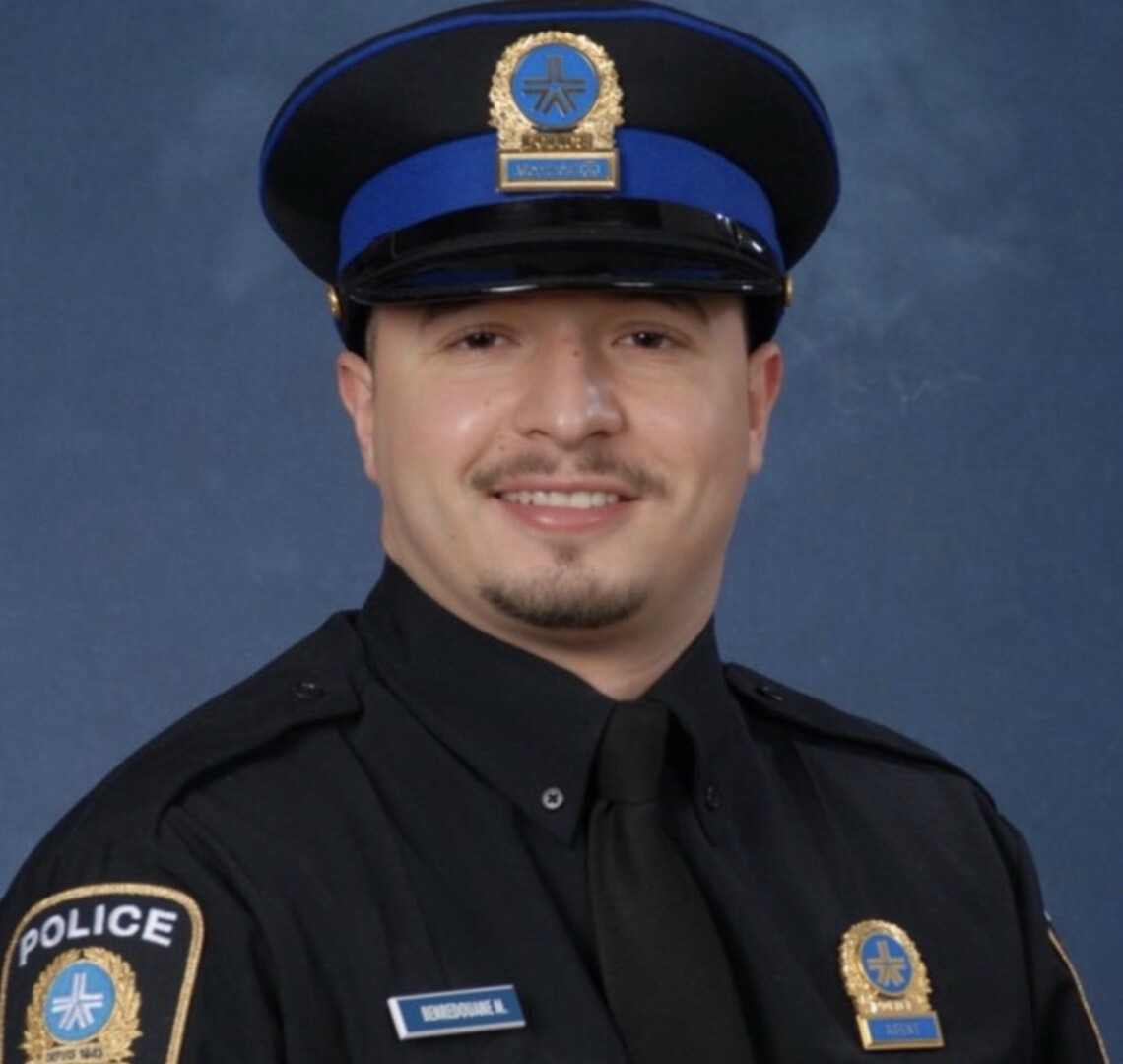
Constable Mohamed Lamine Benredouane was killed while responding to the call. At 34, he was still early in his policing career, having joined the Montreal Police Service in 2021.
His death carries a weight beyond the immediate facts of the shooting. A police officer killed on duty changes the emotional temperature of a city. It reaches fellow officers, first responders, families, local officials, and residents who watched the scene unfold in real time or saw the videos later online.
Chief Dagher described the day as a nightmare, and the word fit the mood. A routine call about a gun became a deadly confrontation.
An officer who arrived to protect the public did not return home. Another officer was hospitalized. A civilian died in circumstances that investigators were still working to clarify.
The 24-year gap since the last Montreal officer was killed in the line of duty made the moment even sharper. It reminded the city that rare does not mean impossible. It also placed new focus on how quickly calls involving firearms can become lethal for both police and bystanders.
Civilian victim Michael Moshe Mizrahi was also killed
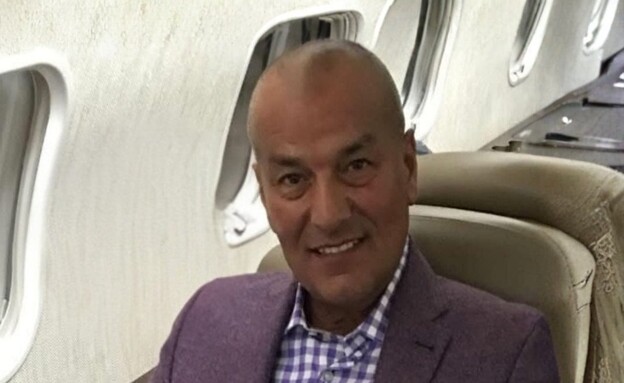
The civilian killed in the shooting was identified as Michael Moshe Mizrahi, 68, a member of Montreal’s Jewish community. His death added another layer of grief to an already devastating incident.
Authorities had not immediately confirmed who fired the shot that killed the civilian. That uncertainty matters. In the first hours after a shooting, especially one captured partly on video and shared across social media, speculation can move faster than evidence.
Police and public officials urged caution while investigators worked through ballistics, witness accounts, video footage, and the full sequence of events.
Mizrahi’s death also shook a community already on edge. Côte-des-Neiges has long been home to Jewish institutions, families, and community life, as well as many other cultural and immigrant communities.
When violence erupts in such a setting, it does not land only as a police story. It lands in homes, schools, synagogues, shops, and sidewalks where people believed the day would be ordinary.
Suspect killed after police returned fire
The suspect, whose identity had not been publicly released in the immediate aftermath, was killed after police returned fire. Officials said the gunman appeared to have acted alone.
Police seized a long gun at the scene. Videos circulating online appeared to show a man carrying a long gun during the confrontation.
The suspect’s motive remained under investigation. That point is important because early reports mentioned a possible manifesto and warnings about anti-police language, while other reporting pointed to misogynistic “incel”-related material.
At the same time, Quebec officials said the attack was not being treated as terrorism after consultations with other agencies.
The clearest responsible framing is this: investigators were examining writings believed to be connected to the gunman, but the public record had not yet settled every question about motive, target selection, or ideology.
Possible manifesto raises questions about motive
One of the most troubling threads in the aftermath was the mention of a possible manifesto. Police and law enforcement agencies were reportedly warned about documentation that may have encouraged violence against officers.
Separate reporting described writings linked to misogynistic and “incel”-style ideology.
Those details are disturbing, but they should be handled carefully. A manifesto can reveal motive, but it can also contain contradictions, delusions, and attempts by a violent person to control the narrative after death.
Investigators will need to determine what was authentic, when it was written, whether it was shared publicly, whether anyone else saw it before the attack, and whether it contained direct threats.
The danger of a manifesto is not only what it says. It is also how it spreads. Violent attackers sometimes write for attention as much as ideology. That is why responsible coverage should avoid amplifying the attacker’s language while still reporting the public safety implications.
Montreal now faces the hard work after the gunfire
The Côte-des-Neiges shooting left Montreal with three deaths, a wounded officer, a wounded civilian, a shaken neighborhood, and a long list of questions.
It also left the city facing a difficult truth: public safety can be shattered in minutes, but public trust is rebuilt slowly.
The investigation will need to answer what happened with precision. Officials will need to communicate clearly. Communities will need space to mourn. And the public will need to resist the easy pull of rumor, especially around motive, ideology, and viral video.
For now, the confirmed story is already painful enough. A police officer was killed responding to danger. A civilian died in the same chaos. A gunman was shot dead. A Montreal neighborhood spent hours in fear. And a city that had gone 24 years without losing an officer in the line of duty woke up to a wound it will not quickly forget.