‘What a Joke’: Michelle Obama Faces Backlash Over Claim Barack Is ‘Uncomfortable’ With Obama Presidential Center Focused on Him
Michelle Obama’s claim that Barack Obama is “completely uncomfortable” with the new Obama Presidential Center being about him has ignited a fresh wave of debate around one of the most ambitious presidential legacy projects in modern American history. The remark, delivered as the former first couple stepped back into the public spotlight for the center’s opening, was meant to frame the project as bigger than a personal tribute. Instead, it gave critics a sharp new opening.
The backlash was immediate because the contradiction practically wrote itself. A towering presidential center bearing Barack Obama’s name, built around his presidency, his rise, his administration, his speeches, his political movement, and his vision, now arrives with the argument that he would prefer less attention on himself. To supporters, that sounds like humility. To skeptics, it sounds like polished public relations. And in the noisy middle, the Obama Presidential Center has become more than a museum. It has become a mirror reflecting America’s endless argument over legacy, power, celebrity, public memory, and political branding.
Michelle Obama’s Comment Put Humility at the Center of the Story
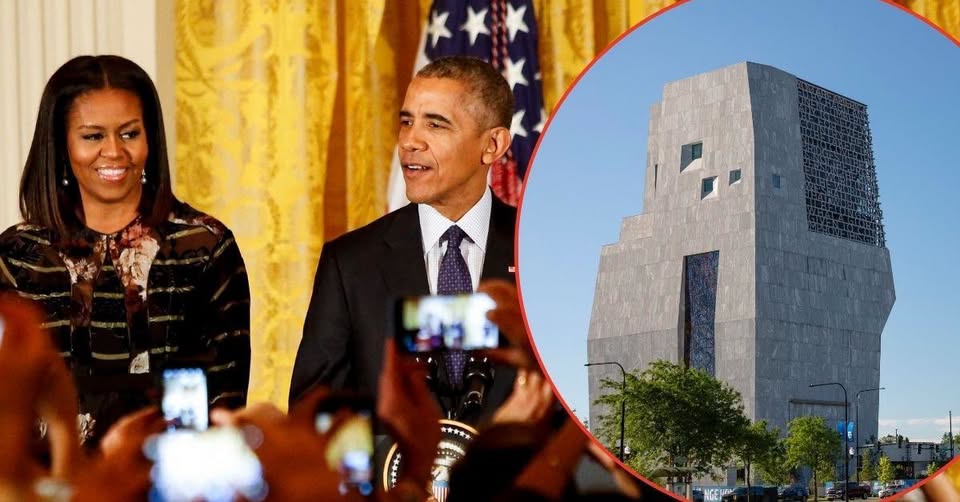
The controversy began with Michelle Obama explaining how her husband reacted to the idea of the center focusing so heavily on his life and presidency. She said he was uneasy with the project being too much about him and even suggested there should be “a little less” of him in the center. When she asked who should be highlighted instead, she said Barack Obama jokingly mentioned Gandhi.
That detail is important because it gives the story its emotional shape. Michelle was not simply saying Barack disliked attention. She was presenting him as a leader who sees himself as part of a broader chain of history, someone who wants visitors to understand the movements, mentors, communities, and public struggles that made his presidency possible.
Barack Obama reinforced that point by describing the center as a “group project.” His explanation suggested that the museum should not function as a shrine to one man, but as a story about the people and movements that shaped democratic change. That is the version of the story the Obamas want the public to hear: not a monument to ego, but a civic space designed to make future generations believe they can participate in public life.
Still, critics were not convinced. Their argument is simple and sharp: if a project carries the Obama name, centers on the Obama presidency, and rises as a major architectural landmark in Chicago, then claiming discomfort with attention can sound difficult to accept.
Why Critics Called the Remark ‘What a Joke’
The phrase “What a joke” captured the mood among detractors who saw Michelle Obama’s comment as tone-deaf. For them, the issue was not just one sentence. It was the larger image of a former president opening an enormous, high-profile center while simultaneously being described as uncomfortable with personal recognition.
That criticism taps into a familiar suspicion surrounding presidential libraries and legacy institutions. These buildings are rarely neutral. They preserve documents, display history, host events, attract tourists, and shape how future generations remember a presidency. They are civic institutions, but they are also curated narratives. Every exhibit choice, every artifact, every quote on a wall, and every design decision sends a message about what the public is supposed to remember.
In Barack Obama’s case, the scrutiny is even sharper because his political brand was always tied to symbolism. “Hope,” “change,” community organizing, civic renewal, and democratic participation were never just campaign themes. They became part of his identity. The Obama Presidential Center extends that identity into stone, glass, gardens, programs, and public space. That complicates the claim of discomfort. The center may be designed to serve the community, but it is still inseparable from the Obama name.
The Obama Presidential Center Is Bigger Than a Traditional Library
The Obama Presidential Center is not a conventional presidential library in the old sense. It is a sprawling campus in Chicago’s Jackson Park, combining a museum, public spaces, foundation offices, athletic facilities, an auditorium, public art, a new Chicago Public Library branch, gardens, and gathering areas.
That broad design is central to the Obama Foundation’s pitch. The center is presented not merely as a place to look backward, but as a place where people can gather, learn, organize, play, read, and connect. The foundation has repeatedly framed the project around civic engagement and community use, not just presidential nostalgia.
That helps explain why Michelle Obama emphasized that her husband wanted the project to feel welcoming to the neighborhood. The South Side of Chicago is not a decorative backdrop in the Obama story. It is where Michelle Obama grew up, where Barack Obama worked as a community organizer, where the couple built much of their early life, and where their political identity was formed. For supporters, placing the center there is meaningful because it ties the presidency back to the community that shaped the Obamas before Washington transformed them into global figures.
But the same location has also fueled debate. A major cultural campus can bring visitors, jobs, programming, and investment. It can also raise concerns about traffic, public spending, neighborhood change, and whether long-time residents will benefit from the attention or be priced out. That tension has followed the project for years.
The Cost Debate Keeps Following the Center
One reason the humility claim landed so heavily is that the Obama Presidential Center has never been just a sentimental project. It has also been a major financial and civic undertaking.
The center has been widely described as an approximately $850 million project funded by private investment from the Obama Foundation. At the same time, public infrastructure work around the campus has drawn scrutiny. Roadway changes, park improvements, utility work, transportation adjustments, and access-related upgrades have become part of the broader debate over who pays when a private foundation-backed presidential center reshapes a public park and surrounding area.
That distinction matters. The building itself may be privately funded, but the surrounding infrastructure has involved public dollars. Supporters argue that those improvements benefit the broader park system and the public, not only the Obama Center. Critics argue the project triggered expensive public work that taxpayers should not be expected to quietly absorb.
This is where the backlash grows beyond personality. The argument is not only whether Barack Obama is humble. It is whether the public should accept the language of community uplift without closely examining cost, access, control, and long-term local impact.
Barack Obama’s Legacy Is Still Politically Charged
Barack Obama remains one of the most admired and most polarizing political figures in recent American life. His supporters see him as a historic president whose election marked a profound democratic milestone. They point to the Affordable Care Act, the recovery from the Great Recession, the killing of Osama bin Laden, climate initiatives, marriage equality’s federal-era transformation, and his symbolic power as the first Black president.
His critics see a very different legacy. They argue his presidency deepened partisan divides, expanded executive power, disappointed parts of the working class, and left unresolved tensions at home and abroad. For some conservatives, the Obama brand represents elite liberal culture. For some progressives, it represents inspiration mixed with compromise.
The Obama Presidential Center sits directly inside that contested memory. It is not opening in a calm political climate. It is opening in an era when every public institution, every phrase, every monument, and every historical claim can become a battleground. That is why Michelle Obama’s seemingly personal remark became political fuel. In today’s media environment, a sentence about discomfort can become a referendum on authenticity.
A Monument Can Be Personal and Public at the Same Time
The strongest defense of Michelle Obama’s comment is that discomfort and legacy-building can coexist. A public figure can approve a major institution while still feeling uneasy about personal glorification. A former president can want his record preserved without wanting every room to feel like a temple. A leader can understand that his story matters while still believing the deeper lesson is about community, history, and collective action.
That is likely what the Obamas are trying to communicate. Their argument is not that Barack Obama has nothing to do with the Obama Presidential Center. That would be absurd. Their argument is that the center should not end with him. It should use his story as a doorway into larger questions: Who gets to lead? What makes democracy work? How do ordinary people create change? What does public service look like after the campaign posters come down?
But critics are also responding to something real. Presidential centers are always exercises in image management. They choose which failures to soften, which victories to spotlight, which controversies to contextualize, and which emotional notes to leave with visitors. No presidential museum is free from narrative control. The Obama Center will be judged not only by its mission statement, but by how honestly it handles complexity.
The Real Question Is Whether Visitors See a Shrine or a Spark
The future of the Obama Presidential Center will not be decided by one viral quote. It will be decided by what visitors experience when they walk through it. If the center feels like a carefully polished monument to Barack Obama’s greatness, critics will say Michelle Obama’s humility defense collapsed on contact with reality. If it feels like a living civic campus that gives Chicago residents, students, families, and future leaders a genuine sense of ownership, supporters will argue the backlash missed the point.
The center’s challenge is enormous because it must serve multiple audiences at once. Tourists will come for the Obama story. Historians will come looking for substance. Supporters will come for inspiration. Critics will come looking for self-celebration. Local residents will judge whether the campus feels like it belongs to them or merely sits beside them.
That last test may be the most important. The Obama name will draw the crowds, but the community promise will determine the center’s deeper credibility. A presidential legacy project can survive political criticism. It cannot easily survive the perception that it speaks about community while failing to serve one.
Michelle Obama’s Remark Revealed the Center’s Biggest Tension
Michelle Obama’s statement did not create the controversy around the Obama Presidential Center. It simply exposed the tension already built into the project. The center wants to be about Barack Obama and bigger than Barack Obama at the same time. It wants to preserve a presidency while inspiring people beyond politics. It wants to honor a famous leader while insisting that ordinary citizens are the real point of the story.
That balancing act is difficult, and the public is right to examine it closely. Humility is not proven by a quote. Community impact is not proven by a ribbon-cutting. Legacy is not secured by architecture. These things are tested over time.
For now, Michelle Obama’s comment has done exactly what major public remarks often do: it has sharpened the debate. Supporters hear a wife describing a husband who wants the story widened beyond himself. Critics hear a polished attempt to make a massive Obama-branded institution sound modest. The truth may sit somewhere between those interpretations.
The Obama Presidential Center now stands as a bold, expensive, symbolic, and deeply personal addition to Chicago’s South Side. Whether Americans see it as a civic gift, a legacy machine, a community hub, or a monument to political celebrity will depend on what the center becomes after the opening-week applause fades.