Soldier Went to California to Train for War. A Bradley Never Let Him Return
The California Army training death of Specialist Adrian Bonsey forces a painful question into the open: how does a soldier survive the choice to serve, only to die inside the military’s own training ground? Bonsey, a 29-year-old New York native assigned to the 3rd Infantry Division, died after an M2 Bradley Fighting Vehicle struck him during a training exercise at Fort Irwin. The incident happened in the early morning darkness of June 10, 2026, at the National Training Center in California’s Mojave Desert.
He was not overseas. He was not in a declared combat zone. He was in a place built to prepare soldiers for war, yet that place became the setting of a fatal accident involving one of the Army’s own armored vehicles.
The California Army training death has drawn attention because it sits at the intersection of service, risk, and institutional responsibility. It is a story about one soldier, but it also points to a broader concern about military vehicle safety, limited visibility, fatigue, and the real cost of readiness. When training turns fatal, the word “accident” can feel too small for what happened.
Bonsey joined the Army in 2023 and served as a combat engineer with the 9th Engineer Battalion, 2nd Armored Brigade Combat Team. His unit was based at Fort Stewart in Georgia, but the training rotation took him west to Fort Irwin. He went to California to train for war, and a Bradley never let him return.
The Training Ground Became the Danger
The most unsettling part of the California Army training death is not only that a soldier died. It is that he died inside a system designed to make soldiers safer, sharper, and better prepared. The National Training Center exists to expose weakness before combat does, but this time the training environment exposed something far more tragic.
Fort Irwin is not a symbolic location. It is one of the Army’s most important training sites, known for its harsh desert terrain, demanding exercises, and large-scale combat simulations. Units go there because modern warfare does not happen in clean, calm, predictable conditions.
That realism matters, but it also creates danger. Soldiers train in the presence of heavy vehicles, weapons systems, darkness, dust, exhaustion, and fast-moving mission demands. When those elements overlap, the training ground can begin to resemble the battlefield in the worst possible way.
This is why the California Army training death should not be treated as a routine military mishap. It happened in a setting where risk is known, studied, briefed, and managed. The central question is whether that risk was controlled well enough on the morning Bonsey died.
The Army needs hard training because soft training can fail soldiers in war. Yet hard training should never mean careless training. The difference between realism and preventable danger must remain clear, especially when soldiers move near armored vehicles before sunrise.
A 4:30 A.M. Movement With No Room for Error
The time of the incident matters. Bonsey was struck around 4:30 a.m., when darkness and limited visibility can turn even routine movement into a dangerous task. That detail gives the California Army training death a deeper investigative edge.
At that hour, soldiers may already be fighting fatigue. Crews may be moving under pressure, following orders, preparing for missions, or reacting to training scenarios. The body is slower, the eyes work harder, and small misunderstandings can grow quickly.
Limited visibility is not a minor condition around armored vehicles. It can mean darkness, dust, terrain shadows, blind spots, night optics, unclear signals, or a combination of several hazards. When soldiers on foot and a tracked combat vehicle share the same space, every second depends on discipline and communication.
A Bradley crew does not see the world the way a civilian driver does. The crew operates from inside an armored shell with restricted sight lines, relying on viewing systems, commands, and coordination. A person near the vehicle can fall into a danger zone that the crew may not see in time.
That is why the California Army training death raises specific questions. Who cleared the Bradley to move? Who knew where soldiers on foot were positioned? Were ground guides present? Were radio calls clear? Did darkness, dust, or fatigue weaken the safety controls that should have protected Bonsey?
The Bradley Was Built for War, Not Forgiveness
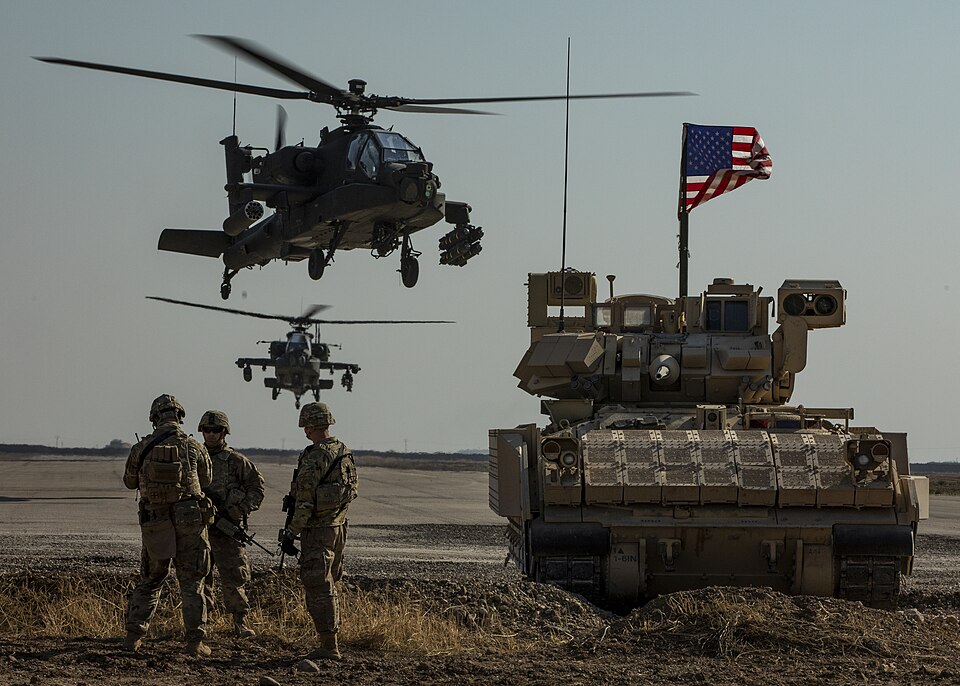
The M2 Bradley Fighting Vehicle is often called a tank by the public, but it is more accurately an infantry fighting vehicle. That distinction does not soften the danger. The Bradley remains a massive tracked armored machine designed for combat, speed, protection, and firepower.
It can weigh around 27 tons, depending on its variant and configuration. It carries soldiers, supports infantry, and moves with armored formations across difficult terrain. In combat, those qualities help protect troops. In training, those same qualities demand extreme caution.
A Bradley does not behave like a civilian truck. It has tracks, armor, blind spots, noise, and movement patterns that can become deadly near people on foot. It can turn and move in ways that require everyone nearby to understand where danger begins.
The California Army training death shows why armored vehicle safety cannot depend on assumptions. A soldier may think a crew sees him. A crew may think the ground is clear. A commander may think the movement plan is understood. Any one of those assumptions can fail.
Around a Bradley, the space near the hull can become a silent threat. The machine is too heavy to forgive confusion and too large to offer second chances. Once movement begins, the margin for survival can disappear in seconds.
One Soldier’s Death Inside a Larger Pattern
Bonsey’s death belongs to his family, his unit, and everyone who served beside him. Still, the California Army training death also fits into a larger national concern about military training accidents. The Army has recorded training deaths in recent years involving ground incidents, aircraft crashes, and military vehicles.
Military safety reviews have long warned about tactical vehicle accidents outside combat. These incidents do not always receive the same attention as battlefield casualties, but they can leave the same grief behind. Families still receive the call. Units still lose a teammate. A uniform still returns without the person who wore it.
This broader trend matters because training deaths can become normalized when they are folded into the language of readiness. Officials may speak of risk, mission demands, and operational necessity. Those terms may be true, but they should not dull public concern.
The California Army training death should remind Americans that service members face danger even before deployment. A soldier can die while preparing for war, before ever reaching the war itself. That reality complicates the way the public understands sacrifice.
The Army cannot remove all danger from training, and serious people understand that. Soldiers must learn to move, fight, and survive around powerful machines. But accepting risk is not the same as accepting every death as unavoidable.
The Word “Accident” Should Not End the Conversation
The word “accident” often arrives quickly after a training death. It is simple, official, and familiar. Yet in the California Army training death of Adrian Bonsey, that word should begin the conversation, not close it.
An accident can still involve preventable conditions. It can involve unclear instructions, weak supervision, fatigue, poor visibility, failed communication, or procedures that existed but did not protect the person most at risk. The investigation must determine what happened, but the public should understand what investigators may need to examine.
They may review vehicle movement, crew actions, use of ground guides, radio communications, lighting conditions, personnel placement, and the chain of command. They may also examine whether the training tempo created pressure that made a dangerous moment more likely. Fatal incidents often stem from a chain of smaller decisions, not a single dramatic failure.
The California Army training death deserves that level of scrutiny because every unanswered question carries weight. Was Bonsey where he had been directed to be? Did the crew know soldiers were nearby? Could the vehicle commander see enough? Were safety measures followed in practice, not just written in a plan?
Accountability does not mean rushing to blame. It means refusing to hide behind soft language. A soldier died under the weight of a war machine on American soil, and the system around that moment must be examined with honesty.
From New York to Georgia to the California Desert
Bonsey’s story carries a painful map. He came from New York, joined the Army in 2023, served at Fort Stewart in Georgia, and traveled to California for training. That journey should have ended with a return to his unit and another step forward in his military career.
Instead, the California Army training death turned a training rotation into a final chapter. The Mojave Desert was where his service ended. His family, friends, and fellow soldiers now carry the loss that followed him home.
This human side matters because military stories can become mechanical. Rank, unit, vehicle type, location, and date can flatten a life into a short notice. Bonsey was more than an incident summary. He was a soldier still building his future.
Combat engineers often work close to the most dangerous parts of military movement. They help units breach, build, clear, and survive. Their work places them near vehicles and terrain that can shift from controlled to deadly very quickly.
That reality makes Bonsey’s death even more sobering. He served in a role where danger was part of the job, but that does not mean his death should be absorbed as routine. The country owes more than a passing glance to soldiers who die while preparing to defend it.
What This Tragedy Should Force the Army to Confront
The California Army training death should push the Army to examine not only what happened, but what it teaches. If visibility played a major role, leaders need stricter controls for armored movement in darkness. If communication failed, units need sharper procedures before the next rotation.
If fatigue contributed, training schedules deserve closer review. Realistic training often demands long hours, but exhaustion can weaken judgment. A tired soldier, a tired crew, and a moving armored vehicle create a dangerous combination.
If the issue involved ground control, the Army must reinforce training on how soldiers on foot interact with heavy vehicles. Ground guides, marked danger zones, vehicle commanders, and movement briefings are not small details. They are life-preserving systems.
The strongest military organizations learn from painful events without weakening their mission. They do not pretend danger can vanish. They identify where danger became uncontrolled, then they close the gap.
That is the standard Bonsey’s death should demand. Not softer training, but safer discipline. Not less realism, but better control. Not silence after grief, but lessons strong enough to protect the next soldier in the dark.
Readiness Has a Human Cost
Military readiness often sounds clean in official language. It appears in budgets, speeches, strategy documents, and command briefings. It suggests strength, preparedness, discipline, and national defense.
The California Army training death puts a human face on that word. Readiness cost Adrian Bonsey his life. It cost his family a loved one and his unit a teammate.
That truth does not weaken respect for the military. It deepens it. Respect requires honesty about the dangers soldiers face, even when they are not in combat.
Bonsey’s death should remain more than a brief headline about a training accident. It should become a serious reminder that the road to readiness can be dangerous, and that danger must be managed with relentless care. A soldier went to California to train for war, but the battlefield did not take him. The training ground did, and that should trouble every institution responsible for sending soldiers into the dark beside machines built for war.