New York Parents Sentenced After 3 Year Old Joycelynn Dylewski Died From Chronic Neglect, Severe Lice Infestation, And Lack Of Medical Care
We are left with a case that is difficult to read and impossible to dismiss: a three year old girl in Corinth, New York, died after investigators found signs of prolonged neglect, untreated medical problems, and living conditions that authorities later described as unsafe for children.
Joycelynn Ann Dylewski was only three years old when first responders were called to her family’s apartment on February 19, 2025, after her parents reported that she was having trouble breathing. She was taken to a hospital, where she was pronounced dead. What began as an emergency call soon became a criminal investigation into the conditions of her final months.
The case ended with her parents, Matthew Dylewski and Samantha Dylewski, pleading guilty to criminally negligent homicide. Both were sentenced to the maximum penalty available under the charge: 16 months to four years in state prison. The sentence has since triggered renewed anger in New York, with lawmakers proposing a new measure known as Joycelynn’s Law.
At the center of the public outrage is a haunting question: how could a child become so medically fragile, so visibly unwell, and so deprived of basic care before anyone was able to save her?
Who Was Joycelynn Dylewski?
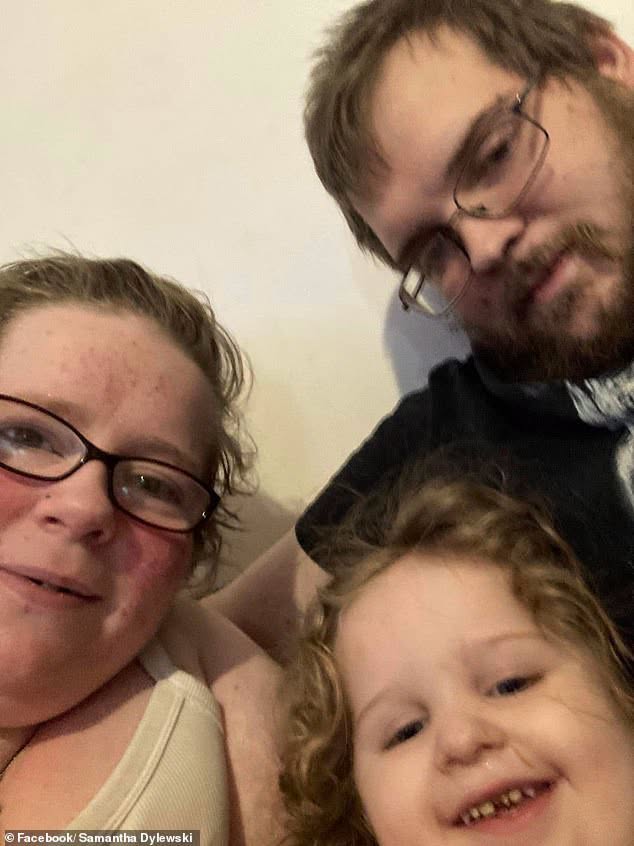
Joycelynn Dylewski was a toddler living with her parents and four siblings in Corinth, a village in Saratoga County, New York. Her name is now attached to proposed legislation, but before that, she was a small child whose life depended entirely on adults for food, hygiene, shelter, medical care, and protection.
The details released in court and reported by local media paint a deeply troubling picture. Joycelynn had not seen a doctor in the final 10 months of her life. She reportedly had blackened, rotten teeth. Her hair was matted. She suffered from a severe lice infestation that authorities said lasted for weeks, possibly months. That infestation allegedly became so serious that it contributed to anemia, a dangerous condition that occurs when the body does not have enough healthy red blood cells to carry oxygen.
This was not a sudden illness that appeared overnight. The evidence described by prosecutors suggests a pattern that developed over time. It was visible. It was physical. It was progressive. It was the kind of suffering that demanded intervention long before the final emergency call.
The Lice Infestation That Became a Medical Emergency
A lice infestation is often treated as a common childhood nuisance, but in extreme and untreated cases, it can become medically serious. Lice feed on blood from the scalp. When an infestation is severe and prolonged, especially in a very young child, the repeated blood loss can contribute to iron deficiency anemia.
That context matters because Joycelynn’s case forces us to look beyond the word “lice” and understand the scale of what investigators described. This was not a minor grooming issue. Authorities said the infestation lasted for weeks or months. Her hair was matted, and she had not received the medical care that could have identified the danger.
When a child is three years old, she cannot schedule a doctor’s appointment. She cannot buy treatment. She cannot insist that an adult wash her hair, clean her bedding, check her scalp, or take her pain seriously. We must see this case through the power imbalance that defines every child neglect investigation: the child is dependent, and the adults are responsible.
The tragedy is that the signs were not hidden inside a medical mystery. They were on her body.
Black Teeth, Matted Hair, and No Medical Care
Court details included some of the most disturbing indicators of neglect: Joycelynn’s teeth were described as black and rotten, and she had not been taken for medical care in the last 10 months of her life. Dental decay in a toddler is not cosmetic. Severe untreated dental problems can cause pain, infection, difficulty eating, sleep disruption, and worsening overall health.
A young child with blackened teeth, matted hair, and a severe lice infestation is a child signaling distress in ways that do not require advanced medical training to notice. The physical evidence described by investigators suggests that Joycelynn’s condition was allowed to worsen until her body could no longer endure it.
We should also be clear about what “no medical care” means in practical terms. It means missed chances to treat the infestation. It means missed chances to diagnose anemia. It means missed chances to address dental disease. It means missed chances for a mandated reporter, clinician, or social service worker to see the full picture and act.
The most painful part of the case is not only that Joycelynn died. It is that her decline appears to have unfolded over time, with warning signs that should have triggered urgent concern.
The Clonidine Found in Her System
Investigators also found clonidine in Joycelynn’s system. Clonidine is a prescription medication commonly used for conditions such as high blood pressure and certain other medical indications. Authorities said Joycelynn was not prescribed the medication and did not have a heart condition that would explain its presence.
Prosecutors said text messages showed Matthew and Samantha Dylewski discussed giving the medication to the child. That detail intensified the case because it raised questions not only about neglect, but about what the parents knew, what they discussed, and what choices were made while the child was already vulnerable.
In a case built around criminal negligence, such evidence can matter deeply. Criminally negligent homicide does not require the same proof as intentional murder, but it does focus on a failure to perceive or act against a substantial and unjustifiable risk. When a child is medically unwell and a non prescribed medication appears in her system, the risk becomes harder to ignore.
We are not looking at a single poor decision. We are looking at a series of alleged failures involving hygiene, medical attention, supervision, household safety, and medication.
Inside the Apartment Authorities Later Condemned
The apartment where Joycelynn lived became part of the case because investigators described conditions that were dangerous for children. Reports from those who saw or cleaned the home described trash on the floor, insects, clogged sinks, stained surfaces, and floors so filthy that investigators said their boots stuck to them.
A cleaning company owner who was later tasked with cleaning the apartment described having to shovel trash from the floor. A local building inspector reportedly called the residence one of the worst homes he had seen. The apartment was later condemned.
These details are not included for shock value. They are important because environmental neglect can be just as harmful as medical neglect. A home overrun by trash, insects, clogged sinks, and filth can expose children to disease, injury, pests, respiratory irritants, and emotional trauma.
For the four surviving children in the home, the conditions were also part of the state’s concern. Joycelynn was the child who died, but the investigation revealed that the danger extended beyond one victim.
Matthew and Samantha Dylewski Pleaded Guilty
Matthew Dylewski, 34, and Samantha Dylewski, 33, both pleaded guilty to criminally negligent homicide in Saratoga County Court. Their guilty pleas acknowledged criminal responsibility in connection with Joycelynn’s death.
The charge carried a maximum sentence of 16 months to four years in state prison, and both parents received that maximum. Samantha Dylewski was sentenced first, on June 8, 2026. Matthew Dylewski was sentenced later in June 2026.
Both parents were also ordered to have no contact with their four surviving children until June 2038. That order extends far beyond the prison sentence itself and reflects the court’s concern for the safety and welfare of the remaining children.
For many observers, the legal outcome has felt painfully small compared with the facts described in court. That gap between the horror of the death and the limit of the sentence is what pushed lawmakers to propose a change in New York law.
Why the Sentence Sparked Anger
The anger around this case is not only emotional. It is legal and structural.
The judge imposed the maximum penalty allowed for the charge. Prosecutors pursued the available sentencing path. Yet the result was a sentence that could allow release after a relatively short minimum term. For a child death case involving prolonged neglect, severe medical deterioration, alleged unsafe medication exposure, and a condemned home, many people see that as a mismatch between harm and punishment.
This is where public frustration becomes a policy debate. If a judge believes a crime deserves more prison time but the law caps the sentence, the focus shifts from the courtroom to the legislature. The question becomes whether existing criminal statutes adequately address child deaths caused not by one violent act, but by long term deprivation, untreated illness, and repeated failure to provide basic care.
Joycelynn’s death has become a symbol of that legal gap.
What Joycelynn’s Law Would Change
Following the sentencing, New York State Senator James Tedisco, Assemblyman Matt Simpson, and Saratoga County District Attorney Brett Eby called for legislation known as Joycelynn’s Law. The proposal would increase the maximum sentence for criminally negligent homicide of a child.
Under the proposal, criminally negligent homicide involving the death of a child would carry a much harsher penalty than the one currently available. Supporters argue that the law should treat prolonged fatal neglect with the same seriousness that the public already feels when the victim is a vulnerable child.
The proposed law is designed around a moral and legal claim: when a child dies because an adult repeatedly fails to provide basic care, the punishment should reflect the duration and severity of that failure.
Whether the proposal becomes law remains a political question. But its introduction shows how quickly a single case can expose a broader weakness in sentencing rules.
The Difference Between Poverty and Criminal Neglect
One important distinction must be made carefully: poverty is not the same as criminal neglect.
Families can struggle financially and still love, protect, and seek help for their children. Parents can face hardship, unstable housing, unemployment, transportation problems, and medical access barriers without allowing a child to suffer untreated conditions for months. Poverty may complicate care, but it does not erase the duty to seek help when a child is visibly deteriorating.
That distinction matters because cases like Joycelynn’s can be misunderstood. The issue is not whether a home was modest, imperfect, or financially strained. The issue is whether a child’s basic needs were ignored to the point that her body shut down.
A child with severe lice, rotting teeth, matted hair, anemia, and no medical care is not simply living in hardship. That child is in danger.