
Venezuela’s Earthquake Disaster Deepens as U.S. Sends $150M Aids and Warships.
The earthquakes in Venezuela have turned a national emergency into a regional test of speed, diplomacy, and survival. Two powerful tremors struck within seconds, flattening buildings, damaging infrastructure, and sending families into streets filled with dust, fear, and uncertainty. Now, the Trump administration says the United States is moving aid, rescue support, military logistics, and money into the crisis zone as Venezuela faces one of its most destructive disasters in modern memory.
A Double Blow That Left No Time To Breathe
The disaster began with a violent one-two punch. The U.S. Geological Survey recorded a magnitude 7.2 earthquake followed 39 seconds later by a magnitude 7.5 quake near Yumare, west of Caracas. That timing matters because residents barely had a moment to react before the second, stronger shock arrived. Scientists call this kind of event a doublet, meaning two similarly powerful earthquakes hit close together in time and location. For people on the ground, it felt less like two events and more like one long nightmare.
The Human Toll Is Still Rising
Venezuelan officials have reported around 235 deaths and about 4,300 injuries, according to Associated Press coverage. Rescue crews are still searching collapsed buildings, while families wait outside ruins for news of missing relatives. Reuters reported that thousands were listed as unaccounted for on a citizen-tracking platform, though such numbers can shift quickly during a disaster. The clearest fact is grim enough: hospitals, first responders, and local volunteers are dealing with a crisis that is still unfolding hour by hour.
Why La Guaira Became The Center Of The Crisis
La Guaira, the coastal state north of Caracas, has emerged as one of the hardest-hit areas. Reports from the scene describe damaged buildings, trapped residents, and neighborhoods where people are sleeping outside because their homes are unsafe. Its location also matters strategically. The area is tied to Venezuela’s main airport and coastal access routes, which makes damage there especially serious for aid delivery. When roads, airports, and hospitals are shaken simultaneously, every rescue becomes harder.
Washington’s Big Move: Money, Ships, And Search Teams
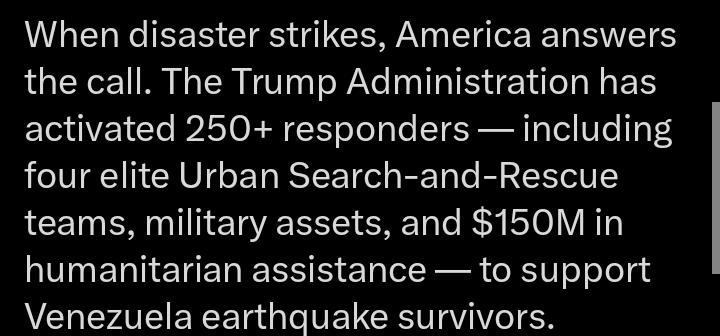
The Trump administration’s response includes $150 million in aid, with reporting indicating $50 million for aid organizations already working in Venezuela and $100 million for a United Nations humanitarian fund. U.S. Southern Command also said military assets would support rescue and relief operations. Reporting quoting SOUTHCOM says two warships, transport planes, and helicopters are being deployed to help move personnel, assess damage, locate injured people, and deliver critical assistance where access is limited.
This Is Humanitarian Aid With A Political Shadow
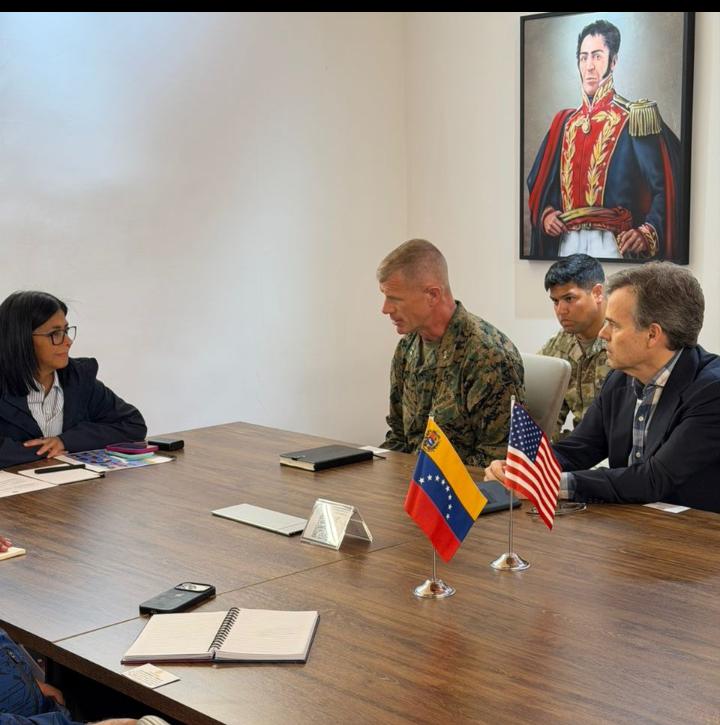
The U.S. response carries more than supplies. It also carries diplomatic weight. Washington and Caracas have a long, tense history, shaped by sanctions, leadership disputes, oil, migration, and regional influence. That history does not disappear during a disaster, but the earthquake changes the immediate question. Right now, the practical test is whether rival governments can allow lifesaving aid to move quickly. In a crisis, politics may still be present, but rubble does not wait for negotiations.
Venezuela Was Already Vulnerable Before The Ground Moved
The earthquakes struck a country already under pressure from years of economic crisis, strained public services, and mass migration. Many Venezuelans have lived through shortages, power problems, weak infrastructure, and limited access to medical care. That background makes the quake damage more dangerous. A strong building can save lives. A reliable hospital can change outcomes. A functioning airport can speed relief. When those systems are fragile before disaster hits, the aftermath becomes far more punishing.
The Science Behind The Shock
Venezuela sits near the boundary between the Caribbean and South American tectonic plates. AP reported that the quakes were tied to movement at the plate boundary, with shallow strike-slip faulting involved. Shallow quakes can be especially damaging because the energy travels a shorter path to the surface, weakening it. USGS also placed both major events under red alert conditions, signaling that serious casualties and damage were likely. The science explains the force, but the damage reflects both geology and human vulnerability.
Aid Is Arriving, But The Clock Is Brutal
In earthquake rescues, the first days are the most critical. Survivors trapped under rubble face dehydration, injury, falling debris, and limited air. Search teams need heavy equipment, trained dogs, medical teams, fuel, communications, and safe routes into damaged neighborhoods. International assistance from the United States and other countries could improve those odds, but coordination will determine how much impact that assistance has. Supplies alone do not save lives unless they reach the right place fast.
Why This Matters Beyond Venezuela
The earthquakes in Venezuela are not just a local tragedy. They are a reminder that disasters can expose the hidden weaknesses of cities, governments, and international systems. For U.S. readers, the story also raises questions about how America uses humanitarian power in a politically sensitive region. For Latin America, it tests whether neighbors and rivals can respond together when the emergency is bigger than ideology. For Venezuelans abroad, it is a painful moment of watching their home suffer from a distance.
The most important story now is not the size of the aid package or the number of ships offshore. It is whether trapped families are reached, whether hospitals can keep working, whether survivors find shelter, and whether help moves faster than exhaustion. The earthquakes in Venezuela have already rewritten thousands of lives in seconds. What happens next will show whether international promises can become food, medicine, rescue, and rebuilding before grief settles into something even heavier.


