Todd Blanche’s Confirmation Hearing Turns Brutal as Sheldon Whitehouse Unloads on DOJ Record
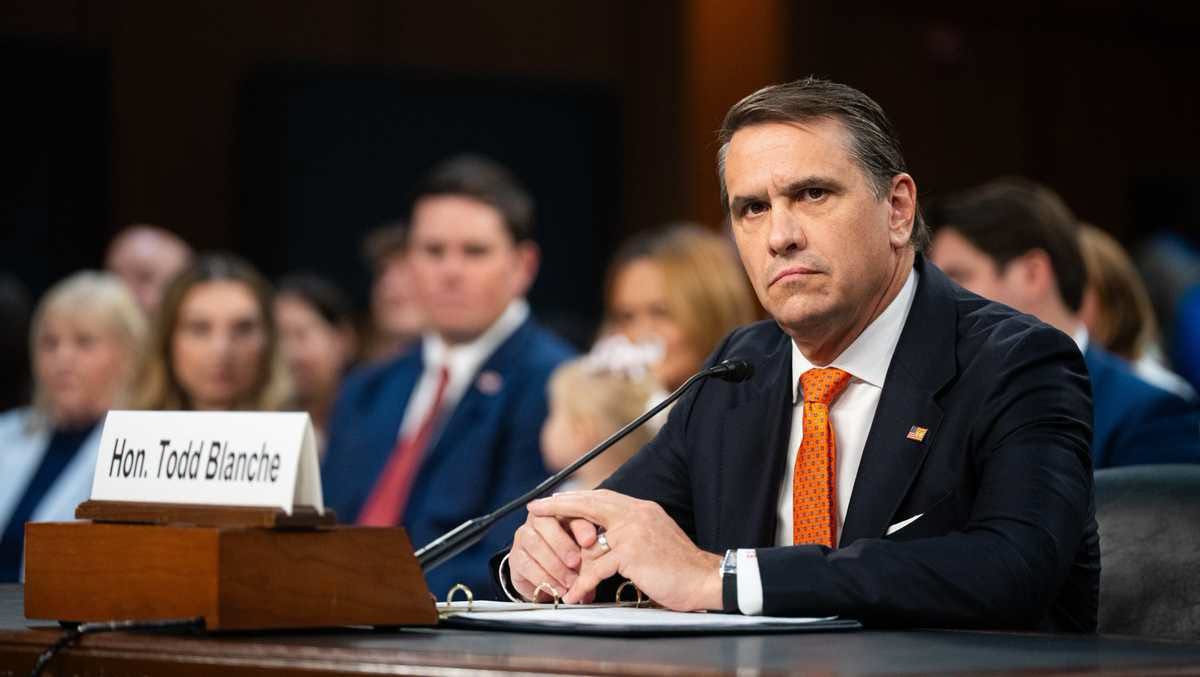
The Senate hearing room is designed for careful questions, polished answers, and cautious political theater. But when Sen. Sheldon Whitehouse began questioning Acting Attorney General Todd Blanche, the atmosphere quickly became less ceremonial and more confrontational.
A viral Facebook reel claims Blanche “imploded” after Whitehouse exposed his incompetence. That description is political commentary, not an objective account. What the official record shows is that Whitehouse delivered a blistering attack on Blanche’s leadership, while Blanche rejected the senator’s conclusions and accused him of presenting a selective picture of the Justice Department.
The exchange took place on July 15, 2026, during Blanche’s Senate Judiciary Committee confirmation hearing to become permanent attorney general. President Donald Trump nominated Blanche after he had already taken over as acting attorney general while continuing to serve as deputy attorney general.
Whitehouse brought receipts, not just rhetoric
Whitehouse did not begin with a vague accusation that Blanche was performing poorly. He displayed a poster containing words and phrases that federal judges had reportedly used to criticize the Justice Department’s arguments and conduct during Blanche’s tenure.
The list included terms such as “bad faith,” “disingenuous” and “unconscionable.” Whitehouse argued that criticism of this severity, coming from judges appointed by presidents of different political parties, reflected an alarming deterioration in the Justice Department’s credibility.
“The problem here, Mr. Blanche, is that it’s not just that one occasion,” Whitehouse said. He pointed to rejected indictments, findings of misconduct, departures by experienced government lawyers and repeated judicial criticism.
Whitehouse then called the current Justice Department “the most troubled” in its history. That was the senator’s assessment, not an independent legal finding. Still, the visual presentation and rapid delivery made it difficult for Blanche to dismiss the confrontation as ordinary partisan disagreement.
Blanche pushed back. He said Whitehouse had selected isolated words that did not represent the daily work of Justice Department prosecutors.
“The Department of Justice works hard and the prosecutors work hard every day,” Blanche responded, adding that the senator’s “handpicked words” were not reflective of the department’s broader record.
Whitehouse refused to retreat. “I will tell you that you are wrong,” he replied, arguing that the volume and intensity of the judicial criticism were unprecedented.
A controversial IRS settlement followed Blanche into the room

One of Whitehouse’s strongest lines of attack involved Trump’s lawsuit against the Internal Revenue Service and a disputed settlement negotiated with the administration’s own Justice Department.
Trump had sued the IRS over the unauthorized disclosure of his tax information. The proposed settlement included a $1.776 billion “Anti-Weaponization Fund” intended to compensate people who claim they were unfairly targeted by the justice system. It also contained protections that critics said could shield Trump, his relatives and affiliated businesses from audits or other government claims.
U.S. District Judge Kathleen Williams delivered a damaging ruling shortly before Blanche’s hearing. She found that the lawsuit lacked a genuine dispute between opposing sides and had been used for an improper purpose.
The judge concluded that the litigation had been employed to provide legal cover for benefits directed toward Trump and his allies. She blocked the settlement terms from taking effect and referred attorneys connected to the matter to professional disciplinary authorities for review.
That ruling gave Whitehouse something more powerful than a partisan talking point. It gave him the language of a federal judge questioning whether the Justice Department had properly defended the United States’ interests.
Blanche maintained that the controversial fund was “dead.” However, senators from both parties pressed him because the underlying agreement had not been formally withdrawn at the outset. Republican Sens. John Cornyn and Thom Tillis also raised concerns about the arrangement, demonstrating that the controversy was not limited to Democratic opposition.
Did Blanche really “implode”?
Blanche did not confess incompetence, abandon his nomination or collapse under questioning. He defended his record and insisted that the Justice Department was fighting violent crime, fraud, drug trafficking and illegal immigration.
Committee Chairman Chuck Grassley offered a sharply different view from Whitehouse. Grassley praised Blanche’s performance, citing the department’s enforcement efforts and accusing Democrats of using partisan attacks to obstruct Trump’s nominees.
Supporters who appeared on the second day of hearings also described Blanche as committed to law enforcement and the rule of law. Former Attorney General John Ashcroft and representatives of law enforcement organizations urged senators to confirm him.
But Whitehouse succeeded in placing Blanche on the defensive. Instead of discussing only his qualifications, Blanche was forced to explain judicial rebukes, unanswered congressional requests, the disputed IRS agreement and concerns about the department’s independence.
That is why the clip has attracted attention. The confrontation was bigger than one senator landing a memorable line. It raised a fundamental question about the attorney general’s job.
Is the nation’s chief law enforcement officer primarily accountable to the president who appointed him, or to the Constitution and the public institutions he has sworn to protect?
Blanche survived the hearing. The questions Whitehouse placed on the record may prove much harder to escape.