USPS, Court Power, and the Hidden Machinery of Mail Ballots: How a Single Ruling Rewires Election Logistics in Real Time
A Federal Court Draws a Hard Line on Election Mail Authority
A federal judge has blocked the United States Postal Service from moving forward with an operational plan tied to a presidential directive on mail ballot delivery, effectively halting one of the most politically sensitive attempts to reshape election logistics in recent years.
At the center of the decision is a simple but powerful legal constraint: the USPS cannot implement changes that conflict with a 2020 court-approved settlement governing how election mail must be handled.
The ruling does more than stop a policy shift. It exposes a deeper structural reality in American elections, where court orders, not political directives, increasingly determine how ballots physically move through the system.
The Real Power Center: Courts as Silent Election Architects
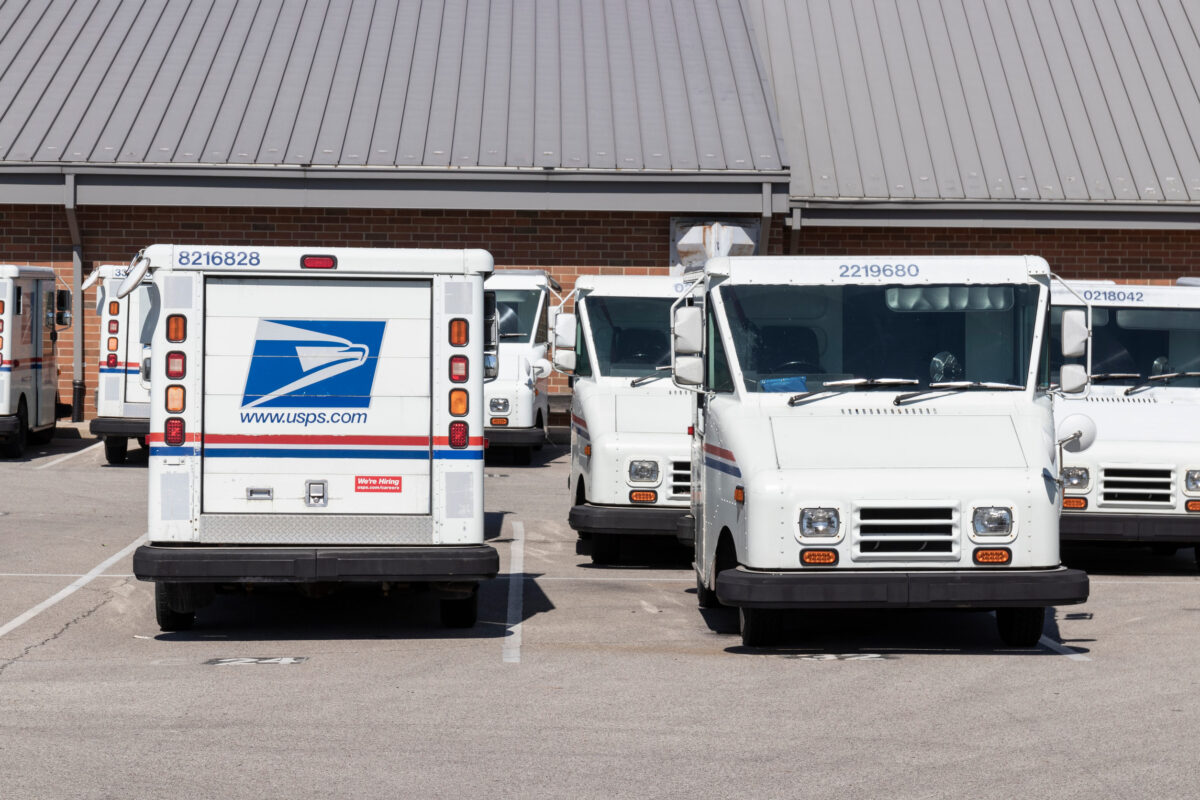
This case is not only about postal operations. It is about control.
The decision reinforces a growing pattern in which the United States federal judiciary functions as the final authority over election infrastructure changes that reach operational reality.
The USPS does not act in a vacuum. It operates inside a legal ecosystem where:
- Prior settlements remain binding for years.
- Operational changes require judicial compatibility.
- Election procedures are treated as legally sensitive infrastructure.
What emerges is an overlooked dynamic: elections are governed not only by legislation or executive action but also by accumulated judicial constraints that quietly shape what is even possible.
The 2020 Settlement That Never Left the System
The origin point of this ruling traces back to a 2020 lawsuit that led to a formal settlement governing election mail handling during a period of unprecedented vote-by-mail expansion.
That agreement introduced operational rules designed to stabilize ballot delivery timelines during high-volume election periods, including safeguards around processing speed, handling consistency, and distribution discipline.
While the emergency conditions that triggered the agreement have faded, the settlement itself has not.
Instead, it has evolved into a permanent legal framework embedded inside USPS operations, effectively turning a temporary crisis solution into a long-term structural constraint.
The court found that the proposed implementation of the executive order would conflict with those obligations, making compliance legally impossible without reopening the settlement itself.
The Executive Order vs Operational Reality Gap
The disputed policy originated from an executive order issued during the administration of Donald Trump, which sought to adjust how mail ballots are processed through the federal postal system.
On paper, executive orders can direct federal agencies to adjust procedures. In practice, agencies like USPS operate under layered legal restrictions that limit how far those directives can go.
This case exposes a critical gap:
- Executive intent sets direction.
- Agency execution must pass legal compatibility.
- Courts decide whether the implementation survives.
The result is a system where policy announcements and operational reality often diverge sharply.
USPS as a Neutral Infrastructure System Under Pressure
The USPS is often described as a neutral delivery system. But neutrality, in this context, is not passive; it is legally enforced.
Any attempt to modify election mail handling must avoid:
- altering voter access timelines
- disrupting state election deadlines
- violating prior judicial agreements
This transforms USPS into something closer to a regulated constitutional utility than a traditional federal agency.
Its role is not just to deliver ballots. It is to deliver ballots within a legally pre-defined boundary system that it cannot unilaterally change.
The “Ballot Timing Economy”: Where Law Controls Speed
One of the most overlooked consequences of this ruling is how deeply it ties law to timing.
Election mail is not just about whether ballots are delivered; it is about when they are delivered and how timing interacts with state election deadlines.
Small operational changes can create large systemic effects:
- Earlier processing shifts voter behavior.
- Slower routing increases ballot risk exposure.
- Altered handling rules impact rural delivery reliability.
This creates what can be described as a ballot-timing economy, in which legal decisions effectively regulate the pace of democratic participation.
How the 2020 Crisis Still Shapes the 2026 Election Infrastructure
Although the legal foundation of this case dates back to 2020, its effects continue to shape election operations years later.
What began as a pandemic-era emergency framework has evolved into a permanent structural layer governing USPS election mail behavior.
This means:
- Temporary crisis rules became durable constraints.
- Emergency judicial settlements became operational law.
- Modern election logistics are still shaped by past disruption.
The system is no longer operating in a clean legislative environment. It operates within accumulated legal history.
The Hidden Chain Reaction Behind a Single Court Ruling
The immediate effect of the ruling is straightforward: USPS cannot implement the blocked plan.
But the downstream consequences are more complex:
- USPS must maintain existing ballot processing rules. State election boards must align deadlines with unchanged federal handling. Future reforms must pass judicial review before implementation. tion
- Policy flexibility is reduced during active election cycles.
A single judicial decision becomes a system-wide multiplier of constraints.
The Deeper System: Elections Governed by Layered Litigation
Beyond the immediate dispute lies a broader institutional reality.
U.S. election administration is increasingly shaped by:
- settlements from past lawsuits
- injunctions that remain active for years
- Consent decrees governing federal agencies
- Court interpretations of administrative authority create a layered governance system in which elections are not governed solely by statutes but by an evolving legal architecture shaped by litigation.
The result is a system where:
Democracy is administered not just through lawmaking but through the accumulation of legal constraints.
What This Means Going Forward

This ruling does not end debates over mail ballot policy. Instead, it raises the procedural threshold for any future changes.
Any attempt to modify USPS election mail handling must now:
- align with existing court settlements
- survive judicial scrutiny before implementation
- account for state-level election deadlines
- avoid disrupting established ballot delivery timelines
The system remains flexible, but only within the boundaries defined by law and enforced by the courts.
The Quiet Power Behind Election Logistics
This case reveals a rarely visible layer of American elections: the machinery behind ballot delivery is not simply administrative, but deeply judicially governed.
The USPS does not simply respond to political direction. It operates inside a legal architecture built over time, reinforced by settlements, and enforced by courts that act as silent arbiters of electoral infrastructure.
And in that structure, every ballot is not just a vote.
It is a package moving through a system defined as much by law as by logistics.