How Joyce Beatty Turned the Kennedy Center Fight Into a Battle Over Power, Art, and Public Memory
For most Americans, the Kennedy Center is supposed to be a stage, not a political battlefield. It is the place where orchestras rise, actors bow, comedians are honored, and the country’s cultural life briefly gets dressed up in marble and lights. But this year, the Washington landmark became something much louder: a test of how far presidential power can reach into a public institution built to honor another president.
At the center of that fight is Rep. Joyce Beatty, the Ohio Democrat whose lawsuit helped stop President Donald Trump’s name from remaining on the Kennedy Center and temporarily blocked a planned two-year shutdown for renovations. A federal judge ruled in late May that the board could not unilaterally rename the federally created arts center and that only Congress had that power. The court also gave officials two weeks to remove changed signage and references to Trump’s name from the building and official materials.
A Name Change That Sparked a Legal War
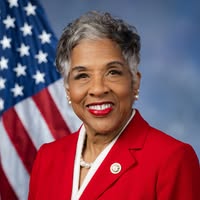
The dispute began after Trump’s allies on the Kennedy Center board moved to rename the institution as “The Donald J. Trump and the John F. Kennedy Memorial Center for the Performing Arts.” Beatty, an ex officio board member, challenged the move, arguing that the center’s official name was not a branding exercise for the board to revise at will.
Judge Christopher Cooper agreed with that core argument, writing that Congress gave the center its name and only Congress could change it. His ruling said the board had overstepped its legal authority not only on the name change but also on votes to strip ex officio members like Beatty of voting rights and to close the center for two years.
That made Beatty’s case bigger than a sign on a wall. It became a fight over whether a public cultural memorial could be reshaped by political force without congressional approval. Beatty framed the ruling as a defense of the institution itself, saying the Kennedy Center belongs to the American people, not to Donald Trump.
The court fight also exposed a messy behind-the-scenes governance battle. Earlier in March, a judge ruled that Beatty had the right to attend and speak at a board meeting about Trump’s plan to close the center for renovations, though he did not force the board to let her vote at that stage.
The July 4 Closure That Didn’t Go as Planned
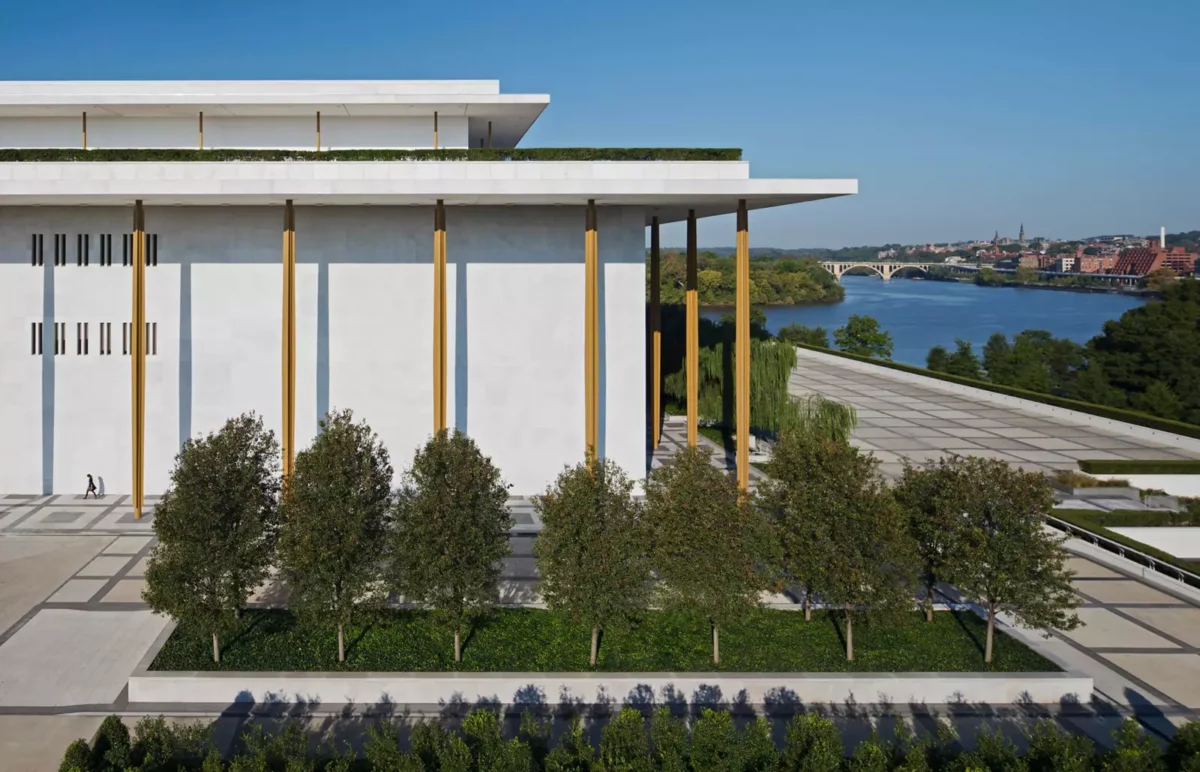
Trump had announced that the center would close on July 4 for a two-year renovation project. Supporters of the plan described the building as badly in need of repairs. Reuters reported that officials highlighted infrastructure issues and that the renovation was backed by roughly $257 million in taxpayer funding, including money for safety systems and performance space improvements.
But critics saw something else: a sweeping remake of a national arts institution under a politically appointed board. The proposed closure raised concerns about canceled programming, staff cuts, donor confidence, and the center’s duty to remain a “living memorial” to President John F. Kennedy.
Judge Cooper’s order temporarily blocked the two-year shutdown, saying the board had not properly considered the consequences of closing the center. He wrote that the center could not “sacrifice one statutory duty at the altar of another,” a striking line that captured the legal heart of the case.
The building’s condition was not dismissed outright. Reuters reported that officials cited eroding support beams, outdated systems, corroded electrical vaults, and other infrastructure issues. But the judge’s ruling made clear that even serious repairs did not automatically give the board permission to shut down a national memorial for two years without properly weighing its public mission.
A Cultural Symbol Under Political Pressure
The drama reached a visual peak in June, when workers began removing Trump’s name from the Kennedy Center facade after the court-ordered deadline. Crowds gathered outside, taking pictures and cheering as the work began. Beatty was also spotted on the plaza, watching the moment unfold after months of legal pressure.
Still, the scene did not deliver instant closure. Workers covered scaffolding with tarps, and when they left in the early morning hours, the covering remained in place, making it difficult for the public to immediately confirm whether all of the letters had come down. The Kennedy Center’s website and official communications, however, had already dropped Trump’s name, according to reporting by the Associated Press, as carried by NBC Washington.
That image, a national arts center hidden behind tarps after a court fight over its name, became a fitting symbol of the entire controversy. The Kennedy Center was still standing, but the argument over its future was far from settled.
For Beatty, the case has turned her into an unlikely guardian of a building many Americans know more from televised honors than from legal statutes. Her role has been part lawmaker, part board member, part public witness. She did not simply object to a name change; she forced a court to examine whether the Kennedy Center’s leadership had crossed the line between stewardship and political ownership.
The larger question now is what happens next. The center still needs repairs. Its leadership still faces scrutiny. Trump and his allies have not abandoned their broader vision for remaking major Washington institutions. And the Kennedy Center, long treated as a bipartisan cultural stage, now carries the scars of a deeply partisan fight.
But Beatty’s legal victory changed the story. What began as a bold attempt to stamp Trump’s name onto one of America’s most visible cultural landmarks ended with a federal judge saying no , not without Congress, not by board decree, and not at the expense of the law that created the memorial in the first place.
In that sense, the Kennedy Center fight is not just about marble, music, or signage. It is about who gets to write the country’s public memory ,and whether one president can place himself inside a memorial built for another.