America’s 250th Anniversary Might Bring the Biggest National Mall Celebration in a Generation.
America is preparing for a birthday party so large that Washington, D.C.’s most symbolic public space may look less like a government district and more like a coast-to-coast festival ground.
The country’s 250th anniversary is arriving on July 4, 2026, and one of the biggest centerpieces of the celebration is the Great American State Fair on the National Mall. Running from June 25 through July 10, the 16-day event is expected to transform the heart of the nation’s capital into a massive patriotic exposition featuring state pavilions, cultural displays, family attractions, live performances, military ensembles, flyovers, movie screenings, industry showcases, and a Ferris wheel rising over one of America’s most historic landscapes.
For many families, it may be the largest national birthday celebration they have ever seen in person. For older Americans, it may recall the spirit of the 1976 Bicentennial, when the country marked 200 years of independence with parades, tall ships, fireworks, patriotic branding, and a rare sense of shared national ceremony. For younger visitors, it could become their first once-in-a-generation moment on the National Mall.
But the deeper story is not just the size of the fair. It is the message behind it: America is using this moment to put itself on display at a complicated point in its history.
A State Fair for the Whole Country
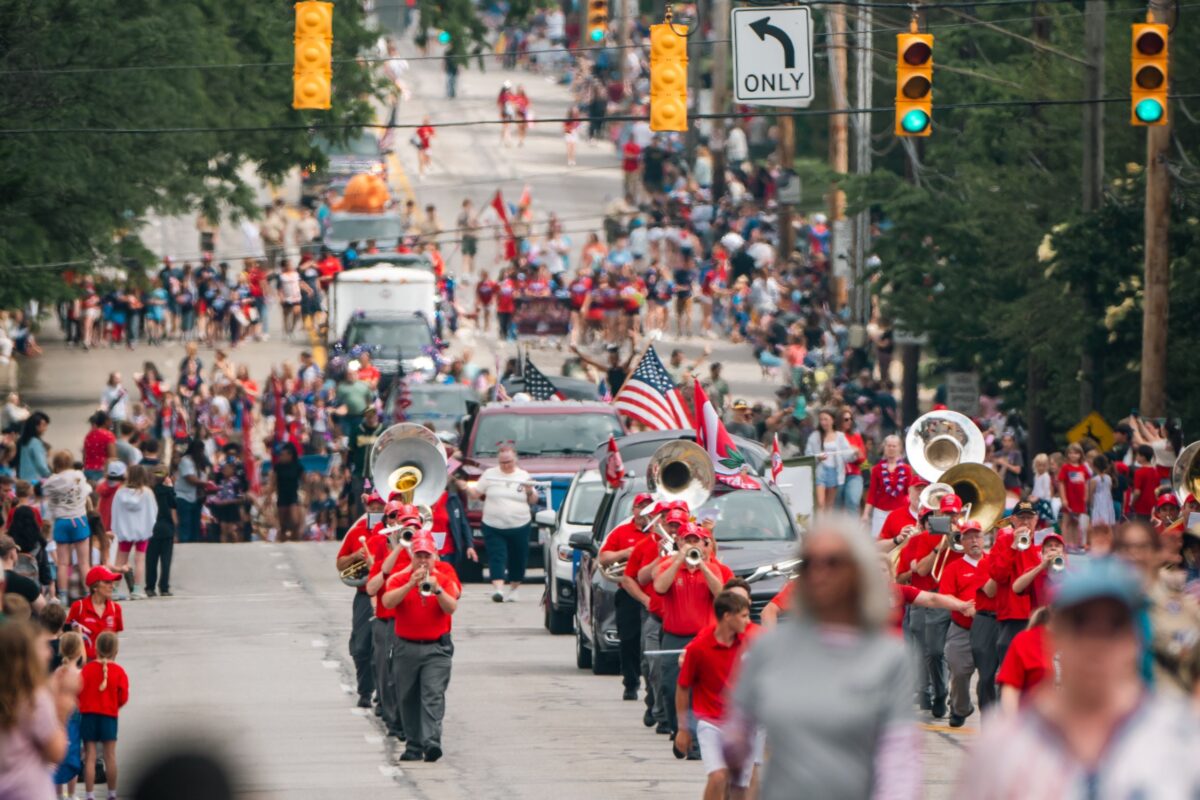
State fairs usually belong to one place. They celebrate local food, farms, music, livestock, students, small businesses, pageants, competitions, and family traditions. The Great American State Fair is taking that familiar idea and stretching it across the entire country.
Instead of asking visitors to travel through dozens of states, the event brings all 56 U.S. states and territories into a single public space. Organizers describe the fair as a modern-day World’s Fair, with more than 150 exhibits from states, territories, businesses, innovators, and civic organizations.
That gives the event a powerful visual promise. A family could walk the National Mall and move from one region of the country to another without leaving Washington. One pavilion may highlight agriculture. Another may focus on technology. Another may showcase culture, music, food, education, health, military service, or entrepreneurship.
In that sense, the fair is not only selling patriotism. It is selling proximity. It is trying to make a large, divided, complicated country feel walkable for a few summer days, and that is the point.
That is what could make the event so memorable. Visitors will not just watch a fireworks show and go home. They may experience a living map of America, with each stop offering a different version of the country.
Why the National Mall Makes This Different
The location gives the celebration its emotional weight. The National Mall is not an ordinary festival site. It is where Americans gather for inaugurations, protests, marches, memorial services, concerts, veterans’ events, fireworks, and national moments that become part of public memory.
The fair will take place between 14th Street and 4th Street, placing it near some of the most recognized civic landmarks in the United States. That setting changes everything. A Ferris wheel on the National Mall is not just a ride. A military band is not just background music. A state pavilion is not just a booth. In that space, every attraction becomes part of a larger national stage.
Families may come for food, music, exhibits, and entertainment, but they will also be walking through a place tied to the country’s struggles and ideals. The Mall has seen Americans celebrate freedom, demand justice, mourn tragedy, and argue about the nation’s direction. Now it will host a birthday celebration built around the question of what America has been and what it wants to become.
That is why this event may feel bigger than a summer fair. The backdrop carries history before the first visitor even arrives.
What Visitors Can Expect
The Great American State Fair is scheduled to run daily from June 25 to July 10. Public hours are listed as 10 a.m. to 9 p.m. Sunday through Wednesday, 10 a.m. to 11 p.m. Thursday through Saturday, and 10 a.m. to midnight on July 4.
Admission is free and open to the public. Advance registration is encouraged, while walk-ups are expected to be welcome. That free admission matters because a national anniversary should not feel like a luxury event reserved only for people who can afford expensive tickets.
The fair is expected to include state pavilions, industry displays, family-friendly attractions, movie screenings, cultural programming, music, military ensembles, flyovers, and other large-scale features. Visitors are being encouraged to use public transportation, rideshare, and Metro because the crowd size and location will make driving difficult.
The event will also have daily themes. Opening day is framed around the American canon. Other days focus on land and prosperity, arts and culture, military and veterans, health and well-being, innovation and technology, faith and values, horsepower, aviation, education, enterprise, family life, and the next 250 years of American progress.
That rotating schedule gives the fair a wider reach. A veteran may care most about military appreciation. A parent may choose a family-focused day. A student may be drawn to education and innovation. A tourist visiting for Independence Day may build the trip around July 4, when the fair stays open until midnight.
July 4 Will Be the Emotional Center

Every day of the fair may bring crowds, but July 4 will almost certainly become the emotional peak. The 250th anniversary is not just another Independence Day. It marks a quarter millennium since the Declaration of Independence placed a new country’s ambitions into writing.
That milestone carries a weight the United States has not felt since the Bicentennial in 1976. The country has changed dramatically in the 50 years since then. It is larger, more diverse, more technologically advanced, more politically divided, and more globally connected. The America of 2026 is not the America of 1976, just as the America of 1976 was not the America of 1776.
That is why the anniversary is both celebratory and reflective. People will come to wave flags, take photos, listen to music, eat fair food, and watch the sky light up. But underneath the spectacle, the country will also be measuring itself. What has America built? What has it failed to fix? Who feels included in the story? What should the next 250 years look like?
A strong national celebration need not avoid those questions. It can hold pride and reflection at once, which is what gives this moment its force.
A Boost for Washington, D.C.

For Washington, D.C., the fair could become a major tourism event. A 16-day national celebration can bring visitors into hotels, restaurants, museums, tour buses, rideshares, souvenir shops, and neighborhood businesses. Families already visit the capital in summer for monuments, museums, and Fourth of July fireworks. This event gives them another reason to stay longer.
That could be especially important for local workers in hospitality, food service, transportation, tourism, security, retail, and event staffing. A major celebration on the Mall can create more shifts, more tips, and more foot traffic at a time when summer travel dollars matter.
But a crowd of this scale will also bring pressure. Residents and visitors should expect heavy security, road restrictions, packed Metro stations, hot weather concerns, and long walking distances. The fair may be joyful, but it will not be effortless.
Smart visitors should plan like they are attending a major national event, not a neighborhood carnival. That means arriving early, wearing comfortable shoes, carrying water where allowed, checking bag rules, using Metro, and following official updates before heading out.
A Celebration in a Divided Country
The Great American State Fair arrives at a time when Americans are not always united on what patriotism should look like. Some people will see the fair as a proud national tribute. Others may question whether the celebration fully represents every part of the American story. Many will simply want a safe, beautiful, family-friendly way to experience history.
That mix is not a weakness. It is America. The country has always been both a shared idea and an argument over that idea. It has always celebrated freedom while debating who fully receives it. It has always looked backward and forward at the same time.
The fair’s biggest opportunity is to make room for that complexity. Farmers, veterans, teachers, immigrants, artists, small-business owners, students, engineers, nurses, parents, and service workers all belong in the American story. A true national celebration should feel wide enough for people from different backgrounds to recognize themselves.
If the Great American State Fair can do that, it may become more than a temporary attraction. It could become a rare public reminder that the country is still capable of gathering in one place, even when it does not agree on everything, and that is the real measure of the event.
The Next 250 Years Start Here
America’s 250th anniversary will not solve the country’s divisions. No fair, concert, fireworks show, or public ceremony can do that. But symbolic moments still matter because they help people pause, give families memories, and create images that outlive the event itself.
For 16 days, the National Mall will become a stage for American identity. There will be spectacle, food, music, exhibits, crowds, celebration, and debate. There will be pride, nostalgia, criticism, curiosity, and hope. That is exactly what makes the anniversary important.
The Great American State Fair may be temporary, but its question will last much longer: what kind of country does America want to be when it turns 300?
The answer will not come from a single pavilion or a single speech. It will come from the people walking the Mall, bringing their families, carrying their memories, asking their questions, and imagining what the next generation deserves.
America’s 250th birthday may bring the biggest National Mall celebration in generations. But the real story is not only the size of the crowd. It is whether the country can look at itself honestly, celebrate what is worth honoring, and still believe the next chapter can be better than the last.