Boston Logan Close Call Raises Deeper Questions About Airspace Pressure and Runway Safety in U.S. Aviation
A Narrow Margin Over Boston Harbor Airspace
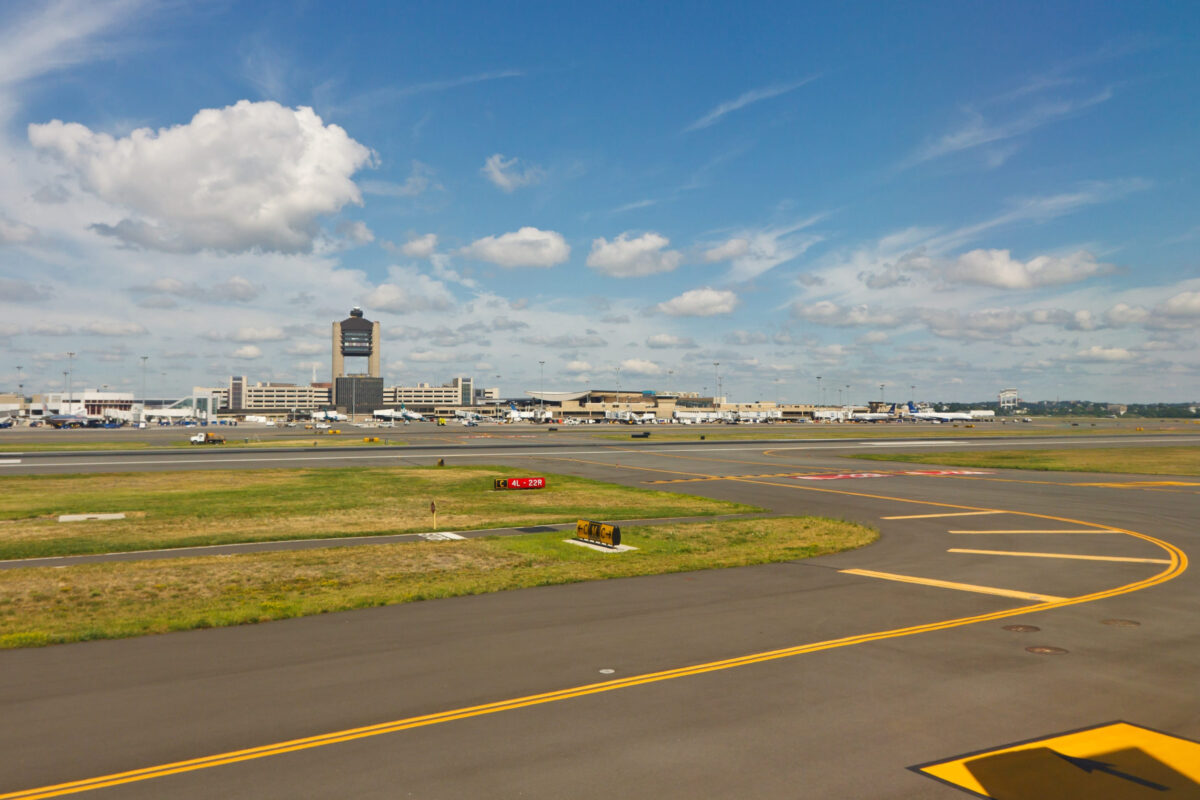
The Boston Logan close call involving a Delta Air Lines arrival and an American Airlines departure has drawn renewed attention to the fragile precision required in modern aviation. A Delta flight approaching Boston Logan International Airport came within an estimated 300 feet of another aircraft operating on an intersecting runway, forcing an immediate go-around. The maneuver prevented a potential runway conflict from escalating further.
This incident matters because it occurred within a tightly controlled environment where multiple safety layers are designed to prevent exactly this type of proximity. The Federal Aviation Administration has launched an investigation to determine how two commercial aircraft came to be so close together. Early analysis suggests timing, runway configuration, and sequencing decisions all played a role.
While the flight landed safely with all passengers and crew unharmed, the underlying event raises broader questions about operational pressure at major U.S. airports. Boston Logan operates in a constrained geographic space with intersecting runways and dense traffic flows. The Boston Logan close call, therefore, becomes more than a single event. It becomes a case study in how modern air traffic systems handle peak complexity under real-time constraints.
A Near Miss in a High-Density Air Corridor
The airspace surrounding Boston Logan functions as one of the busiest and most complex aviation corridors in the United States. Arrivals and departures often converge within narrow time windows, especially during peak travel periods. In the Boston Logan close call, two commercial aircraft were positioned on intersecting operational paths, requiring precise coordination to maintain separation.
Aviation experts note that high-density hubs depend heavily on sequencing discipline rather than physical distance alone. Controllers must align arrival descents with departure clearances while maintaining separation standards that can shrink rapidly under operational pressure. When those sequences compress, aircraft can move from safe spacing to critical proximity in seconds.
In this case, the Delta crew executed a go-around after recognizing that continuation of the landing would violate safe separation margins. That decision reflects standard safety protocol, but it also highlights how quickly airspace conditions can shift at major hubs. The Boston Logan close call illustrates how even routine operations can become high-stakes when intersecting flight paths converge at critical moments.
Intersecting Runways and Structural Risk at Logan
Boston Logan International Airport operates with multiple intersecting runways designed to maximize capacity within a limited coastal footprint. This layout allows the airport to adapt to wind direction and traffic demand, but it also introduces inherent structural risk. The Boston Logan close call occurred within this intersecting system, where arrival and departure paths can cross within tightly controlled time intervals.
Intersecting runway operations require precise timing coordination between air traffic controllers and flight crews. A departure clearance issued seconds too early, or an arrival sequence slightly delayed, can significantly compress separation margins. At Logan, this risk is amplified by the airport’s physical layout, which limits alternative routing options during peak operations.
Historical patterns at similarly structured airports show that intersecting runway configurations consistently require greater procedural discipline. While these systems are safe when executed correctly, they have reduced tolerance for timing deviations. The Boston Logan close call underscores how airport design itself can influence operational risk, even when all procedures are followed as intended.
Controller Workload and the Human Decision Ceiling
Air traffic controllers operate within a high-pressure environment where multiple aircraft movements must be managed simultaneously. Each instruction carries immediate consequences for separation, sequencing, and runway access. In the Boston Logan close call, investigators will likely examine whether timing decisions contributed to the compressed spacing between the two aircraft.
Controller workload becomes especially critical at high-traffic airports like Boston Logan. During peak periods, controllers must track arrivals, departures, taxi movements, and runway crossings in real time. Cognitive load increases as communication frequency intensifies, leaving little room for delay or reassessment once a sequence is in motion.
Aviation safety studies have long shown that human performance remains highly reliable but sensitive to workload saturation. Even minor delays in communication or instruction timing can cascade into tighter separation margins. The Boston Logan close call highlights how the human decision ceiling interacts with system complexity, particularly in environments where multiple runways intersect.
System Pressure Across U.S. Aviation Networks
The Boston Logan close call does not exist in isolation. It reflects a broader trend across U.S. aviation infrastructure, where increasing demand places sustained pressure on established operational systems. Major hubs are handling more flights, tighter schedules, and higher passenger volumes than in previous decades.
This growth has outpaced certain structural adaptations in airport design and air traffic staffing. While technology has improved surveillance and communication capabilities, physical runway layouts and controller staffing ratios have not always kept pace. As a result, separation margins in busy corridors can increasingly depend on precise timing rather than on expanded capacity buffers.
Historical comparisons show that aviation safety improvements often follow periods of increased operational stress. Near-miss events typically rise before procedural adjustments, training updates, or infrastructure investments are implemented. The Boston Logan close call fits within this pattern, in which system strain becomes visible only when timing tolerances are tested under real conditions.
What Investigators Will Scrutinize Behind the Radar Data
The FAA investigation into the Boston Logan close call will focus on a detailed reconstruction of events using radar data, cockpit communications, and air traffic control recordings. Investigators will map the exact sequence of clearances issued to both aircraft and determine how separation narrowed during the critical window.
A key focus will be the timing of runway assignment. If the American Airlines departure and Delta arrival were cleared within overlapping operational windows, investigators will assess whether sequencing protocols were sufficient. Even small deviations in timing can significantly affect intersecting runway operations.
The clarity of communication will also be closely reviewed. Aviation safety depends heavily on precise phraseology and immediate readbacks between pilots and controllers. Any ambiguity in instructions or delays in acknowledgment can contribute to compressed spacing. The Boston Logan close call will therefore serve as a detailed test of procedural integrity across multiple operational layers.
Safety Outcomes, Public Trust, and the Transparency Gap
Although the aircraft involved in the Boston Logan close call landed safely, the broader issue extends beyond immediate outcomes. Aviation safety is built on the principle that incidents are analyzed not only after failure, but also after narrowly avoided failure. This approach helps identify systemic weaknesses before they escalate.
Public trust in aviation depends on transparency around such events. However, many near-miss incidents are not immediately visible to passengers or widely understood outside specialist reporting channels. This creates a gap between operational reality and public perception, where safety is assumed but not always fully observed.
In recent years, increased reporting of runway incursions and close calls has prompted regulatory attention. The Boston Logan close call contributes to this evolving dataset, reinforcing the need for continuous monitoring and communication between regulators, airlines, and the traveling public.
Aviation Safety at the Edge of Precision
Modern aviation operates at an extraordinary level of reliability, but that reliability depends on precision under pressure. The Boston Logan close call demonstrates how quickly that precision can be tested when intersecting runways, dense traffic, and tight sequencing converge in real time.
Each layer of the aviation system performed its intended role in this case. The pilots executed a go-around, controllers managed the separation recovery, and the aircraft landed safely. Yet the event still reveals how narrow operational margins can become at major airports operating near capacity.
The broader question is not whether aviation is safe in absolute terms. The question is how much operational strain the system can absorb before safety depends more on rapid correction than on built-in spacing. The Boston Logan close call leaves that question open, inviting continued scrutiny of airspace management in an increasingly crowded aviation network.
In the end, the most important insight may be this: safety in aviation is defined not only by what happens but also by how often the system comes close to what must never happen.