Trump Says the World Needs “Winning” Leadership, Stirring a Fresh Debate Over Power, Ego, and Results
President Donald Trump has never treated leadership like a quiet exercise. To him, it is not a soft handshake, a polished speech, or a carefully written policy memo. It is a scoreboard. It is a victory. It is the feeling of walking into a room and convincing people that success has already arrived.
That message resurfaced when Trump was asked which single leadership trait the world is missing right now. His answer was blunt: winning. In true Trump fashion, the response was simple, sharp, and built for instant political argument. Supporters heard confidence. Critics heard ego. Everyone else heard the familiar language of a president who has long believed that leadership begins with dominance and ends with results.
A One-Word Answer With a Big Political Shadow

Trump’s remark did not land like a normal leadership quote. It landed like a campaign slogan. In a country already split over what strong leadership should look like, the word “winning” carried more weight than it first appeared to hold.
For Trump’s base, the message fits perfectly into the brand they have followed for years. They see a leader who talks about strength, economic growth, border control, military power, and American pride without apology. To them, “winning” means standing up to rivals, refusing weakness, and pushing the United States back into what they believe should be its natural place at the top.
But for Trump’s opponents, the same word raises alarms. They argue that leadership cannot be reduced to victory alone. A president may win headlines, rallies, negotiations, or elections, they say, but still lose public trust if the style becomes too combative or self-focused. In that view, leadership is not just about beating the other side. It is about governing a divided country without deepening the divide.
That is why the comment quickly became more than a soundbite. It touched the central question of Trump’s political identity: is he selling strength, or is he selling spectacle?
Why “Winning” Still Works for Trump

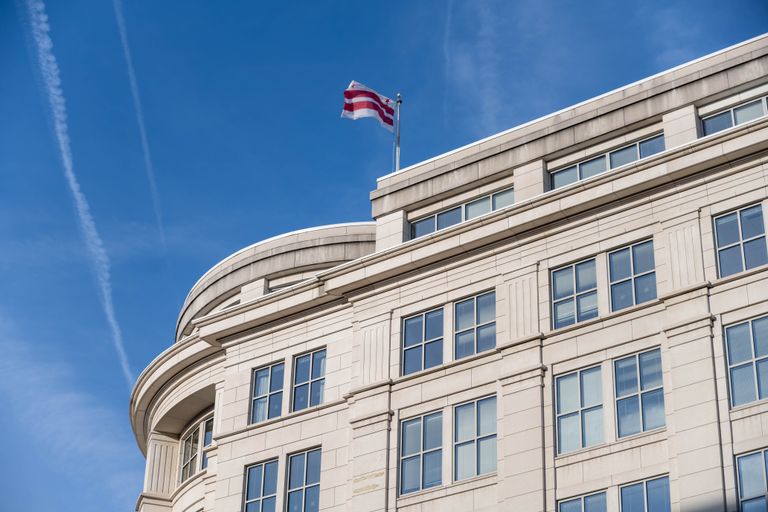
The White House from Washington, DC, Public domain, via Wikimedia Commons
Trump understands the emotional power of simple language. He rarely speaks like a policy professor. He speaks in words that can fit on a hat, a chyron, or a social media post. “Winning” is one of those words.
It gives his supporters a feeling of motion. It suggests that America was losing before him and can rise again through toughness. It turns politics into competition, where every issue has a winner and a loser. Immigration, trade, energy, foreign policy, crime, and even culture wars become part of the same scoreboard.
That style has helped Trump survive controversies that would have ended other political careers. He does not ask voters to judge him only by tone. He asks them to judge him by outcomes. Are factories returning? Are rivals listening? Are markets moving? Are enemies afraid? Are supporters energized? That is the frame he wants the public to use.
The danger is that this frame can make compromise look like weakness. In a democracy, leaders often need to negotiate, absorb criticism, and accept limits. But when politics becomes only about winning, compromise can sound like surrender. That is where Trump’s critics see the risk.
A Leadership Message Built for a Divided America
The timing of the remark matters because Americans are already exhausted by political conflict. Many voters want strength, but they also want stability. They want leaders who can defend national interests without turning every disagreement into a battlefield.
Trump’s answer plays directly into that tension. On one side, it gives frustrated voters a clear emotional promise: we can win again. On the other side, it gives Democrats and anti-Trump Republicans a warning sign: he may view leadership as personal victory rather than public service.
That contrast explains why even a short answer can travel widely. Trump’s words often become political mirrors. People hear what they already believe about him. Supporters hear a fighter. Critics hear a man who cannot separate leadership from ego. Undecided voters may hear both at once.
This is also why Trump remains such a powerful media figure. He rarely gives answers that disappear quietly. His language creates conflict, and conflict creates attention. In modern politics, attention is a form of power.
The Bigger Question Behind the Soundbite
There is a deeper debate hiding beneath Trump’s remark. What should leadership mean in 2026 America?
For some voters, leadership means results above all else. They are tired of speeches that sound noble but change little. They want lower costs, safer streets, secure borders, stronger jobs, and a country that feels respected abroad. For them, “winning” is not arrogance. It is accountability.
For others, leadership must include humility, restraint, honesty, and respect for institutions. They worry that a leader obsessed with winning may treat opponents as enemies and criticism as betrayal. They argue that a country cannot be led like a private business or a sports team because citizens are not players to be benched or rivals to be crushed.
Both sides are responding to real frustrations. Many Americans feel the system has failed them. Many also fear that anger has become the system’s main fuel. Trump’s gift is that he knows how to speak to the first feeling. His weakness, critics argue, is that he often intensifies the second.
A Trump Moment That Says More Than It Seems
The “winning” comment may sound casual, but it captures the engine of Trump’s politics. He sells victory as identity. He presents success as proof of leadership. He frames himself as the man who can turn national anxiety into national power.
That message will energize his loyal supporters. It will also sharpen criticism from those who believe America needs less chest-thumping and more careful governing. Either way, the remark does what Trump’s best-known political lines often do: it forces people to take sides.
In the end, the debate is not only about one word. It is about what kind of leader Americans believe the moment requires. Some want a fighter who wins loudly. Others want a steady hand that leads without turning every room into an arena. Trump has made clear which side of that argument he owns.
And once again, the country is left arguing over whether winning is the highest form of leadership ,or just the loudest one.