Trump’s Supreme Court Warning Turns a Procedural Fight Into a 2026 Political Earthquake
Washington has plenty of loud arguments, but this one comes with a trapdoor under both parties.
President Donald Trump’s warning that Democrats could leave the Republican Party “dead” if they end the filibuster and expand the Supreme Court was not just another social-media blast. It was a campaign flare fired over the deepest fear in modern Republican politics: that the next Democratic governing majority will not simply pass bills, but rewrite the machinery that decides who gets power, how long they keep it, and whether the courts can stop them.
The fight sounds technical at first. Filibuster. Court expansion. Voting Rights Act. Congressional resolution. But beneath the legal language is a raw political question: what happens when one side believes the referee has become part of the game?
Here are some of the key flashpoints driving the fight over Trump’s warning, Democratic court reform plans, and the political stakes ahead of 2026.
Trump Finds the One Issue That Makes Washington Sound Like a War Room
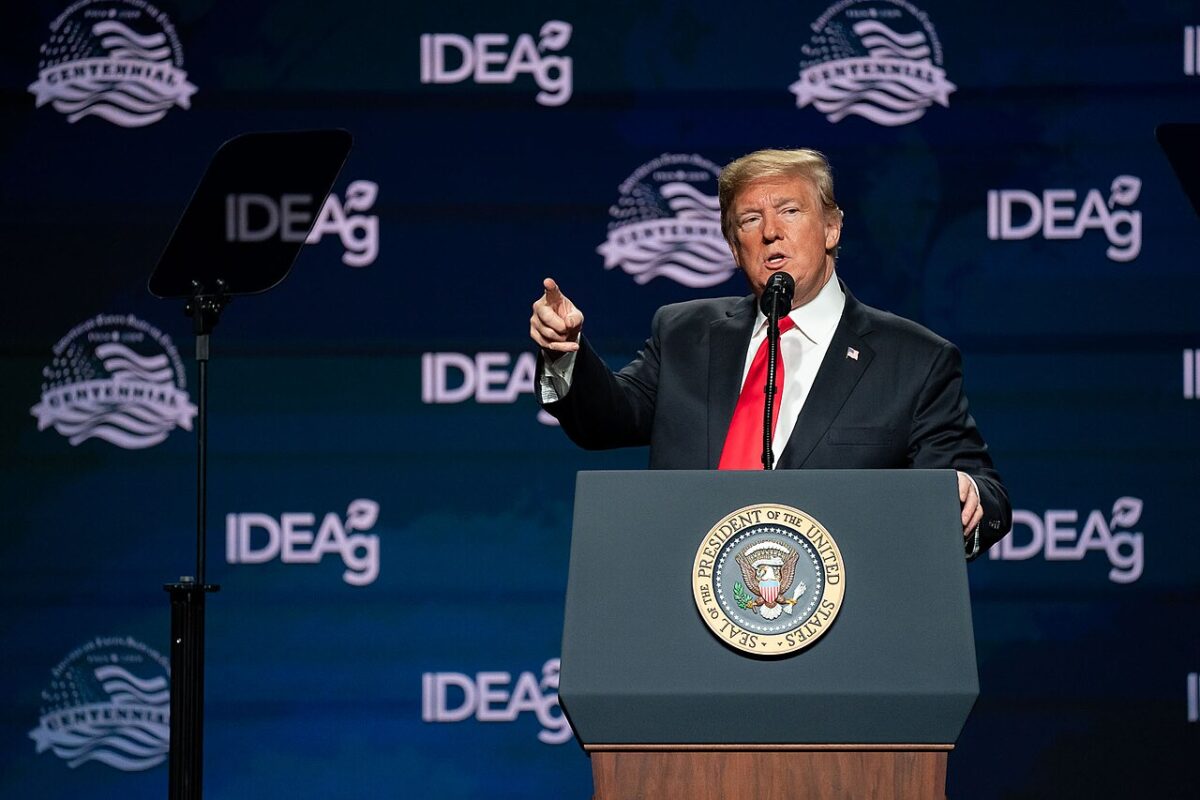
Trump’s message landed because it converted a slow-burning institutional debate into a survival warning. He framed Democratic court reform not as a policy idea, but as a political kill switch. In his telling, Democrats would regain power, scrap the Senate’s 60-vote threshold, expand the Supreme Court, and use the new alignment to protect their agenda from conservative legal challenges.
That is the kind of argument built for a midterm season. It is simple, alarming, and easy to repeat: Democrats are not just trying to win the next election; they are trying to change the rules after they win.
The Democratic resolution Trump cited does call for major structural changes. H. Res. 1384 says the House should support restoring and strengthening the Voting Rights Act, eliminating the Senate’s 60-vote threshold during the next “prodemocracy governing moment,” and considering Supreme Court reforms such as a binding ethics code, term limits, and expanding the number of justices.
The Democratic Resolution Is Not Law, but It Is a Warning Label
The resolution does not have a realistic path in the current Republican-controlled House. It is not a signed Democratic Party platform. It does not instantly add seats to the Supreme Court. That matters. But dismissing it as meaningless would be a mistake.
In Washington, resolutions often work like weather vanes. They show where a faction wants the wind to blow next. This one does not whisper. It openly says that some Democratic lawmakers want voting rights, Senate rules, and the Supreme Court’s structure treated as a single, connected fight. That is why Trump seized on it. The resolution gives him a document, not just a theory. It lets him tell Republican voters that the threat is already on paper.
The Supreme Court Case That Lit the Fuse

The spark behind the Democratic push is Louisiana v. Callais, a Supreme Court ruling that reshaped the debate over race, redistricting, and Section 2 of the Voting Rights Act. The case centered on whether Louisiana’s congressional map was an unconstitutional racial gerrymander, after earlier litigation had focused on whether the state needed another majority-Black district under the Voting Rights Act.
For Democrats and voting-rights advocates, the ruling looked like another blow against minority representation. For Republicans and conservative legal thinkers, it looked like a necessary limit on race-based districting. That divide is exactly why the case became so politically combustible: each side believes the other is using election law to choose winners before voters ever reach the ballot box.
The Court’s opinion also wrestled with whether compliance with the Voting Rights Act can justify the intentional use of race in drawing legislative districts, a question that now sits at the center of America’s redistricting wars.
Why the Filibuster Is the Real Prize
The Supreme Court may be the headline, but the filibuster is the key. Under current Senate rules, most major legislation requires 60 votes to advance. The Senate’s own history explains that in 1975, the chamber reduced the cloture threshold to three-fifths of all senators duly chosen and sworn — normally 60 out of 100.
That rule is why sweeping voting-rights legislation, court expansion, and other major reforms can fail even when one party controls the House, Senate, and White House. A simple Senate majority may win elections, but the filibuster can still stop legislation at the door.
So when Democrats talk about ending the 60-vote threshold, Republicans hear something larger than procedural reform. They hear the sound of the lock turning.
Court Expansion Is the Political Dynamite
The Supreme Court has had nine justices since 1869, but that number is not permanently fixed in the Constitution. Congress has changed the Court’s size before. That gives reformers a legal argument, but it also gives opponents a devastating political attack.
To Republicans, expanding the Court now would look like an attempt to dilute the conservative majority Trump helped build. To Democrats, the current Court already feels structurally tilted after years of bruising confirmation battles, lifetime appointments, ethics controversies, and rulings that reshaped abortion, presidential power, voting rights, and federal regulation.
That is why “court packing” remains such a lethal phrase. It turns a complex debate into a single accusation: the losing side wants more justices until it likes the rulings.
The Public Is Split in the Most Dangerous Way Possible

Voters are not uniformly opposed to Supreme Court reform. That makes this issue more unpredictable than Republicans may like.
A May 2026 Marquette Law School Poll found Americans evenly divided on increasing the number of Supreme Court justices, with 50% in favor and 50% opposed. But the same survey found much stronger support for fixed terms for justices, with 79% in favor and only 21% opposed.
That split gives both parties a path. Republicans can attack expansion as radical. Democrats can lean into term limits and ethics rules as cleaner, less partisan-sounding reforms. The danger for the GOP is that the public may reject “court packing” even as they believe the Court needs repair.
The same poll found that 52% of adults said Supreme Court justices are mainly motivated by politics, while 48% said they are mainly motivated by the law. That is a flashing red light for the Court’s public image.
Trump’s Warning Is Really a Midterm Message
The House is narrow enough that every institutional fight now doubles as a campaign weapon. The official House Press Gallery lists the 119th Congress breakdown as 218 Republicans, 212 Democrats, 1 independent, and 4 vacancies. That is not a comfortable majority. It is a balancing act.
Trump knows that fear can be a turnout machine. By telling Republicans that Democrats could end the filibuster and expand the Supreme Court, he is not only attacking a resolution. He is trying to make the midterms feel existential. The message is clear: stay home, and Democrats may not just take the gavels; they may change the system those gavels control.
The Court Is No Longer Above the Campaign

The Supreme Court used to shape elections from a distance. Now it is becoming part of the campaign itself.
Candidates will not only argue over inflation, rising immigration, taxes, and foreign policy. They will argue over whether the Court should remain nine justices, whether lifetime appointments still make sense, whether the Senate minority should keep its veto power, and whether voting-rights protections need to be rebuilt after the latest Court ruling.That makes Trump’s warning more than a headline. It is a preview of the next political season.
The coming fight will not be polite. Republicans will call it court packing. Democrats will call it democracy protection. Voters will hear both arguments and decide whether the system needs to be defended from change or rescued by it.
Either way, the Supreme Court is no longer just the marble building at the end of First Street. It is becoming the battlefield where America’s next power struggle may be decided.