Did Obama’s Presidency Bring America Backward on Race? The Debate That Still Divides the Nation
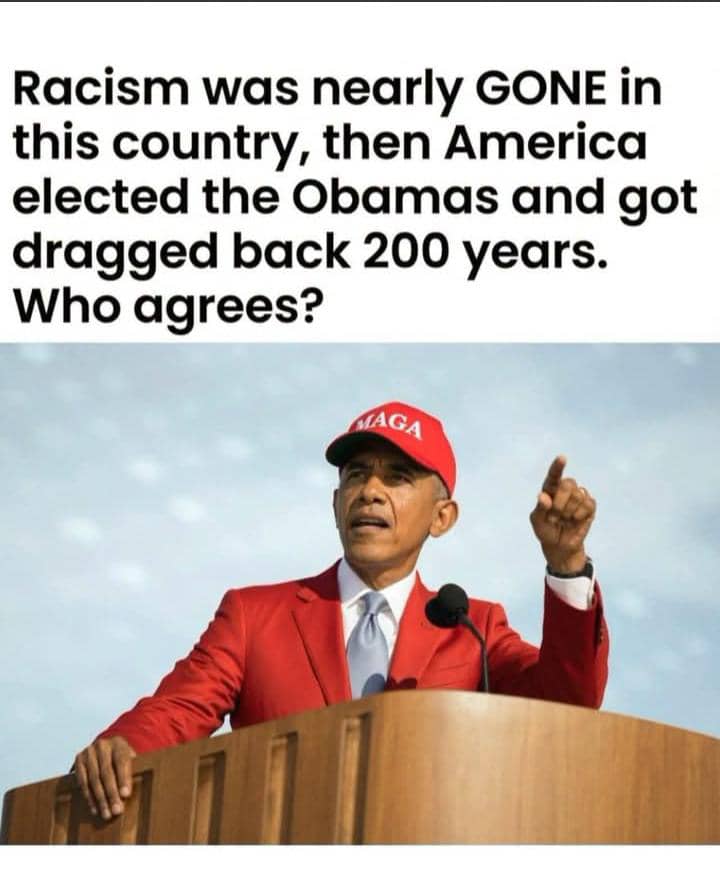
A controversial claim has once again ignited a fierce debate across America: “Racism was nearly gone in this country, then America elected the Obamas and got dragged back 200 years.”
The statement has become a lightning rod in conversations about race, politics, and identity. Some people argue that Barack Obama’s presidency exposed divisions that had been quietly growing beneath the surface. Others say the election of America’s first Black president did not create racial tension, but instead revealed problems that had never fully disappeared.
The reality is far more complicated than a simple before-and-after story. Obama’s election was viewed by many as a historic symbol of progress, but his presidency also became one of the most intense periods of racial and political debate in modern American history.
The “Post-Racial America” Dream Collided With Reality
When Barack Obama won the 2008 presidential election, many Americans saw the moment as proof that the country had moved beyond some of its deepest racial divisions.
The idea of a “post-racial America” quickly entered political conversations. Supporters pointed to the election of a Black president as evidence that the United States had made extraordinary progress since the civil rights era.
But Obama himself pushed back against the idea that his election meant racism had disappeared.
In a 2015 interview, Obama said, “Racism, we are not cured of it,” arguing that racial problems could not vanish simply because the country elected a Black president.
That statement highlights the central disagreement behind today’s debate. Some Americans believe Obama’s presidency represented the achievement of racial equality. Others believe the intense focus on race during his administration reopened conflicts that had been fading.
Historians and researchers generally argue that Obama’s election was both a sign of progress and a reminder of unresolved tensions. His presidency showed how far America had come, but also how much disagreement remained.
Did Obama Create Racial Division or Reveal Existing Problems?
One of the biggest arguments surrounding Obama’s presidency is whether he increased racial tension or simply became the person who brought those tensions into public view.
Critics of Obama often point to political battles during his presidency, including debates over healthcare, immigration, policing, and government power. They argue that conversations about race became more frequent and more politically charged during those years.
Supporters counter that many of these issues existed long before Obama entered the White House. They argue that his presidency did not create racial disagreements but gave the country a clearer look at debates that had been present for decades.
The discussion became especially intense after events involving race and law enforcement gained national attention. The deaths of several Black Americans during police encounters sparked protests and national conversations about policing and equality.
Obama addressed these issues carefully, often warning against both ignoring racial inequality and assuming every disagreement was motivated by racism.
His presidency became a mirror reflecting America’s different views about race. For some people, seeing a Black family in the White House represented a historic achievement. For others, political disagreements with Obama became connected to broader debates about culture and identity.
Researchers have examined whether opposition to Obama was driven by policy disagreements, racial attitudes, or a combination of both. Some studies have found evidence that racial attitudes influenced parts of the political reaction to his presidency.
Why This Argument Still Sparks Strong Reactions Today
Years after Obama left office, arguments about his legacy continue because his presidency represents different things to different Americans.
For many supporters, Obama’s election remains one of the clearest examples of America’s ability to change. His rise from a community organizer to the nation’s highest office represented a historic shift in American politics.
For critics, however, the Obama years marked a period when discussions about race became more politically divisive. They argue that racial issues became central in ways that increased conflict rather than reducing it.
The debate also reflects a larger question: How does a country measure progress?
Is racism reduced when laws change, opportunities expand, and people from different backgrounds reach positions of power? Or does progress require addressing deeper cultural attitudes and social inequalities that can continue even after major milestones?
There is no single answer that satisfies everyone.
What is clear is that America’s racial history did not begin with Obama, and it did not end with his election. The country has experienced centuries of racial conflict, from slavery and segregation to the civil rights movement and modern debates over equality.
Obama’s presidency became part of that long story. To some, it represented a breakthrough moment. To others, it exposed how much work remained.
The claim that Obama “dragged America back 200 years” remains a powerful political statement, but historical evidence shows a more complicated picture. The election of the Obamas did not create America’s racial debates. Instead, it placed those debates at the center of national attention.
The conversation continues because Americans are still wrestling with a difficult question: How far has the country truly come, and how far does it still need to go?