Denmark’s Prayer Call Debate: Why a Proposed Ban Has Muslims Asking “Do We Still Belong Here?”
A familiar sound in many Muslim communities around the world has suddenly become the center of a heated political fight in Denmark. The Danish government’s move to explore restrictions on amplified Islamic calls to prayer has sparked a fierce debate about religion, national identity, freedom of expression, and what public spaces should sound like.
For some Danish politicians, the issue is about protecting the country’s cultural traditions and limiting the broadcast of religious messages in shared spaces. For many Muslims living in Denmark, however, the proposal feels like a direct challenge to their place in society.
The controversy has become so intense that some Muslims have reportedly warned they may consider leaving Denmark if restrictions become law. The debate is no longer just about a sound coming from a mosque; it has become a larger conversation about belonging and integration.
Why Denmark Is Considering Restrictions on the Call to Prayer

The discussion centers on the Islamic call to prayer, known as the adhan, which traditionally invites Muslims to pray five times a day. In many countries with large Muslim populations, the call is broadcast publicly through mosque loudspeakers. In Denmark, however, amplified religious broadcasts have long been a sensitive political issue.
The Danish Parliament has considered proposals that would introduce a nationwide ban on loudspeaker-amplified prayer calls in public spaces. A recent proposal submitted by members of the Danish People’s Party argues for banning “high speaker-amplified prayer or calls to prayer” in public areas. The proposal is currently under parliamentary discussion and has not become law.
Immigration Minister Morten Bødskov said the government wanted to continue examining whether restrictions could be introduced legally. He argued that public prayer calls should not become a common feature of Denmark’s soundscape.
“The call to prayer should not be heard over Danish rooftops,” Bødskov said, according to reports. He also argued that people walking through Denmark should not feel as though they had entered a different cultural environment.
Supporters of restrictions say Denmark is not banning Islam itself. They argue that Muslims remain free to practice their religion privately and inside places of worship, but public broadcasting of religious messages is a separate issue.
Some politicians have compared the proposal to existing noise pollution rules, saying the same standards should apply to everyone, regardless of religion.
Critics, however, believe the debate goes beyond noise. They argue that focusing specifically on Islamic prayer calls risks sending a message that Muslims are less welcome in Danish society.
Muslims Push Back Over Identity and Religious Freedom
For many Muslims in Denmark, the proposed restrictions feel personal. They argue that the issue is not simply about sound levels but about whether religious minorities are allowed to visibly exist in public life.
Denmark has thousands of Muslim residents who have built families, careers, and communities in the country. Many were born in Denmark or have lived there for decades. To them, a ban on the public call to prayer raises concerns about whether cultural and religious differences are truly accepted.
Some Muslims have expressed frustration and have said they may consider leaving if they feel their religious freedoms continue to shrink. The reaction reflects a wider European debate about immigration, integration, and the balance between secular government policies and religious expression.
The Danish government has previously introduced other measures involving religious symbols and practices. These decisions have sparked similar arguments over whether they represent reasonable cultural policies or unfair restrictions targeting Muslims.
Supporters of religious freedom say a democratic society should make room for different traditions, even when those traditions are unfamiliar to the majority population.
They argue that a country’s identity is not weakened by diversity. Instead, they believe national identity can evolve as new communities become part of society.
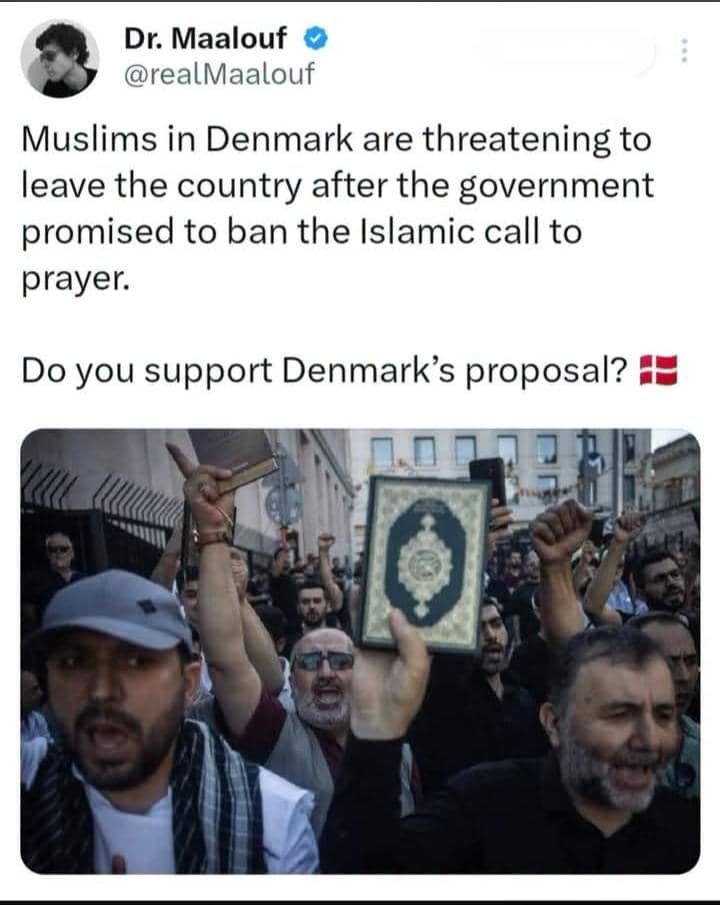
On the other side, opponents say cultural integration requires newcomers to adapt to certain shared expectations. They argue that Denmark’s traditions and social norms should remain the foundation of public life.
A Bigger Question: Where Does Religious Freedom End?
The debate in Denmark highlights a question many countries are struggling with: How much religious expression should be allowed in shared public spaces?
Most democracies protect freedom of religion, but those protections often come with limits. Governments regularly regulate activities that affect public life, including noise levels, building rules, and public demonstrations.
The challenge is deciding when a regulation applies equally to everyone and when a rule unfairly affects a specific group.
Supporters of the Danish proposal say the issue is about public space, not religion. They argue that if any organization, religious or otherwise, uses loudspeakers that affect neighborhoods, restrictions are reasonable.
Critics respond that religious practices often become targets during cultural debates. They argue that banning visible expressions of minority religions can make communities feel excluded rather than integrated.
At the moment, Denmark’s proposal remains part of an ongoing political discussion rather than an implemented nationwide ban. The debate is likely to continue because it touches on some of the most difficult questions facing modern societies: How should countries protect traditions while respecting growing diversity?
Whether people support or oppose Denmark’s approach often depends on how they answer one fundamental question: Is public unity built by limiting differences, or by learning how to live with them?
That question extends far beyond Denmark’s borders. Across Europe and beyond, governments and communities are wrestling with the same challenge, finding a balance between preserving national identity and protecting individual freedoms.