Viral Clint Eastwood Praise for Trump Falls Apart Under Fact Check
A fiery Facebook post claims Clint Eastwood delivered a sweeping defense of Donald Trump, praising his wealth, political victories, economic record, and immigration policies while attacking Democrats. The words fit the tough, plain-speaking image Eastwood built during his long Hollywood career.
There is one major problem. Eastwood did not write them.
The viral statement is a recycled political letter written in 2019 by Fred Doucette, then a Republican state representative in New Hampshire and chairman of Trump’s campaign in the state. The wording was later paired with Eastwood’s photograph and circulated under the actor’s name. Fact-checkers traced the text almost word for word to Doucette’s published letter, where Eastwood was never mentioned.
Eastwood’s Real Trump Comments Were More Complicated

Eastwood has expressed conservative and libertarian views, appeared at the 2012 Republican National Convention, and criticized political correctness. During a 2016 interview, he said he understood some of Trump’s appeal and would choose Trump over Hillary Clinton if forced to select between them.
That interview was not the unconditional endorsement portrayed in the viral post. Eastwood said Trump had made “a lot of dumb” remarks and explained that he did not always agree with him. He also clearly stated that he had not endorsed anyone.
By February 2020, Eastwood was supporting Democratic presidential candidate Michael Bloomberg. He also said he wanted Trump to behave more civilly rather than use social media to insult people.
The authentic record shows a politically independent celebrity who sometimes approved of Trump’s instincts, sometimes criticized him, and later supported another candidate. It does not show Eastwood writing the emotional pro-Trump manifesto now spreading online.
Several Numbers Are Real, but the Conclusions Are Inflated
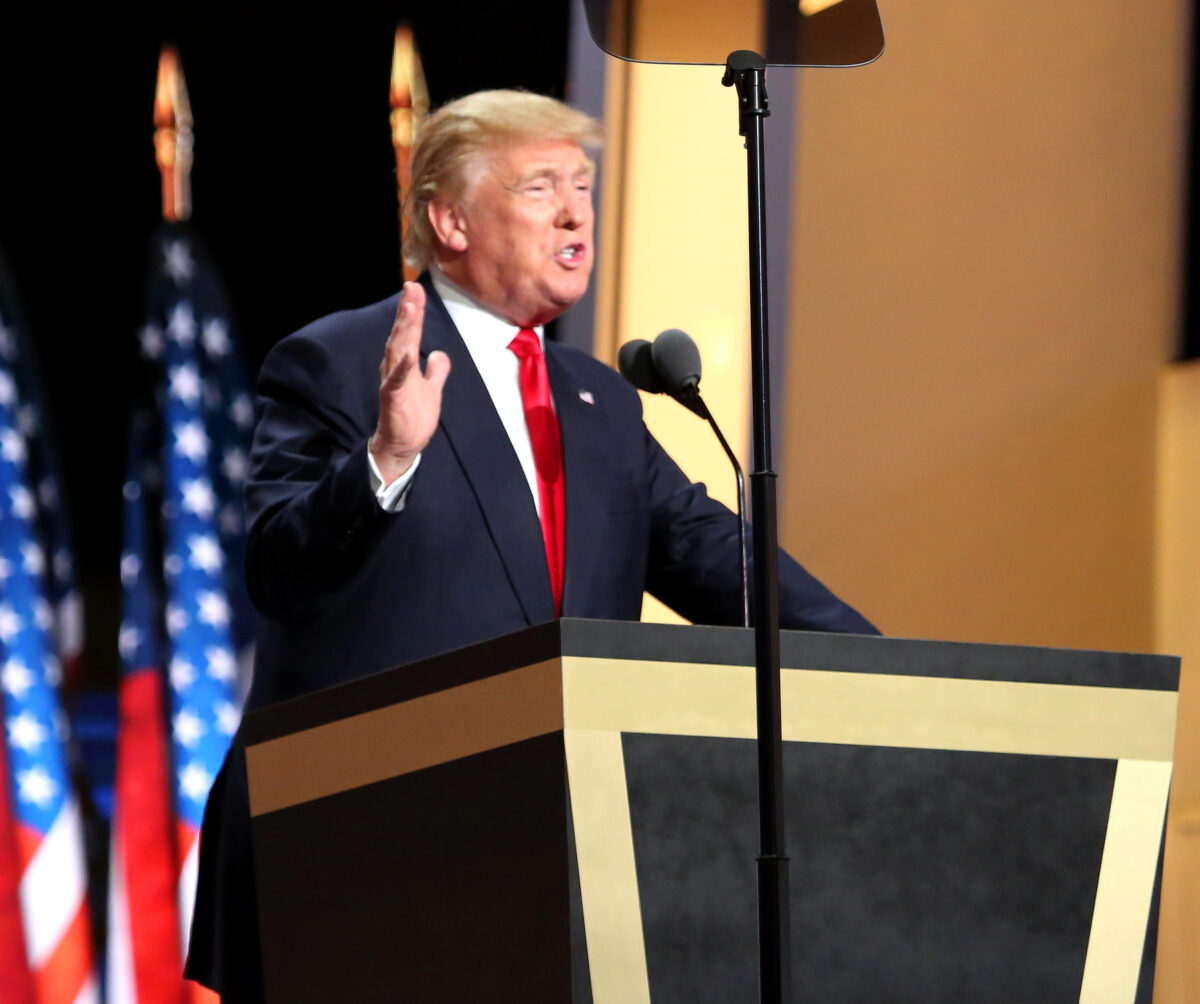
Trump did defeat a historically crowded Republican field in 2016. The contest began with 17 major candidates, meaning he overcame 16 rivals.
Calling all 16 “career politicians,” however, is inaccurate. Ben Carson was a retired surgeon, Carly Fiorina was a former technology executive, and Trump himself had never held elected office. The field included governors and senators, but it also featured political outsiders.
The jobs claim also contains some truth. More than 1 million payroll jobs were added during Trump’s early months in office. Yet the Bureau of Labor Statistics reported that employment growth averaged 176,000 jobs per month through August 2017, close to the 187,000 monthly average recorded during 2016 under President Barack Obama.
The economy was continuing a long expansion that began years before Trump entered the White House. Giving one president complete credit for every position created during his first months ignores hiring plans, consumer demand, interest rates, and economic momentum already in place.
Stocks also climbed sharply after the 2016 election. The S&P 500 and Dow Jones Industrial Average repeatedly reached records during 2017, with the Dow recording 71 new closing highs that year.
Investors were responding to expected tax cuts, corporate earnings, global growth, and other financial forces. Trump’s election affected market expectations, but saying his “mere presence” single-handedly produced record highs turns a complicated market rally into a campaign slogan.
The Border Drop Happened, but Not Through Words Alone
Southwest border apprehensions fell dramatically after the 2016 election, dropping from 47,211 in November 2016 to 11,127 in April 2017. Fiscal 2017 ultimately produced the lowest annual apprehension total in more than four decades.
That was a significant development and one of the strongest factual points behind the original letter.
Still, the claim that Trump achieved it “with his words alone” overlooks executive orders, enforcement changes, and warnings of tougher immigration consequences. Officials and regional analysts also observed that some migrants had rushed toward the border before Trump’s January 2017 inauguration because they expected enforcement to tighten.
The decline did not remain permanent. Border Patrol apprehensions increased to 396,579 in fiscal 2018 and then jumped to 851,508 in fiscal 2019.
Trump’s election and early enforcement agenda likely created a deterrent effect. The evidence does not support the claim that rhetoric alone permanently solved illegal immigration.
The Slavery Claim Distorts American History
The Facebook post claims Democrats voted unanimously against abolishing slavery. That is false.
When the Senate passed the 13th Amendment in April 1864, the winning coalition included 30 Republicans, four border-state Democrats, and four Union Democrats. Six senators opposed the amendment. The House approved it in January 1865, and the states ratified it that December.
The 19th-century Democratic Party included powerful defenders of slavery, while Republicans led the drive for abolition. However, treating Civil War-era parties as identical to their modern versions ignores more than 160 years of political change.
Regional loyalties, voter coalitions, and civil rights positions shifted across generations. House historical records note that Black voters began consistently moving toward the Democratic Party by the late 1940s.
Claims about the “decimation of Christian values” are political and moral opinions, not measurable facts. Pointing to a politician’s expensive home may invite questions about wealth, but property value alone does not prove corruption. That requires evidence of improper payments, hidden transactions, or documented misconduct.
The post succeeds because it combines authentic frustrations, selective statistics, and a famous name. Trump’s political rise was real. The early border decline, job gains, and stock market rally were real.
But Clint Eastwood did not write the message, and several of its strongest claims weaken once dates, economic trends, and historical context are restored. The real question is not whether readers support or oppose Trump. It is whether a political argument still deserves belief after its celebrity author disapp