Troy Jackson Surges Toward Maine Senate Nomination, Setting Up a High-Stakes Susan Collins Showdown
Former Maine Senate President Troy Jackson has gained a commanding delegate advantage as Democrats race to select a new nominee to challenge Sen. Susan Collins. Maine Democrats appear to have found a new front runner for one of the most consequential Senate races of the 2026 midterm elections.
Former Maine Senate President Troy Jackson, a fifth-generation logger with deep ties to organized labor, has built a formidable advantage in the hurried contest to replace Graham Platner as the party’s nominee. Jackson’s early success does not make his nomination official, but it puts him in a powerful position ahead of the Democratic convention in Bangor.
If Jackson completes his rapid rise, he will face Republican Sen. Susan Collins, a veteran campaigner seeking another term in a state that increasingly favors Democrats in presidential elections. The matchup would pit Collins’ long-standing reputation for experience and independence against Jackson’s blunt, working-class populism.
Troy Jackson Dominates Maine’s Democratic Delegate Contest

Jackson’s advantage comes from organization rather than a new statewide primary. After Platner left the race, Maine Democrats created an unusually compressed process in which county meetings select delegates for a state nominating convention. Those delegates will ultimately choose the replacement candidate.
The party plans to seat 601 convention delegates, including 500 selected through county meetings and 101 members of the Democratic State Committee. Hundreds of party members will gather in Bangor on July 25 and continue voting until one candidate receives a majority.
Jackson-aligned slates captured the overwhelming share of the positions decided during the first day of county voting. In Cumberland County, which includes Portland and carries the largest delegate bloc, Jackson’s slate reportedly won 148 of 149 available positions.
His campaign also performed strongly in Kennebec County and several other parts of the state. The results demonstrated something that can be difficult to measure through polls: Jackson’s supporters knew the rules, attended the meetings, and voted as an organized bloc.
More than 19,000 Maine Democrats had reportedly registered to participate in the county process, while almost 4,000 people sought delegate positions. That level of interest suggests the party’s sudden crisis has not completely drained its grassroots energy. The Washington Post reported that Jackson’s campaign converted that participation into a decisive organizational advantage.
The nomination is not formally settled. Delegates will cast the actual convention ballots, and slate alignment does not necessarily guarantee how every person will vote. Still, Jackson has moved from contender to clear favorite in a matter of days.
Shenna Bellows’ Withdrawal Further Strengthens Jackson
Maine Secretary of State Shenna Bellows, initially considered one of the strongest potential replacements for Platner, withdrew from the contest on July 19.
Bellows said the shortened process left Democrats little time to regroup and argued that the party needed to quickly unify around the shared goal of defeating Collins. Her departure narrowed the field and removed a candidate with statewide recognition and an established political network.
Former Maine Center for Disease Control and Prevention Director Nirav Shah remains a prominent alternative. Shah finished ahead of Jackson in the recent Democratic gubernatorial primary and entered the Senate contest with substantial name recognition from his role in Maine’s response to the COVID-19 pandemic.
However, the county results showed that public familiarity does not automatically translate into convention delegates. Jackson’s labor backing, local political relationships, and ready-made campaign structure allowed him to dominate the selection process before many rivals could build comparable operations.
The Portland Press Herald described Jackson as holding a commanding lead as Bellows ended her campaign.
Who Is Troy Jackson?
Jackson, 58, comes from Allagash, a small community in northern Maine near the Canadian border. He followed his father, grandfather, and great-grandfather into logging and built his political identity around the economic struggles of rural workers.
His path through politics has not followed a straight partisan line. Jackson first ran for office as a Republican, later became an independent, and joined the Democratic Party in 2004.
He eventually rose through the Legislature and served as president of the Maine Senate from 2019 through 2024. During that period, he developed a reputation as an outspoken defender of labor unions, loggers, and other workers who often feel overlooked by political leaders in Augusta and Washington.
Jackson has also brought his professional background directly into policymaking. In 2019, he introduced legislation intended to give independent loggers greater power to negotiate over wages and working conditions, according to Maine Public.
That history gives him a political biography Democrats hope can travel beyond Portland and Maine’s more liberal coastal communities. His campaign says he has won by a wide margin in a northern district that previously supported both Collins and President Donald Trump.
Jackson Offers Democrats Continuity After Graham Platter
Jackson previously endorsed Platner and appeared beside him at political events. He withdrew his support after a woman accused Platner of sexual assault, an allegation Platner denies.
Platner suspended his campaign in early July after winning more than 70% of the Democratic primary vote. His departure forced the party to replace its nominee only months before the November election. Reuters reported that Maine Democrats must complete the replacement process by July 27.
Jackson is now attempting to preserve the economic movement behind Platner without carrying forward the former nominee’s personal controversies.
Both men built their appeal around frustration with corporate influence, economic inequality, and a political system that many working-class voters believe has abandoned them. Jackson, however, adds years of legislative experience, union relationships, and familiarity with Maine’s political institutions.
Those positions could energize progressives who initially rallied behind Platner. They will also give Republicans material for attacks portraying Jackson as too far left for Maine’s general-election electorate.
Susan Collins Remains a Formidable Opponent
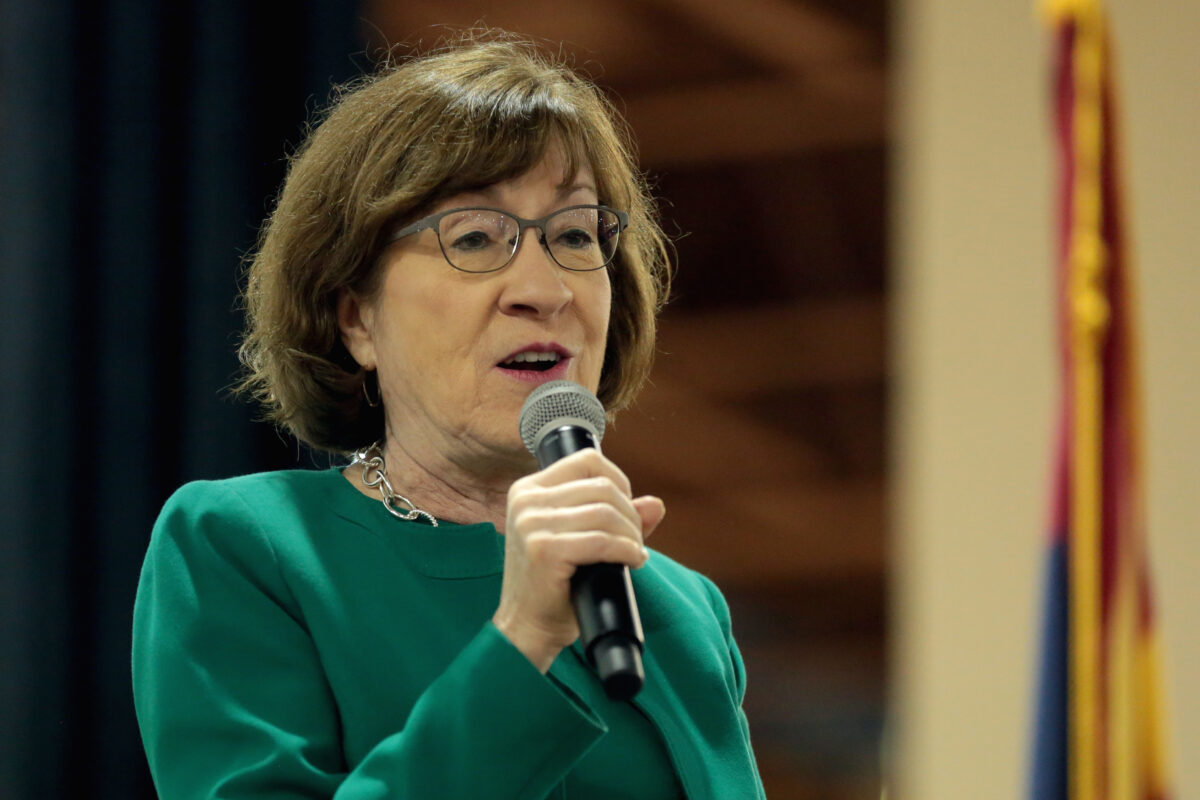
Jackson’s delegate success should not be confused with evidence that he has already solved the much larger challenge waiting in November.
Collins has represented Maine in the Senate since 1997. She has survived difficult political environments by presenting herself as a pragmatic Republican willing to break with her party.
That reputation has been tested during the Trump era, particularly among voters who believe Collins has not done enough to restrain the president or the Republican agenda. Democrats will argue that her occasional disagreements with party leaders do not outweigh her votes on judicial nominations, federal spending, and other major issues.
Collins will counter that her seniority gives Maine significant influence in Washington. As chair of the Senate Appropriations Committee, she can point to her ability to direct attention and federal resources toward the state.
She will also enter the general election with an established fundraising network, a statewide campaign organization, and decades of experience winning over ticket-splitting voters.
Jackson’s challenge will be to turn his rural background into broader credibility without losing the progressive activists who could supply the energy his campaign needs.
Why the Maine Senate Race Matters Nationally
Republicans hold a 53–47 Senate majority, making Maine one of the seats Democrats must seriously contest if they hope to regain control of the chamber.
Collins is the only Republican incumbent seeking reelection in a state that voted for the Democratic presidential nominee in 2024. Kamala Harris carried Maine by approximately seven percentage points, giving Democrats reason to believe the state’s political fundamentals favor them.
History offers a warning, however. Maine has not elected a Democratic candidate to the U.S. Senate since 1988. Independent Sen. Angus King occupies the state’s other seat, while Collins has repeatedly demonstrated that she can outperform Republican presidential candidates.
We should therefore expect both parties to treat Maine as a national battleground. Outside groups are likely to pour money into advertising, opposition research, and voter turnout efforts once Democrats officially select their nominee.
Jackson’s Strengths Could Also Become His Vulnerabilities
Jackson enters the potential general election with several clear advantages. His background as a logger gives him an authentic connection to rural and blue-collar voters. His years in the Legislature provide a record of public service, while his relationships with labor unions give him an experienced organizing network.
Yet those same strengths will face intense scrutiny. Republicans can highlight his earlier Republican affiliation, his political evolution, and his previous association with Platner. They can also use his positions on ICE, Israel, and Medicare for All to argue that he is outside Maine’s political mainstream.
Jackson must explain those positions in practical terms while introducing himself to voters who may know Collins far better than they know him. He must also rebuild a Senate campaign almost from the ground up, raise money quickly, and unite Democrats who supported different candidates during the primary and replacement contests.
Most importantly, he must undergo rapid vetting. Platner’s collapse reminded Democrats of the danger of entering a major general election before a candidate’s background has been thoroughly examined.
What Happens Next in Maine’s Democratic Nomination Process?
The July 25 convention will begin with all qualified candidates eligible to receive votes. Under the party’s announced rules, the five candidates with the most support will advance after the opening round. If no one reaches a majority, the lowest-performing contender will be removed in each following round until a nominee emerges.
Jackson’s delegate advantage could allow him to win quickly. A prolonged contest, however, could give his rivals time to combine their support or persuade delegates to reconsider.
The immediate question is whether Jackson can convert organizational dominance into a convention majority. The larger question is whether his working-class message can defeat one of the country’s most experienced Republican senators.
Maine Democrats have not completed their comeback from the collapse of Platner’s campaign. But with Jackson’s rapid delegate surge, they may have found the candidate who will get the chance to attempt it.