Why Mamdani Wants Netanyahu Arrested In NYC
The proposal has produced outrage, applause and plenty of political theater. Yet beneath the shouting sits a serious legal question. Can the mayor of America’s largest city use the New York Police Department to enforce an arrest warrant issued by an international court that the United States does not recognize?
When we separate Mamdani’s political argument from the legal machinery surrounding Netanyahu’s possible visit, the answer becomes clearer. Mamdani views the International Criminal Court warrant as a rule-of-law obligation. Federal law, diplomatic protections and the United Nations Headquarters Agreement make carrying out that warrant in New York extraordinarily difficult.
Why Zohran Mamdani wants Benjamin Netanyahu arrested
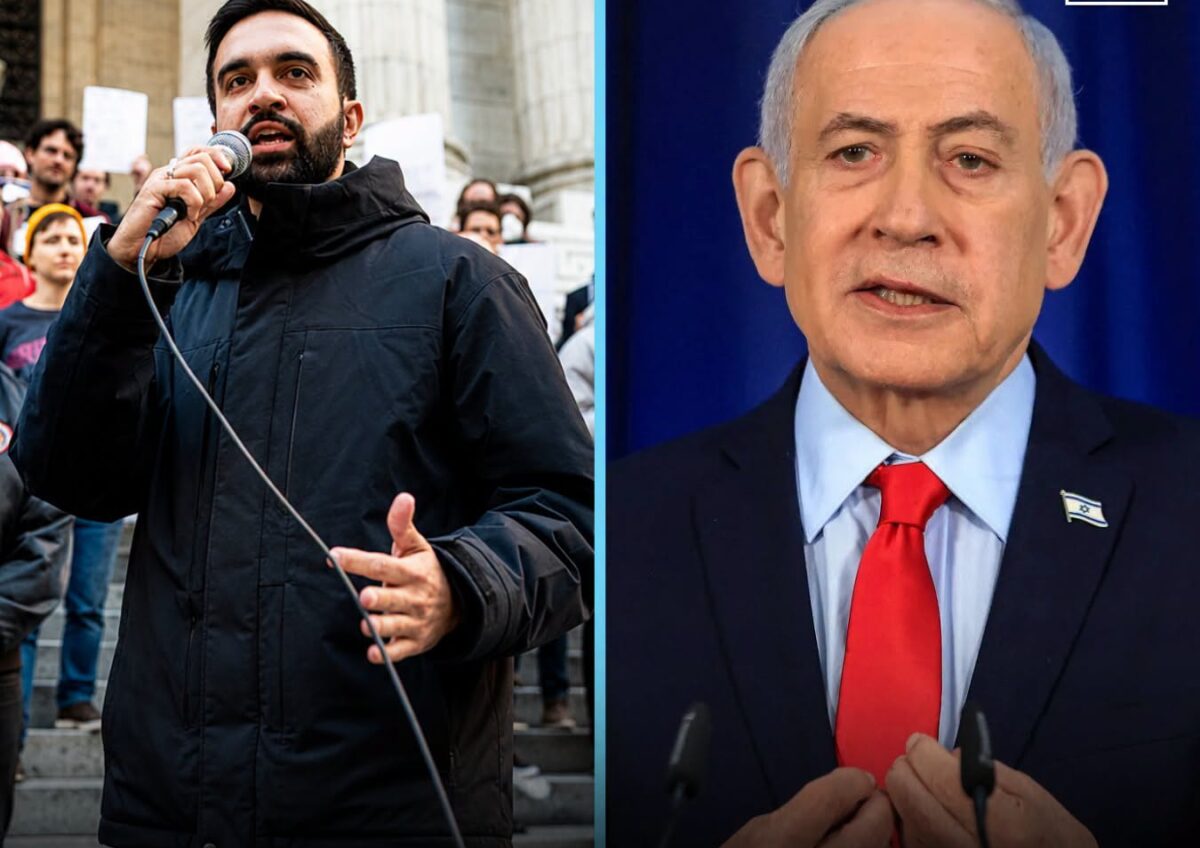
Mamdani’s position begins with the International Criminal Court, not with a New York criminal investigation.
In an interview published in July 2026, Mamdani said his administration was consulting the city’s legal advisers about what could lawfully happen if Netanyahu attended the United Nations General Assembly in September. He argued that the issue was not simply his personal opinion of the Israeli leader. Instead, he pointed to the international arrest warrant and said Netanyahu “belongs in The Hague.”
The mayor has repeatedly criticized Israel’s military campaign in Gaza and has accused Netanyahu’s government of committing grave violations against Palestinians. His arrest pledge therefore combines two parts of his political identity: his support for Palestinian rights and his argument that international law should apply even to powerful leaders.
Mamdani has also framed the issue as a test of consistency. His position is that political alliances should not erase judicial decisions simply because the accused person leads a government closely aligned with Washington.
That message appeals to voters who believe Western governments enforce international law selectively. They see the Netanyahu warrant as a chance to prove that allegations of war crimes receive the same attention regardless of the accused leader’s nationality or diplomatic relationships.
However, Mamdani has added an important qualification. He says he will act only within existing law and will not invent municipal authority that New York City does not possess. That distinction turns his promise from a simple arrest order into a legal review whose outcome may disappoint his strongest supporters.
What the ICC warrant against Netanyahu actually says
The ICC’s Pre-Trial Chamber said it found reasonable grounds to believe that Netanyahu and Gallant bore criminal responsibility for the alleged war crime of using starvation as a method of warfare and the alleged crimes against humanity of murder, persecution and other inhumane acts. The court also cited allegations involving intentionally directing an attack against civilians. The alleged conduct covered a period beginning on October 8, 2023, and continuing until at least May 20, 2024.
Those findings are serious, but they are not a conviction.
An arrest warrant means ICC judges believe sufficient grounds exist to bring the accused person before the court. Netanyahu has not faced trial at The Hague, and the allegations have not been tested through a completed judicial process. The ICC continues to list him as being at large.
Israel rejects the court’s jurisdiction and denies committing genocide or war crimes. Netanyahu’s government argues that Israel acted in self-defense following the Hamas-led attacks of October 7, 2023, while taking measures to limit civilian casualties.
This distinction matters. Mamdani calls Netanyahu a war criminal, but the more precise legal description is that Netanyahu is wanted by the ICC over alleged war crimes and crimes against humanity. The warrant establishes an accusation backed by a judicial finding of reasonable grounds. It does not establish guilt.
Why the ICC warrant does not automatically apply in New York
The central problem for Mamdani is straightforward: the United States is not a party to the Rome Statute, the treaty that created the International Criminal Court.
Because the United States has not accepted the ICC’s general authority, an ICC warrant does not operate like a New York warrant, a federal warrant or an extradition request issued under a treaty recognized by the United States.
New York police officers cannot simply download the ICC document, treat it as a valid domestic arrest order and place Netanyahu in custody. They would need a lawful foundation under federal or state law.
Congress has also placed explicit restrictions on cooperation with the court. Under 22 U.S.C. § 7423, state and local government entities generally may not cooperate with ICC requests or provide support to the court. Federal law defines “support” broadly enough to include law enforcement cooperation and the arrest or detention of individuals.
That language creates a formidable obstacle. An NYPD operation designed to execute the ICC warrant could be interpreted as precisely the kind of municipal assistance Congress sought to prohibit.
Mamdani could argue that New York was enforcing an independent domestic law rather than assisting the ICC. Yet that argument would require an identifiable New York offense, a valid domestic warrant or another recognized legal basis for detention. The ICC warrant alone does not supply one.
Diplomatic immunity creates another powerful barrier.
Netanyahu would not enter New York as an ordinary foreign visitor. He would arrive as Israel’s sitting head of government, potentially leading an official delegation to the United Nations.
The U.S. State Department’s guidance says foreign heads of state, heads of government and foreign ministers enjoy immunity from criminal and civil jurisdiction while serving in office. That protection exists because national governments must be able to conduct diplomacy without local authorities detaining visiting leaders.
Netanyahu is Israel’s prime minister rather than its ceremonial head of state, but the State Department guidance expressly includes heads of government.
The federal executive branch plays the decisive role in recognizing and defending that immunity. A New York mayor cannot independently cancel diplomatic protections granted or recognized by Washington.
This is where Mamdani’s proposal collides most sharply with federal power. Foreign relations belong primarily to the national government. A city may operate one of the world’s largest police forces, but it cannot conduct its own foreign policy or override federal decisions concerning diplomatic immunity.
Legal scholars examining Mamdani’s earlier pledge concluded that the federal government would almost certainly assert immunity on Netanyahu’s behalf. They also noted that foreign policy remains an exclusive federal responsibility, making a successful municipal arrest extremely unlikely.
The UN Headquarters Agreement protects Netanyahu’s access.
The United Nations headquarters sits in Manhattan, but its presence is governed by an agreement between the United Nations and the United States.
Section 11 of the UN Headquarters Agreement says federal, state and local authorities must not impose impediments on representatives traveling to or from the headquarters district. It also requires American authorities to provide necessary protection while those representatives are in transit. The agreement applies regardless of the diplomatic relationship between the United States and the representative’s government.
That creates a direct problem for any plan to arrest Netanyahu while he travels to the General Assembly.
A municipal arrest based on an international warrant rejected by the federal government would almost certainly qualify as an impediment to his official transit. It would also contradict the federal obligation to protect eligible delegates traveling to and from the UN.
The headquarters district itself carries additional protections. American police officers generally cannot enter the UN grounds to perform official duties without the consent of the UN secretary-general. Legal process and seizures inside the district also require approval.
Mamdani could not solve the problem by waiting outside the UN gates. The transit protections cover more than the building itself, and Netanyahu’s personal immunity would remain a separate barrier throughout his official visit.
Can the NYC mayor order the NYPD to make the arrest?
The mayor holds substantial power over New York City’s policing structure. The mayor appoints the police commissioner, establishes administration-wide policies and can remove senior officials.
However, the mayor’s influence does not create unlimited arrest authority.
Under the New York City Charter, the police commissioner controls the administration and operation of the police force and is responsible for executing applicable laws. The commissioner and NYPD officers must follow valid law, not simply a political instruction from City Hall.
For an arrest to be lawful, officers generally need probable cause that a recognized offense has been committed, a valid warrant or another legal authorization. A mayoral statement cannot replace those requirements.
If Mamdani directed officers to detain Netanyahu solely because the ICC wanted him, the order could face immediate resistance from the police commissioner, city attorneys, federal officials and the courts.
Former prosecutors have warned that city officials attempting such an arrest could face allegations that they violated federal protections for foreign officials. NBC New York reported that some former prosecutors believed an operation based on the ICC warrant could expose participants to federal conspiracy allegations. That theory has not been tested in this situation, but it highlights the personal legal risk city officials could face.
Federal law also criminalizes certain attacks on the person or liberty of protected foreign officials and internationally protected persons. Any prosecution would depend on the specific facts and legal authority claimed, but the statute would become part of the confrontation immediately.
Netanyahu’s response turns the legal dispute into a political fight.
Netanyahu’s office has dismissed Mamdani’s proposal as politically motivated. In a July 19 statement, it accused the mayor of trying to divert attention from his administration and said he should focus on New York rather than supporting the ICC’s actions.
U.S. Ambassador to the United Nations Mike Waltz has also rejected the possibility of an arrest. He cited America’s refusal to join the Rome Statute, the UN Headquarters Agreement, diplomatic protections and the supremacy of federal authority over municipal action.
New York Gov. Kathy Hochul has previously argued that the city’s mayor does not possess the power to arrest Netanyahu under these circumstances. Critics have accused Mamdani of using foreign policy to energize supporters while distracting from local responsibilities.
Mamdani’s defenders see the confrontation differently. They argue that the mayor is forcing Americans to confront the gap between international justice in theory and international justice in practice. From their perspective, a warrant loses credibility when powerful allies can ignore it without consequence.
That disagreement explains why the issue will survive even if no arrest occurs.
The arrest may be impossible, but Mamdani’s message is deliberate.
Mamdani’s proposal works on two levels.
Legally, his administration says it is examining whether New York City can take any action consistent with existing law. Politically, he is declaring that the ICC warrant should not disappear merely because Netanyahu is an American ally.
The first goal faces overwhelming obstacles. The United States does not recognize the ICC warrant as an enforceable domestic arrest order. Federal law restricts local cooperation with the court. Netanyahu would likely receive head-of-government immunity. The UN Headquarters Agreement protects his transit, and federal courts could rapidly block municipal action.
The second goal has already succeeded.
Mamdani has placed the allegations against Netanyahu, the authority of the ICC and America’s selective relationship with international justice at the center of a national argument. He has also strengthened his image as a politician willing to challenge both Israel’s government and Washington’s foreign-policy consensus.