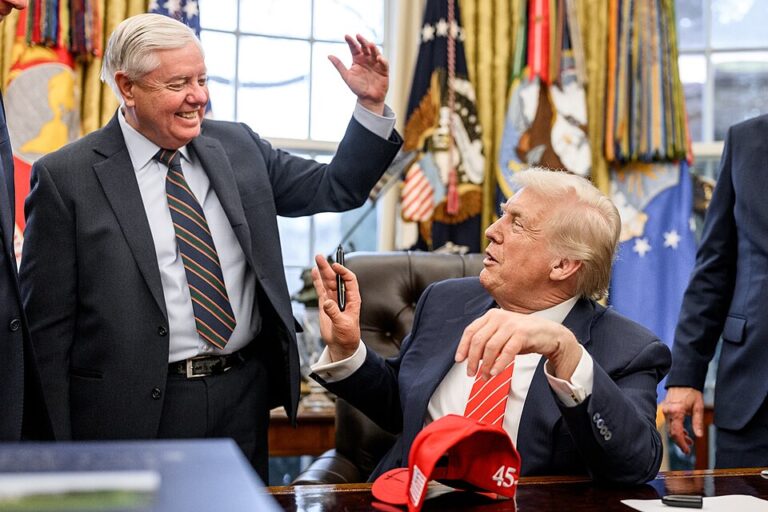
Trump Picked Darline Graham. Now GOP Rivals Are Refusing to Back Down
President Donald Trump gave newly appointed Sen. Darline Graham the endorsement most Republican candidates would consider decisive. Within days, however, two Trump-aligned members of Congress entered the South Carolina Senate race and began competing to prove that they would serve as the president’s strongest ally. The rapidly expanding primary is no longer simply a contest over who should continue the late Sen. Lindsey Graham’s legacy. It has become an unusual test of whether Trump’s endorsement can still close a Republican field before voters have their say.
As we examine the candidates, their alliances and the compressed election calendar, we find a race in which nearly everyone supports Trump. The dispute is over which candidate South Carolina Republicans trust to turn that loyalty into results.
Darline Graham Enters With Trump’s Support and a Famous Name
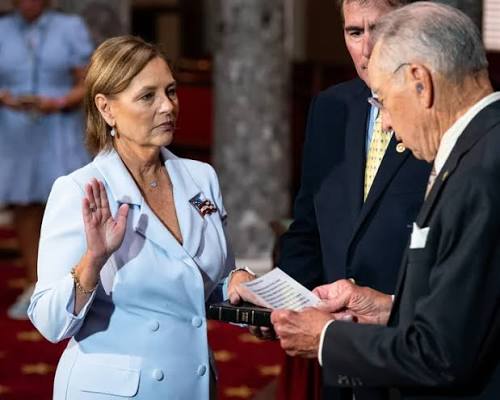
Darline Graham was appointed by South Carolina Gov. Henry McMaster to complete the remainder of her brother’s Senate term following Lindsey Graham’s unexpected death. Trump encouraged her to seek a full six-year term and later gave her his “complete and total endorsement.” Graham confirmed her candidacy during an appearance with Fox News host Sean Hannity, declaring, “I’m in.” She said she reached the decision after praying, speaking with relatives and considering the responsibility of carrying forward her brother’s work.
The appointment immediately gave her several advantages. She entered the race as a sitting senator, inherited enormous statewide name recognition and received the support of the Republican Party’s most influential figure before the official filing period began. She also has the backing of Senate Majority Whip John Barrasso, who described her as an excellent senator and said she had his full support. Senate Majority Leader John Thune has remained neutral, although he called Graham accomplished and acknowledged that she had every right to compete for the term. Those advantages make Graham the early frontrunner, but they have not created the uncontested path that Trump’s endorsement might normally produce.
Russell Fry Says the Primary Should Not Become a Coronation
Rep. Russell Fry entered the race on July 20, presenting himself not as a Trump critic but as an even more dependable partner for the president. His campaign described the contest as an opportunity to give voters a choice rather than permit a political “coronation.” Fry represents South Carolina’s northeastern congressional district and has already benefited significantly from Trump’s political support. He entered Congress after defeating Rep. Tom Rice in the 2022 Republican primary. Rice had voted to impeach Trump following the January 6 Capitol attack, and Fry made that decision central to his campaign. Now Fry is challenging the candidate Trump personally endorsed.
That apparent contradiction is shaping his message. Instead of opposing the president, Fry is describing himself as a “MAGA warrior” who could become Trump’s favorite senator. His campaign is effectively asking voters to separate Trump’s endorsement decision from their judgment about who would fight most aggressively for his agenda. Fry’s entry is especially significant because Trump had praised him shortly before endorsing Graham, calling the congressman talented, popular and a potentially outstanding candidate for the seat. That earlier praise gives Fry room to argue that he remains closely aligned with the president even though Trump selected someone else.) His candidacy also creates a complication for House Republicans. Fry is already nominated for reelection to his House seat and can legally appear on the ballot for more than one office under South Carolina practice. If he ultimately wins both races, he would have to choose one, potentially triggering another special election and temporarily reducing the Republican House majority.
Ralph Norman Builds His Own Trump Coalition
Rep. Ralph Norman is making a similar argument from a different position. Norman entered the Senate race after unsuccessfully seeking the Republican nomination for governor earlier in 2026. He says South Carolina needs a conservative fighter who will stand beside Trump, continue Lindsey Graham’s work and help pass the president’s election legislation in the Senate. Norman has emphasized his support for the SAVE America Act, making the proposal a central part of his campaign. Although Trump endorsed Graham, several nationally known Trump allies have chosen Norman. Republican Sens. Mike Lee of Utah and Rick Scott of Florida endorsed him, citing his commitment to the president’s legislative priorities. The political arm of Turning Point USA is also supporting his campaign. Rep. Nancy Mace, who decided against entering the Senate contest, added another important endorsement on July 21. She called Norman a proven conservative and urged South Carolina Republicans to support him over Graham and Fry.
Norman has attempted to turn Fry’s House position into a campaign vulnerability. He argues that Fry should remain in Congress because Republicans cannot afford to weaken their narrow majority. That criticism allows Norman to portray himself as both a Senate candidate and a defender of Trump’s ability to move legislation through the House. His relationship with Trump has not always followed a straight line. Norman supported former South Carolina Gov. Nikki Haley during the 2024 Republican presidential primary before backing Trump after Haley ended her campaign. Even so, Norman is now running almost entirely as an America First candidate.
The Republican Field Could Still Grow
As of July 21, the contest included more than the three most recognizable candidates. Businessman Mark Lynch, who challenged Lindsey Graham in the June Republican primary, announced another campaign. Attorney Duke Buckner also entered, while Lt. Gov. Pamela Evette publicly left open the possibility of joining the race. The filing window opened at noon on July 21 and closes at noon on July 28. That leaves potential candidates only one week to decide whether the opportunity is worth challenging Trump’s preferred nominee.
The official primary will be held on August 11, 2026. If no candidate receives a majority, the two leading contenders will meet in an August 25 runoff. The Republican nominee will appear on the November 3 general election ballot against Democratic nominee Annie Andrews. The short timeline changes the normal rules of campaigning. Candidates have little time to raise money, build statewide organizations, or introduce themselves to voters. Graham’s name recognition and Trump endorsement are therefore especially valuable, but the crowded field could prevent any candidate from winning a majority in the first round. A runoff would create a different contest. Endorsements from eliminated candidates could become decisive, and Trump could face pressure to campaign aggressively for Graham if one of his congressional allies advances against her.
South Carolina Voters Are Being Asked to Choose Among Trump Allies
The most striking feature of the race is that Trump’s Republican opponents are not campaigning against him. They are competing over who understands him best, supports him most strongly and can deliver more of his agenda in Washington. Graham offers Trump’s direct endorsement, her brother’s political legacy and the authority of incumbency. Fry offers an established MAGA record and a close connection to the movement’s voters. Norman offers support from conservative senators, Turning Point USA and prominent South Carolina Republicans.
That makes the primary a test of two different kinds of power. Trump controls the most valuable endorsement in Republican politics, but South Carolina candidates are betting that voters still want the final decision. The endorsement placed Graham at the front of the field. It did not persuade ambitious Republicans to step aside. By August 11, we will learn whether Trump’s approval functions as an instruction to Republican voters or merely as the opening argument in a race that South Carolina intends to decide for itself.