FIFA Faces Fresh Pressure as La Liga Boss Javier Tebas Says Gianni Infantino’s ‘Time Is Up’.
The celebrations from Spain’s World Cup triumph had barely settled when Javier Tebas turned his attention away from the champions and toward a much larger target.
The La Liga president launched a blistering attack on FIFA and its powerful leader, Gianni Infantino, declaring that the Swiss-Italian administrator’s “time is up.” It was a dramatic escalation in the increasingly hostile struggle over who controls football, who profits from its expansion and who pays the price when the international calendar grows larger.
Tebas accused FIFA of damaging the football industry by prioritizing its own tournaments over the domestic leagues that operate every week, employ thousands of people and provide the clubs that develop most of the world’s elite players.
His comments arrived at a sensitive moment for FIFA. The first 48-team men’s World Cup had just concluded after introducing a larger field, an additional knockout round and 104 matches. FIFA presented the tournament as evidence of football’s expanding global reach. Tebas saw something very different: a governing body consuming more of the calendar while leaving leagues and clubs to manage the consequences.
Tebas Turns a Policy Dispute Into a Leadership Challenge
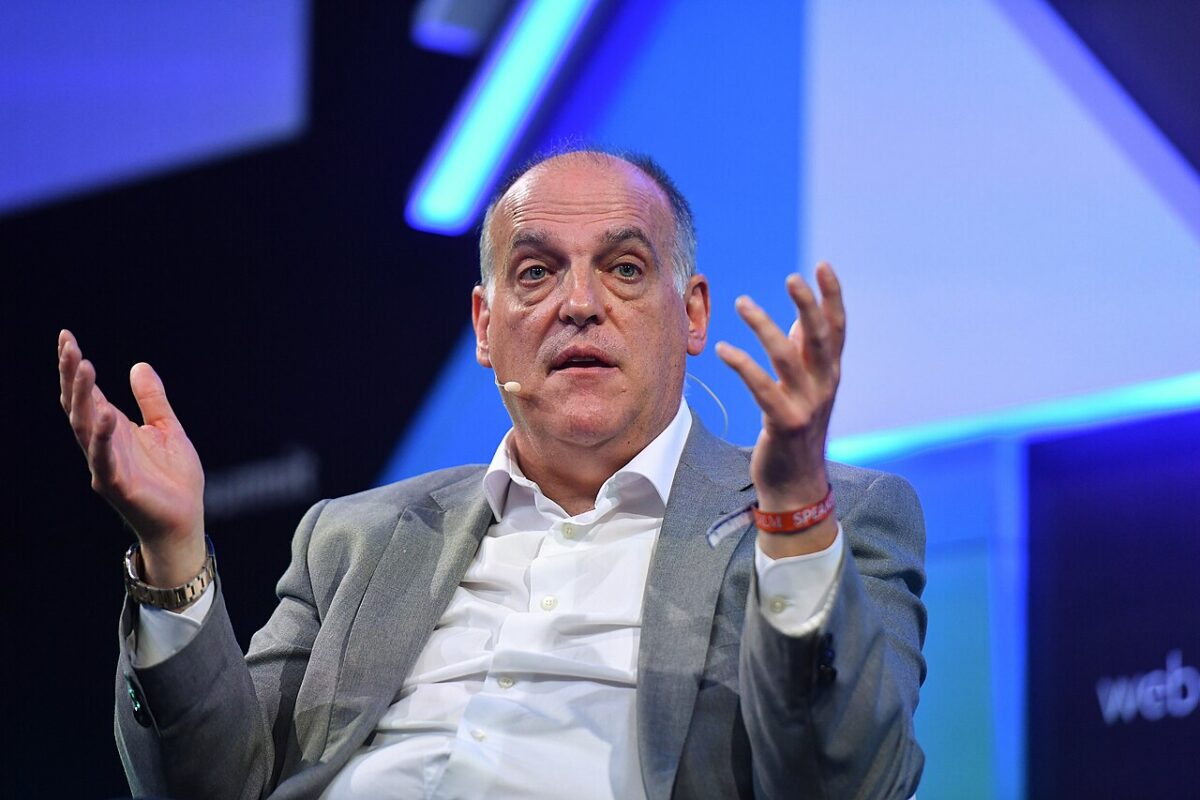
Disagreements between FIFA and Europe’s leading leagues are hardly new. Club executives have repeatedly complained about scheduling, player fatigue, commercial control and the growing number of international fixtures.
What made Tebas’s intervention extraordinary was its directness.
He did not simply demand changes to the calendar. He openly questioned whether Infantino should continue leading world football. Tebas described FIFA’s political system as deeply unhealthy and argued that it discourages credible challengers from standing against an incumbent who already controls broad support among national associations.
That accusation strikes at the foundation of FIFA’s power structure. The organization has 211 member associations, and each holds a vote in presidential elections. A small football nation therefore has the same formal voting power as Germany, Brazil, England or Spain. Supporters view that system as democratic and globally inclusive.
Critics argue that it allows FIFA presidents to build powerful voting coalitions through development funding, tournament access and close relationships with regional confederations.
Infantino has already confirmed that he intends to seek re-election in 2027. FIFA announced his candidacy at its congress in Vancouver, placing him on course for another four-year term that could keep him in office until 2031.
Tebas believes the absence of a serious challenger does not prove satisfaction with Infantino. In his view, it reveals how difficult the FIFA system makes organized opposition.
The World Cup Expansion Battle Is Growing
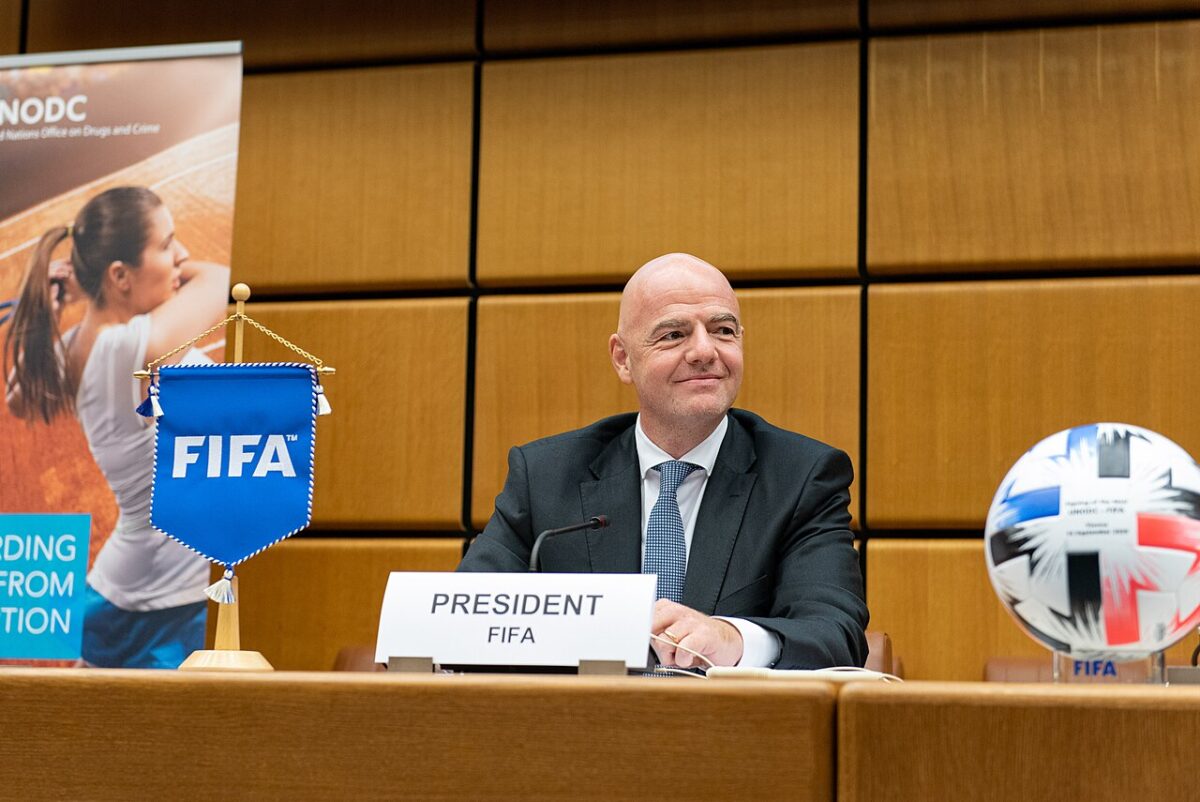
The 2026 tournament represented the largest World Cup in history.
FIFA increased participation from 32 to 48 countries, giving more nations access to football’s biggest stage. The tournament also expanded from 64 matches to 104, creating more broadcast inventory, ticket sales, sponsorship exposure and commercial opportunities.
For FIFA, that growth supports a simple argument: the World Cup belongs to the whole world, not merely to the traditional powers of Europe and South America. For Tebas, however, every additional game comes with a cost.
International players already move between domestic leagues, continental club competitions, national-team qualifiers and major tournaments. Expanding FIFA competitions places further pressure on athletes whose clubs continue paying their salaries throughout the season. The debate is now shifting toward 2030.
Spain, Portugal and Morocco are due to serve as the principal hosts of the centenary World Cup, with opening commemorative matches planned in Uruguay, Argentina and Paraguay. A proposal to expand that edition to 64 teams has created fresh alarm among critics who believe FIFA is chasing growth without adequately protecting the rest of the game.
Tebas has strongly opposed that possibility. He argues that a 64-team tournament would occupy even more space, create additional disruption and weaken the domestic competitions that form football’s economic base.
His message is blunt: the World Cup may be the sport’s grandest spectacle, but football cannot survive on one tournament staged every four years.
Domestic Leagues Say They Carry the Daily Burden
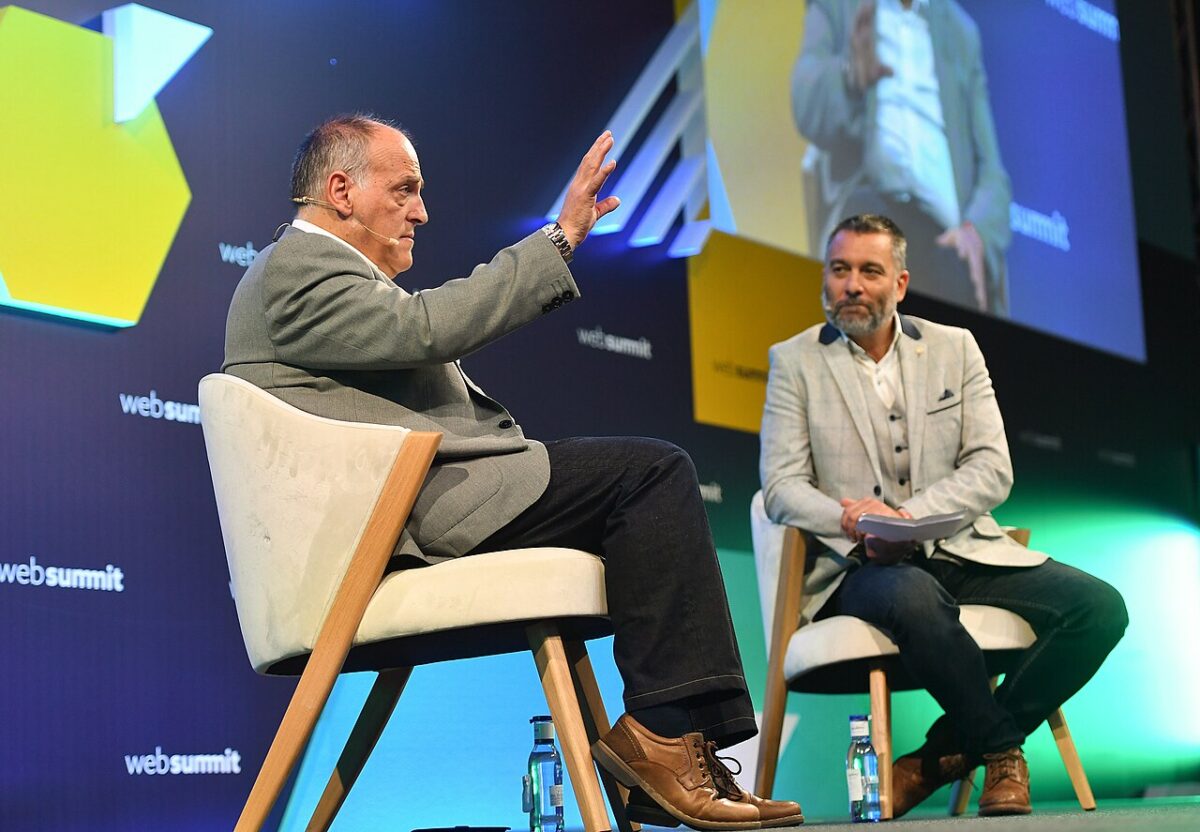
La Liga’s conflict with FIFA is partly about money, but it is also about responsibility. Domestic leagues arrange matches across entire seasons. Clubs maintain stadiums, academies, medical departments, scouting networks and permanent workforces. They negotiate broadcast agreements, sell tickets and build relationships with supporters who follow their teams every week.
FIFA, by contrast, controls global tournaments that produce enormous attention over shorter periods. Tebas argues that FIFA enjoys the commercial rewards of those events without carrying the same year-round risks. When players return injured, exhausted or unavailable, their clubs absorb much of the impact. When international competitions expand, domestic organizers must find space inside schedules that are already crowded.
This tension has intensified as FIFA builds a larger portfolio. Beyond the expanded World Cup, Infantino has promoted a bigger Club World Cup and other competitions designed to increase FIFA’s influence in the club game. European leagues fear that the governing body is no longer content to oversee international football and is moving into territory traditionally controlled by clubs, leagues and continental organizations.
That is why Tebas’s attack matters beyond Spain. His words reflect a wider concern among powerful football institutions that FIFA’s ambitions are changing the balance of the sport.
Controversies Added Fuel to Tebas’s Criticism
Tebas also pointed to controversies from the 2026 World Cup as evidence that FIFA’s problems extend beyond scheduling.
He criticized the handling of the disciplinary case involving United States striker Folarin Balogun, whose suspension was lifted before the Americans faced Belgium. The controversy became politically charged after intervention connected to Donald Trump, raising questions about whether outside pressure had influenced a football decision.
Belgium eventually won 4-1, but the result did not erase the governance concerns. Tebas suggested the episode exposed the danger of political influence entering FIFA’s disciplinary process.
He also attacked the use of hydration breaks in climate-controlled stadiums, questioning whether some stoppages were genuinely necessary or had been designed to create extra advertising opportunities.
Commercial pauses are hardly unusual in American sport, but football traditionally protects its continuous flow. For critics, manufactured interruptions symbolize a wider attempt to reshape the game around television demands.
Tebas’s criticism therefore reaches beyond Infantino’s personality. He warns that football’s traditions, calendar, and governing independence are being altered in pursuit of revenue and spectacle.
Infantino Still Holds the Stronger Political Hand
Despite the growing criticism, Infantino remains firmly positioned inside FIFA. He first became president in 2016 after the corruption crisis that ended Sepp Blatter’s rule. Since then, he has expanded FIFA’s commercial operations, increased tournament sizes and strengthened ties with associations across Africa, Asia, the Americas and Oceania.
The Confederation of African Football has already backed Infantino’s proposed 2027 re-election, providing him with a major bloc of support before the campaign fully develops. That support demonstrates the challenge facing Tebas and other European critics.
FIFA’s expansion policies may anger major leagues, but they can appeal strongly to countries seeking more qualification places, development funding and access to global tournaments. A larger World Cup gives nations that once stood little chance of qualifying a realistic route to the finals.
Infantino can therefore present himself as the champion of football’s wider world, standing against European interests that have historically dominated the game’s wealth.
Tebas, meanwhile, can argue that protecting domestic leagues is not merely a European concern. Clubs on every continent depend on sustainable competitions, reliable calendars and healthy players.
Both positions carry political weight.
A Battle Over Football’s Future
Tebas’s demand for Infantino to leave office is unlikely to trigger an immediate resignation. FIFA’s president retains institutional control, international backing and no obvious election rival. Yet the attack has broken through the cautious language usually used by senior football officials.
One of the most influential league executives in Europe has openly declared that FIFA’s leader has stayed too long, accumulated too much power and placed the organization’s ambitions above the broader health of the sport.
The conflict now extends far beyond two outspoken administrators.
It is a battle between international expansion and domestic stability. It is a fight over whether more matches genuinely grow football or simply place additional pressure on players and clubs. It is also a test of whether FIFA’s political system can produce meaningful opposition when its president faces serious criticism.
Infantino appears likely to survive the latest pressure. Tebas knows that. But by declaring that his “time is up,” the La Liga chief has turned private frustration into a public challenge. FIFA may still control the machinery of global football, but the argument over its direction is becoming louder, sharper and increasingly difficult to ignore.