Trump’s Arrest Warning to Zohran Mamdani Was Real, but the Viral Version Leaves Out Crucial Context
President Donald Trump did threaten to arrest Zohran Mamdani over a clash involving Immigration and Customs Enforcement. The words were blunt and tailor-made for social media: “Well, then, we’ll have to arrest him.”
But the viral claim needs a timestamp. Trump made the remark on July 1, 2025, when Mamdani was New York City’s Democratic mayoral nominee, not the sitting mayor. Mamdani later won and was sworn in as the city’s 112th mayor on January 1, 2026. No arrest order or federal charge connected to Trump’s comment appears in the verified public record reviewed for this article.
A Reporter’s Question Set Off the Firestorm
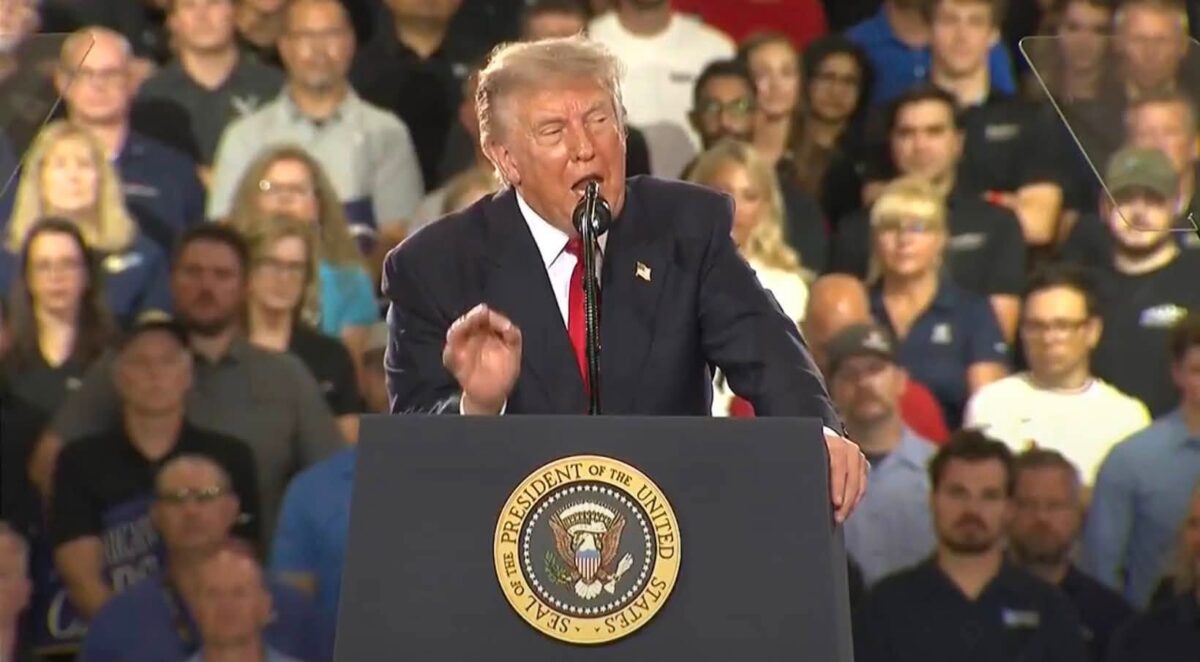
The exchange happened during Trump’s visit to the “Alligator Alcatraz” migrant detention facility in Florida. A reporter told Trump that Mamdani had said he would “defy ICE” and refuse to let the agency arrest “criminal aliens” in New York City. Trump answered, “Well, then, we’ll have to arrest him,” before saying he would watch Mamdani “very carefully on behalf of the nation.”
The official transcript confirms the central quote. It also shows Trump calling Mamdani a communist, questioning his immigration status and discussing federal money sent to New York. Mamdani, born in Uganda, became a naturalized United States citizen in 2018. No credible evidence supported Trump’s suggestion that he was in the country illegally.
The reporter’s wording also went further than Mamdani’s campaign language. In his primary victory speech, Mamdani pledged to “stop masked ICE agents from deporting our neighbors.” That was an aggressive promise to resist Trump’s enforcement strategy, but it was not a detailed declaration that he could block every federal arrest anywhere in the city.
Mamdani answered Trump later that day, calling the threat intimidation. “His statements don’t just represent an attack on our democracy,” he said, arguing that the message targeted New Yorkers who refused to remain silent. “We will not accept this intimidation.”
What a New York Mayor Can and Cannot Do
Immigration enforcement is primarily a federal responsibility. ICE does not need a mayor’s permission to carry out lawful federal operations in New York City. A mayor also cannot legally direct police officers to physically interfere with federal agents exercising valid authority.
Still, the federal government generally cannot force state or local governments to administer a federal regulatory program. The Supreme Court’s anti-commandeering doctrine limits Washington’s ability to order local officials to perform federal enforcement work. Refusing voluntary cooperation is not automatically the same as obstructing an arrest.
New York City’s sanctuary laws limit when city agencies may honor civil immigration detainers or share information. The city code also states that agencies may cooperate when federal law requires it. City Hall can restrict the use of city personnel, property and data, but it cannot erase federal immigration power.
Mamdani tested those boundaries after taking office. In February 2026, he signed Executive Order 13, reinforcing limits on city cooperation, protecting personal data and requiring a judicial warrant for immigration agents seeking access to many city-controlled properties, including schools, shelters and hospitals. The order did not claim that Mamdani could prevent ICE from operating throughout New York City.
Active interference would be different. Officials accused of hiding targets, helping people evade agents or physically impeding federal officers can face investigation or prosecution. Merely maintaining sanctuary policies, however, does not by itself prove a criminal offense.
The Political Threat Did Not Become an Arrest
The most important update is what happened next. Mamdani won the mayoral election, took office and continued defending New York’s sanctuary framework. Yet he was not arrested over Trump’s July 2025 remark.
The relationship became less theatrical once governing began. Trump met Mamdani at the White House in November 2025 and described their conversation as productive. He said they agreed on more than expected and expressed willingness to help New York succeed. Mamdani said they focused on housing, food prices and affordability despite their disagreements.
They met again in February 2026 to discuss a major affordable-housing proposal. That cooperation did not erase the immigration conflict, but it showed that the arrest line functioned more as a political warning than an announced law-enforcement action.
The quote is authentic. The simplified framing is not, because it collapses campaign rhetoric, local policy and criminal liability into one dramatic sentence. Trump did say, “We’ll have to arrest him,” after a reporter described Mamdani as planning to block ICE. But the statement came during the 2025 campaign, and the verified record does not show an arrest order, a criminal charge or proof that Mamdani committed an offense. What remains is a constitutional and political struggle over how far a sanctuary city may go in resisting a president determined to expand federal immigration enforcemen