U.S. Issues Worldwide Travel Caution as 23 Countries Remain at ‘Do Not Travel’ Level
A July 20 worldwide caution is urging Americans abroad to prepare for security threats and flight disruptions, while 23 destinations remain under Level 4 warnings.
A missed connection used to be one of the biggest worries on an overseas vacation. In July 2026, American travelers are being told to prepare for something far more serious: sudden airspace closures, security threats and rapidly changing conditions linked to the conflict between the United States and Iran.
The State Department issued its latest Worldwide Caution on July 20, 2026, advising Americans in every region to exercise increased caution. The notice is not a global order to cancel travel, but it arrives as 23 countries carry the government’s highest warning, Level 4, which means “Do Not Travel.”
One worldwide alert can affect thousands of different trips.
The July 20 notice warns of possible “unforeseen escalation” as tensions continue across the Middle East. It also says periodic airspace closures could disrupt travel and that U.S. diplomatic facilities, including those outside the region, have previously been targeted.
For a traveler, 1 airport connection can be enough to turn a distant conflict into a personal problem. Someone flying from New York to an African, Asian or European destination may still pass through a Gulf hub, leaving the itinerary vulnerable even when the final country is hundreds of miles from the fighting.
The alert also warns that groups sympathetic to Iran could focus on American interests or places closely associated with U.S. citizens. That does not mean every American hotel, restaurant or company faces a confirmed threat, but it gives travelers 2 practical reasons to stay alert: personal safety and the possibility of sudden transportation disruptions.
Aviation authorities have flagged 5 Gulf airspaces.
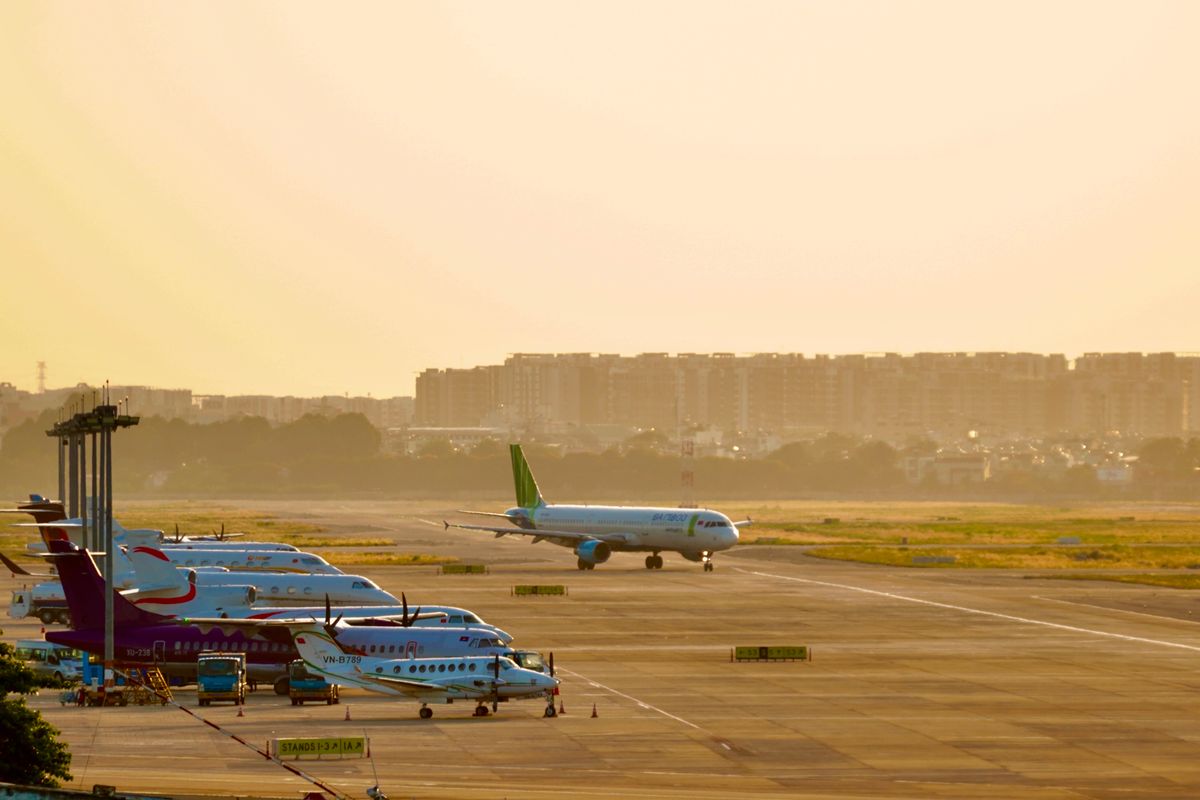
The State Department’s concern about air travel is supported by warnings from aviation regulators. On July 14, the European Union Aviation Safety Agency advised airlines to avoid the airspace of 5 areas: Bahrain, Kuwait, Qatar, the United Arab Emirates, and the Gulf of Oman.
That warning remains valid through July 29, giving airlines a reason to reroute, delay, or cancel some services even when individual airports remain open. A separate advisory covering Iran, Iraq and Lebanon, a group of 3 countries, was extended through August 31.
The concern is not limited to missiles directly striking civilian planes. Aviation officials also warned that the presence of major U.S. military sites raises the risk of missile or drone activity and the possible misidentification of civilian aircraft by air defense systems.
Yet the Gulf’s aviation network has not completely shut down. Emirates President Tim Clark said on July 21 that the airline was operating at roughly 90% capacity, with premium cabins full, showing that widespread disruption can coexist with many flights operating normally.
That mixed picture may be frustrating for passengers because it creates 2 competing realities. Most flights may operate, but one canceled route, closed airspace, or missed connection can still leave an individual traveler stranded.
The warning is not a worldwide travel ban.
The State Department uses a 4-level system to describe risk. Level 1 means normal precautions, Level 2 calls for increased caution, Level 3 asks travelers to reconsider a trip, and Level 4 says not to travel.
Level 4 is reserved for life-threatening risks and situations in which the U.S. government may have limited or no ability to assist during an emergency. As of July 22, the official advisory list shows 23 Level 4 destinations.
Those 23 destinations include Afghanistan, Iran, Iraq, Lebanon, Libya, Russia, Syria, Ukraine and Yemen. The list also includes Haiti, North Korea, Somalia, Sudan, South Sudan, Uganda and several countries affected by conflict, terrorism, kidnapping or severe political instability.
The Middle East also has at least 7 prominent Level 3 destinations: Bahrain, Jordan, Kuwait, Oman, Qatar, Saudi Arabia and the United Arab Emirates. Level 3 does not automatically prohibit travel, but it means the government believes serious safety risks deserve reconsideration.
Popular destinations outside the region remain spread across lower levels. Canada and Japan are listed at Level 1, while France, Italy and the United Kingdom are among at least 3 major European destinations at Level 2.
Travelers should watch connections, not just destinations.
A vacation in France may appear unrelated to the Gulf crisis, but an itinerary with 1 layover in Dubai, Doha, Abu Dhabi or another regional hub may carry a different level of disruption risk. Travelers should check every country on the booking, including short connections where they never expect to leave the terminal.
Air France KLM suspended some services involving Riyadh and Dubai through July 27, while the wider European aviation warning remains active through July 29. Those separate dates show how airline schedules can change faster than a traveler’s hotel, tour or rental car reservations.
Before leaving home, passengers should complete a 3-part check involving the airline’s app, the departure airport and the connecting airport. Relying on only one alert could miss a route change announced by another airline, government or aviation authority.
Travelers should also examine at least 2 sections of their insurance policy: trip interruption coverage and exclusions related to war or known events. A policy may cover an ordinary mechanical cancellation while excluding disruptions tied directly to armed conflict.
Packing enough medicine, chargers, documents, and basic clothing for the first 24 hours can also reduce the damage caused by delayed baggage or an unexpected overnight stay. Essential items should remain in a carry-on rather than inside a checked suitcase traveling on a different aircraft.
STEP offers 6 types of embassy messages
The State Department recommends enrolling in the Smart Traveler Enrollment Program, known as STEP. The service is free and can send 6 types of messages, including security, demonstration, health, weather, travel advisory, and routine embassy updates.
STEP also gives an embassy or consulate a way to contact the traveler or an emergency contact during a crisis. Enrollment does not guarantee evacuation or immediate assistance, but it can place official instructions in a traveler’s inbox within hours if conditions change.
Americans should also save 2 State Department emergency numbers before leaving the country. Travelers can call 1-888-407-4747 from the United States or Canada and 1-202-501-4444 from another country.
Families can create a simple 3-point communication plan containing the itinerary, passport details, and emergency contacts. Those details may be difficult to locate quickly if a phone is lost, internet access is disrupted, or a traveler must change hotels without warning.
The decision to travel now depends on the route.

The July 20 warning should not be read as proof that every country is unsafe. It should be read as a signal that 1 overseas journey can involve several different risk environments, especially when connections, airlines and stopovers cross the Middle East.
A traveler heading to a Level 1 destination on a nonstop flight may face fewer immediate concerns than someone visiting a Level 3 country through airspace covered by a regulator’s warning. The word “worldwide” describes the reach of the caution, not an identical threat level in all 4 corners of the globe.
A sensible review can begin 72 hours before departure, continue on the morning of the flight, and repeat before every connection. Passengers should confirm that flights are operating, review embassy alerts, and know how they would respond if a route closes after the trip begins.
The new caution leaves American travelers with 3 clear facts: the warning is real, the risk is not equal everywhere, and preparation now matters more than panic. With 23 destinations already at Level 4 and aviation warnings covering key Gulf routes, a backup plan may be as important as a passport.
The numerical details are integrated as useful context rather than added solely for shock value.