Trump Says U.S. Was ‘Disinvited’ as $4.7 Billion Gordie Howe Bridge Opens Into a 50% Tariff Fight.
A $4.7 billion bridge built to connect 2 close allies opened with only 1 country celebrating. Instead of American and Canadian officials cutting a ribbon together, the U.S. side was absent as a widening tariff dispute followed the project onto the bridge deck.
President Donald Trump said Friday that Canada had “disinvited” the United States from the opening celebration for the Gordie Howe International Bridge. The 6-lane crossing between Detroit and Windsor, Ontario, is scheduled to open to vehicles at noon on Monday, July 27.
The ceremony was supposed to showcase more than 8 years of construction and decades of cross-border cooperation. Instead, children played hockey, Canadian flags lined the venue, and guests were prevented from walking onto the U.S. side of the 1.5-mile bridge.
A 50% tariff announcement changed the celebration.
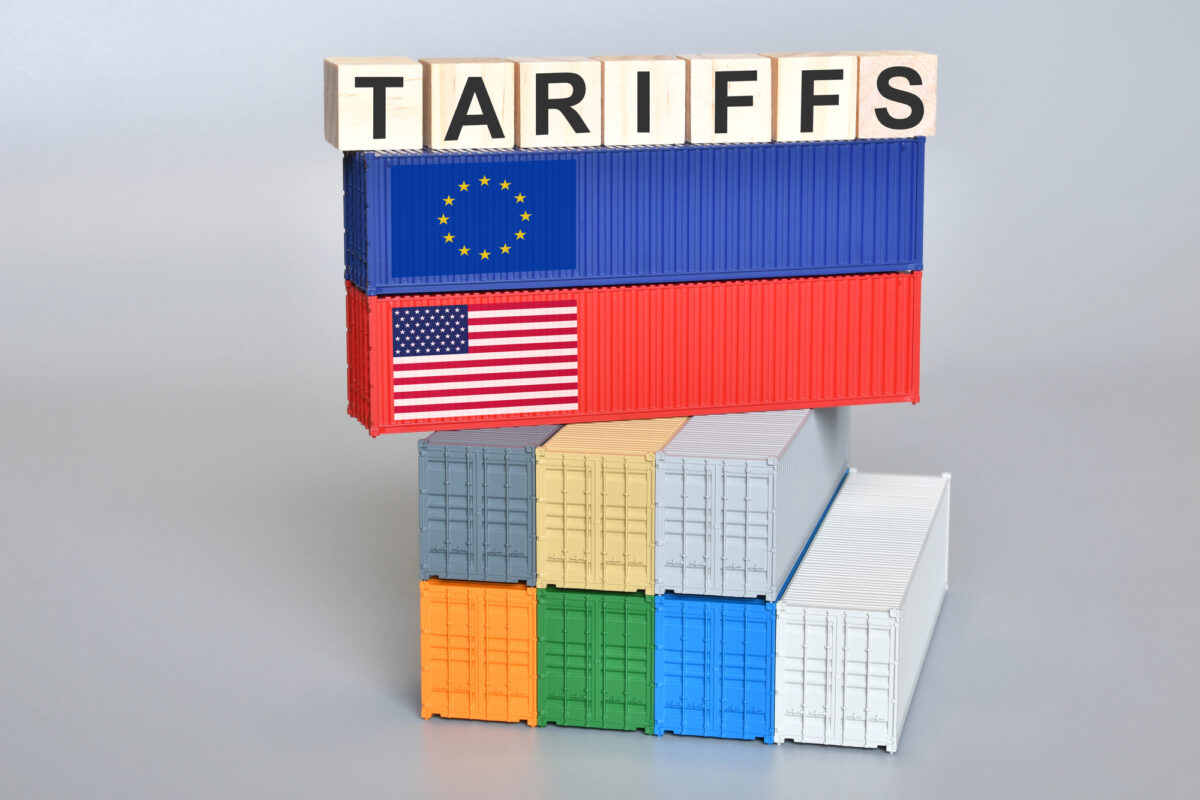
Canada canceled the joint ceremony after Trump announced an additional 50% tariff on covered Canadian products on July 20. The measures target categories including wine, cement and hockey sticks, although energy, potash and several other products are excluded.
Those new 50% duties were not yet being collected when the ceremony took place on July 24. The White House gave importers 30 days of notice, placing the scheduled effective date around August 19 and leaving several weeks for negotiations.
Canadian officials decided that a 2-country celebration would be inappropriate only 4 days after the tariff announcement. The government proceeded with a Canadian event attended by political leaders, workers, community representatives and members of Gordie Howe’s family.
Ontario Premier Doug Ford attended wearing a red hockey jersey with Howe’s famous No. 9. Ford said Americans and Canadians are “better off when we work together.” Still, he also promised that Ontario would not back down in the trade fight.
Trump says the U.S. secured 50% of the profits.
Trump said the original bridge agreement had been poorly negotiated and no longer controlled the project. He claimed the United States would now receive 50% of the bridge’s profits, presenting the revised arrangement as a financial victory for American taxpayers.
The available documents make the 50% claim less straightforward than the president’s post suggests. A proposed agreement would divide certain net bridge and crossing-related revenue for the first 15 years, but neither country has publicly estimated how much money that could produce.
Prime Minister Mark Carney has argued that Canada must first recover the billions of dollars it spent financing the crossing. Under the earlier 2012 Canada-Michigan agreement, Michigan would not begin receiving its share until Canada’s construction debt had been repaid.
The dispute leaves 2 versions of the deal in public view. Washington can point to the new 15-year revenue language, while Ottawa can point to the original repayment provision and argue that Canada’s financial priority remains intact.
Canada paid for infrastructure on both sides of the border.
Canada financed the entire project, including the bridge, 2 ports of entry and the Michigan interchange connecting the crossing directly to Interstate 75. The design, construction, operation and long-term maintenance contract carries a value of C$6.4 billion, commonly reported as about $4.7 billion in U.S. currency.
The unusual arrangement meant Canada paid for significant infrastructure located inside the United States. Canada accepted that cost because hundreds of millions of dollars in goods move through the Detroit-Windsor corridor on a normal day.
Canadian officials estimate approximately C$274 million, or about $194 million, in trade crosses between Detroit and Windsor every 24 hours. That turns a dispute over 1 opening ceremony into a much larger question about the reliability of North America’s most important land trade route.
The bridge could reshape the No. 1 truck crossing.
Detroit is the No. 1 U.S.-Canada port for truck traffic, according to the U.S. Department of Transportation. For nearly 100 years, the privately owned Ambassador Bridge has been the only Detroit River route available to large commercial trucks.
The Ambassador Bridge handled about $126 billion in truck-based trade during 2023 alone. Adding a second major crossing gives manufacturers, freight companies and border agencies another route when congestion, maintenance, demonstrations or emergencies disrupt traffic.
A University of Windsor study cited by Reuters estimated that the direct highway connection could reduce some trips by roughly 20 minutes. Over 30 years, those time savings could be worth approximately $2.3 billion to commercial operators.
That matters because a vehicle assembled in Michigan or Ontario may contain parts that cross the border several times. A 20-minute delay multiplied across thousands of trucks can affect factory schedules, driver hours, warehouse inventories and ultimately the price consumers pay.
The numbers behind the massive crossing
The Gordie Howe International Bridge stretches approximately 1.5 miles across the Detroit River and carries 6 traffic lanes. Its 853-meter main span is the longest cable-stayed bridge span in North America, while its 2 towers rise about 720 feet above the region.
The Canadian and American ports of entry include 60 primary inspection lanes, with 24 located in Canada and 36 in the United States. The Canadian side also has 16 toll lanes designed for manual, automatic, and electronic payments.
Standard passenger vehicle tolls are set at $5.75 in U.S. currency, while registered Breakaway customers receive a 25% discount and pay $4.35. Commercial trucks pay $8.75 per axle, or $6.90 per axle with the discount program.
More than 15,800 people built the bridge.
The political argument can easily obscure the human story behind the concrete and steel. Since construction began in October 2018, more than 15,800 people worked over 20.1 million hours to complete the crossing and its supporting infrastructure.
The project also created more than 455 student placements and contributed an estimated $1.3 billion to Windsor’s economy. Those numbers represent apprentices learning trades, union crews working through difficult weather and families whose incomes were tied to a project that took nearly 8 years to finish.
The COVID-19 pandemic slowed construction, supply disruptions and the complexity of coordinating 2 countries, 2 border agencies and several levels of government. Yet the bridge reached completion even as the political relationship supporting it became increasingly strained.
A bridge named for No. 9 became a political symbol.
Gordie Howe was born in Saskatchewan but spent much of his legendary career with the Detroit Red Wings. The hockey star, who died in 2016, became a natural symbol for a bridge intended to connect Canadian identity with Michigan history.
That symbolism was visible at the July 24 ceremony, where children played hockey, and Ford wore Howe’s No. 9. The celebration honored a man embraced on both sides of the border even as representatives from only 1 side participated.
Pedestrians and cyclists will receive their own connection beginning at 8 a.m. on August 5. The bridge’s 1.5-mile multiuse path will be toll-free, although travelers will still need proper identification to cross the international border.
Washington’s trade case goes beyond the bridge.
The White House says the 50% tariffs respond to Canadian policies affecting U.S. automobiles, alcohol and dairy products. It reported that Canadian imports of American motor vehicles fell about 22%, or $5.6 billion, between April 2025 and March 2026 compared with the previous 12-month period.
The administration also said Canadian imports of U.S. alcoholic beverages dropped roughly 81%, or $582 million, between March 2025 and February 2026. Canada disputes the broader U.S. trade approach and argues that new tariffs violate the spirit and terms of the North American trade relationship.
Canada sends more than 70% of its exports to the United States, making it deeply exposed to tariff pressure. American factories are also vulnerable because Michigan, Ontario and other industrial regions operate through supply chains built over several decades.
The ceremony was canceled, but the commerce will continue.
At noon on July 27, the political argument is expected to give way to passenger cars, delivery vans and commercial trucks. The 6 lanes will begin carrying the daily traffic of 2 economies that remain tightly connected, even when their governments are not.
Trump can claim that pressure produced a 50% share of certain profits and greater U.S. influence over toll decisions. Canada can point to its C$6.4 billion investment, the original repayment agreement, and the fact that it delivered a second major Detroit-Windsor crossing.
The ribbon cutting became a casualty of a 50% tariff fight, but the bridge was built for a much longer timeline. For the next 30 years of its operating contract, its success will be measured less by who attended 1 ceremony and more by how quickly goods, workers and families move between Michigan and Ontario.
A bridge designed to unite 2 countries opened during one of their sharpest modern disputes. The politicians stood apart on July 24, but the traffic moving across the Detroit River will offer a daily reminder that the U.S. and Canadian economies remain difficult to separate.
The statistics are concentrated around the strongest reader-interest angles without inserting unsupported numbers solely for clickability.